

Cargo volume suffering decline in Nigerian ports over inconsistent policies, falling naira: ANLCA

TheAssociation of Nigerian Licensed Customs Agents (ANLCA) has revealed a 24-month decline in cargo volume across the country’s ports.
The group’s acting president, Kayode Farinto made the revelation in a television programme monitored by the News Agency of Nigeria on Thursday in Lagos.
He was speaking on the Nigerian Ports Authority report in the first half of the year which showed a total of 849,000 twenty-foot equivalent units of container rise on imports received in Nigerian ports.
Mr Farinto said that there was no increase in cargo imports but there was a decline.
A lot of factors militate against cargo import in Nigeria, Mr Farinto pointed out, listing bureaucracy, inconsistent policies and the continued slide of the naira as some of the factors.
“The role of the Central Bank of Nigeria (CBN) too cannot be overlooked and this is because they are encroaching on fiscal policy which affect importation of cargo.
“We have over 48 items on the forex prohibition list and these people are still going through black market, bringing these items is a problem and even when brought in, issues of declaration come in.
“That is why I say there is a decline and not an increase. If it’s not a decline, I will say that 40 per cent of the containers are raw materials from all these multinationals and producing companies like Nigerian Breweries,” he said.
The ANLCA acting president said that to address this, the government needed to look into the country’s maritime policy to have a clear cut way of harnessing the industry, which was under tapped.
“Before now, Nigeria had lost 45 per cent of its cargo to Lome, because they have a deep seaport.
”But with the coming of the Lekki Deep Seaport, we will witness berthing of large vessels in Nigeria,” he said.
On the issue of the African Continental Free Trade Agreement (AfCFTA) and ensuring Nigeria does not become a dumping ground, he urged the government to create a ministry to oversee the agreement.
According to him, having a ministry to oversee the agreement will ensure the preparedness of the country in the trade.
“We are signatory to this convention and whether we like it or not, African countries need to bring their goods to our country and we cannot say no.
“The UK has an anti-dumping policy in spite of the fact that they are a member of the European Union and they used it to reject items they don’t want in their country, so we too need to do things right.
“AfCFTA is a lofty idea for African countries, a ministry to oversee issues in Nigeria will make us more prepared,” he said.
(NAN)

We have recently deactivated our website's comment provider in favour of other channels of distribution and commentary. We encourage you to join the conversation on our stories via our Facebook, Twitter and other social media pages.

More from Peoples Gazette

Agriculture
FG tasks ECOWAS on leveraging financing strategies for agroecology
The federal government has urged stakeholders in the agriculture and finance sectors in the West Africa region to leverage financing strategies to enhance agroecology practices

Politics
Katsina youths pledge to deliver over 2 million votes to Atiku
“Katsina State is Atiku’s political base because it is his second home.”
![U.S. Mission[Credit: X.com]](https://gazettengr.com/wp-content/uploads/images-78-3.jpeg)
World
U.S. issues security alert to Americans worldwide as Iran kills two soldiers
The U.S. government issued a warning to all Americans worldwide amid the escalating war against Iran.

Heading 3
Tinubu’s scorecard is 139 million Nigerians in poverty; he should resign, not seek re-election: ADC
“The evidence of 139 million people living in poverty and 17 million at risk of starvation is President Tinubu’s scorecard,” the party said.
Lagos
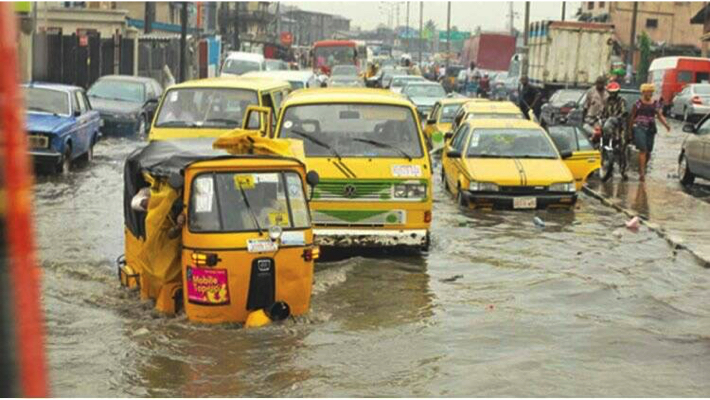
Lagos govt working to tackle flooding, says SSG
She said the government was assessing critical drainage channels and other vulnerable locations to strengthen ongoing flood control measures.

States
Three killed, four injured in Anambra road crash: FRSC
The FRSC said the accident occurred on Friday along the Nnobi–Agulu–Awka road.
Politics
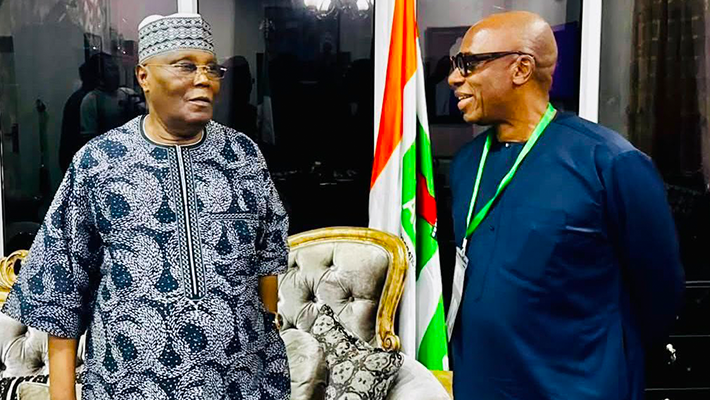
2027: Group asks ADC, Atiku to drop Amaechi as vice-presidential candidate
The group accused Mr Amaechi of desperation, saying that he lacked the grassroots strength required to win the election.
![Jens Spahn. [PHOTO CREDIT: ZDF]](https://gazettengr.com/wp-content/uploads/Jens-Spahn.jpg)
Heading 4
German lawmaker resigns after backlash for welcoming child through surrogacy
The 46-year-old politician and his party, the Christian Democratic Union (CDU), had backed a ban on surrogacy.


