

CDD unveils five-year plan to tackle democratic decline, insecurity in West Africa
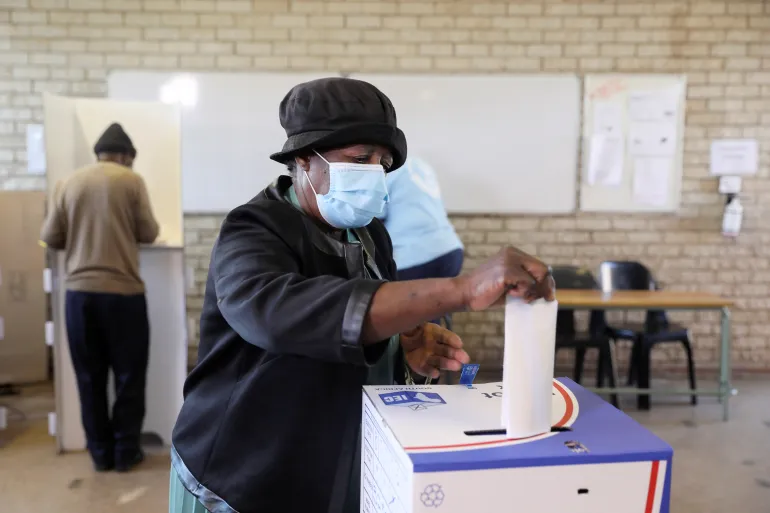
The Centre for Democracy and Development has unveiled a five-year strategic plan to reverse the troubling trajectory of democratic backsliding and worsening poverty across West Africa.
Director of CDD-West Africa, Dauda Garuba, disclosed this at the unveiling of the plan in Abuja.
Mr Garuba said that, despite nearly three decades of progress in promoting democratic governance and regional stability, recent developments showed that the gains were increasingly under threat.
According to him, the region now faces a mix of progress and setbacks, with countries like Senegal and Ghana maintaining democratic stability, while others grapple with authoritarian tendencies.
He cited the resurgence of military coups and constitutional manipulations by civilian leaders in countries like Côte d’Ivoire, Guinea and Togo, alongside the declining public trust in elections and governance systems weakened by corruption.
“The rise of military-led populism in Mali, Burkina Faso, Niger and Guinea-Bissau further complicates the region’s democratic landscape,” he said.
Mr Garuba noted that beyond governance and security concerns, the region also faced a worsening humanitarian situation.
The CDD boss explained that democracy and development are interconnected, stressing the need for collaborative action among governments, civil society, businesses and international partners to achieve sustainable progress.
In a keynote address, a former director of CDD, Jubrin Ibrahim, said that economic development was only meaningful when it benefitted the majority of people.
Mr Ibrahim argued that Nigeria and West Africa had struggled to achieve people-centred development, as they were discouraged from effective economic planning by institutions such as the IMF and the World Bank.
Drawing on global examples such as China, India and Brazil, he emphasised that countries that had successfully reduced poverty did so through deliberate, centralised planning, unlike those that relied solely on market forces and made limited progress.
Mr Ibrahim said that the crisis of democracy was often caused by self-proclaimed democrats who ultimately undermined it.
The occasion also featured a panel discussion session. Members of the panel included Nana Tanko, chief executive officer of the African Policy Research Institute; Hussaini Abdu, country director of CARE International; and Okechukwu Ibeanu, among others.
The discussion highlighted deep challenges facing democracy in West Africa, emphasising that the problem was not just military interference but systemic failures within democratic practice itself.
The panellists agreed that democracy had not entirely failed but that both governments and citizens shared responsibility for its weaknesses.
They argued that the breakdown of the social contract, poor infrastructure, healthcare and governance have fuelled instability and the return of coups to the region.
They concluded that the “silver lining” lay in empowered citizens, supported by women, youth and technology, driving a more inclusive, responsive and effective democratic system.
(NAN)

We have recently deactivated our website's comment provider in favour of other channels of distribution and commentary. We encourage you to join the conversation on our stories via our Facebook, Twitter and other social media pages.

More from Peoples Gazette

Agriculture
FG tasks ECOWAS on leveraging financing strategies for agroecology
The federal government has urged stakeholders in the agriculture and finance sectors in the West Africa region to leverage financing strategies to enhance agroecology practices

Politics
Katsina youths pledge to deliver over 2 million votes to Atiku
“Katsina State is Atiku’s political base because it is his second home.”

World
Three Liberians, one Ghanaian indicted for voting illegally in U.S. election
The defendants were accused of voter fraud, including making false claims of citizenship to vote and voting illegally as aliens.

Lagos
Navy inaugurates healthcare facility in Lekki community
The facility comprises a dental clinic and a heart-to-heart centre.
Africa
Customs repatriate rescued baby gorilla to Congo
Bili was rescued in August 2023 by officers of the service during enforcement operations against wildlife trafficking.

World
Gavi approves first-ever rapid diagnostic tests for measles
Gavi said up to 500,000 tests are expected to be deployed annually once the programme is complete.

NationWide
Nigeria@66: AAC chieftain seeks increased devolution of powers
Mr Ajayi said, “The Nigeria we desire is possible, but we must overhaul the way we practise democracy.”

World
Iran bans luxury car imports amid economic crisis
President Masoud Pezeshkian announced the ban on Wednesday.


