

CIOTA to enforce professional standards in transport
The Chartered Institute of Transport Administration of Nigeria (CIOTA) says it will unveil a new regulatory framework to professionalise transport administration and curb informality in the sector.
Segun Obayendo, president and chairman of CIOTA’s governing council, disclosed this at a news conference on Friday ahead of the institute’s eighth National Transport Conference in Lagos.
Mr Obayendo said the framework, to be unveiled through the CIOTA Gazette at the conference, would strengthen professional standards, set clear requirements for practitioners, and ensure that sensitive transport positions are held by qualified professionals.
He said the initiative was backed by the Chartered Institute of Transport Administration of Nigeria Act, 2019, which empowers the institute to regulate transport practice and promote training and professional capacity development.
According to him, the reform is particularly important because significant parts of Nigeria’s road and inland-waterway transport operations remain informal, making it difficult to account for the sector’s economic contribution properly.
“We cannot seamlessly integrate an informal sector, for example, into the operation of a modern aviation system,” he said.
He said the sector needed to move away from a system where people could assume transport responsibilities without the required professional training, adding that CIOTA was prepared to enforce the new standards.
Mr Obayendo said transportation facilitated the movement of goods and services worth about N157.8 trillion in 2025, arguing that the scale of activity demonstrated the sector’s importance to the economy.
He said the conference would also examine how road, rail, maritime, aviation and inland-waterway systems could operate as a connected network to reduce logistics costs, improve safety and enhance Nigeria’s trade competitiveness.
The CIOTA president said integration was necessary to support the country’s ambition of becoming a $1 trillion economy, noting that efficient transportation was critical to moving people, goods and services across the country.
He identified professional capacity development, transport governance, technology, infrastructure financing, logistics, and supply-chain efficiency as key areas to address at the conference.
On the challenge of informal transport operators, Obayendo said CIOTA recognised that existing transport unions had developed over decades and could not simply be eliminated without providing a transition framework.
He cited the Lagos Metropolitan Area Transport Authority (LAMATA) industry transition programme as an example of efforts to move informal operators into more structured systems.
Mr Obayendo also called for improved driver training and licensing, saying transport professionals should undergo appropriate training before entering the sector.
He said technology would be central to the transformation of transportation, citing app-based services as an example of how digital platforms had changed the way passengers accessed transport.
“Is it efficient? Is it safe? Is it secure? Is it affordable? Those are the characteristics of a good transportation system, and with technology, we can do better than we are doing,” he said.
On infrastructure financing, Mr Obayendo said the challenge was not necessarily the availability of funds but the capacity of institutions to package projects and manage financing effectively.
He cited the N34 trillion pension fund as one potential source of infrastructure financing, stressing that projects would need the right policies, master plans, personnel, and institutional structures to attract such investment.
He also said the National Land Transport Policy provided a framework for coordinated development of the sector, including provisions for non-motorised transport.
Taiwo Olufemi-Salam, chairman of the conference’s national planning committee, said the event would focus on moving Nigeria from fragmented transport modes to an integrated system in which road, rail, water, air and non-motorised transport complement one another.
Mr Salam said such integration would help reduce congestion, improve logistics and mobility, enhance road safety, lower environmental impact and increase productivity.
James Zang, director of corporate planning and representative of the Managing Director of the Nigerian Railway Corporation, Kayode Opeifa, said the corporation viewed integration as the future of transportation.
Mr Opeifa said rail could serve as a backbone for multimodal integration by complementing road, air and water transport in moving people and goods safely and efficiently.
He said the corporation would collaborate with stakeholders to build an integrated transport system that can support economic growth.
Also, Samuel Odewunmi, a transport planning and policy scholar, said professionalisation and multimodal integration were central to the transformation Nigeria’s transport sector needs.
Mr Odewumi said proper training and retraining were necessary because transportation affects not only operators’ lives but also those of other road users.
He urged government and transport stakeholders to ensure that the planning of railway stations, airports and ports incorporated appropriate road and other transport linkages.
He said transportation should be treated as one interconnected system rather than as isolated sectors administered separately.
The Eighth National Transport Conference, themed “Integrated Multimodal Transport Systems for Sustainable Development in Nigeria”, is scheduled for October 13 and October 14 at the Federal Palace Hotel, Lagos.
The conference is expected to bring together policymakers, regulators, transport operators, investors, academics, development partners, and other stakeholders to examine the reforms needed to build a safe, efficient, affordable, and sustainable transport system in Nigeria.
(NAN)

We have recently deactivated our website's comment provider in favour of other channels of distribution and commentary. We encourage you to join the conversation on our stories via our Facebook, Twitter and other social media pages.

More from Peoples Gazette

States
Independence: NBA urges Nigerians to expect better future
The NBA said that ordinary Nigerians should be deriving benefit from the subsidy removal rather than hardship.

Agriculture
FG tasks ECOWAS on leveraging financing strategies for agroecology
The federal government has urged stakeholders in the agriculture and finance sectors in the West Africa region to leverage financing strategies to enhance agroecology practices

Politics
Katsina youths pledge to deliver over 2 million votes to Atiku
“Katsina State is Atiku’s political base because it is his second home.”

States
Ogun man arrested, arraigned for stealing iron rods
A 23-year-old man, Michael Gbadero, stood before an Abeokuta Magistrates’ Court in Isabo on Monday, accused of stealing iron rods worth N460,000.
World
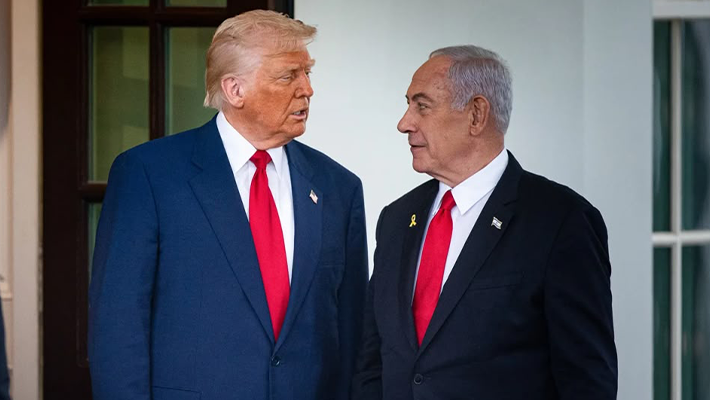
Trump endorses Netanyahu for re-election as Israel’s PM
President Donald Trump has endorsed the re-election bid of Prime Minister Benjamin Netanyahu, urging Israelis to vote for him.
World
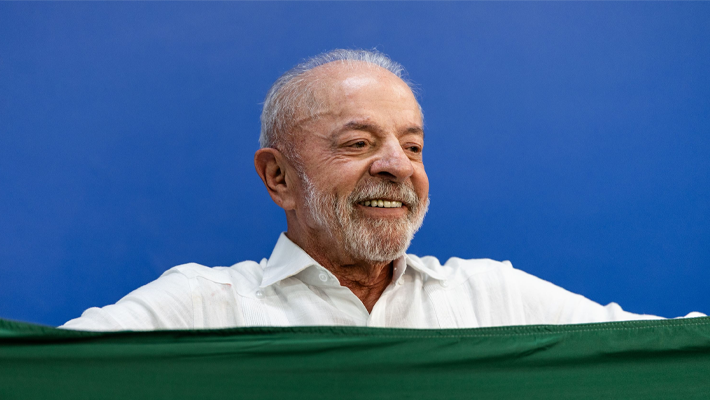
World leaders react to Lula’s presidential election victory
World leaders on Monday congratulated Brazil President Luiz Lula da Silva for his victory in Sunday’s presidential election runoff.
![Governor Sheriff Oborevwori [Photo: Facebook Sheriff]](https://gazettengr.com/wp-content/uploads/Governor-Sheriff-Oborevwori-Photo-Facebook-Sheriff-1.png)
States
Delta govt mourns mother of WTO director-general
Governor Sheriff Oborevwori has commiserated with the Okonjo family of Ogwashi-Uku, Aniocha South council area, over the death of their matriarch, Kamene Okonjo.
Health
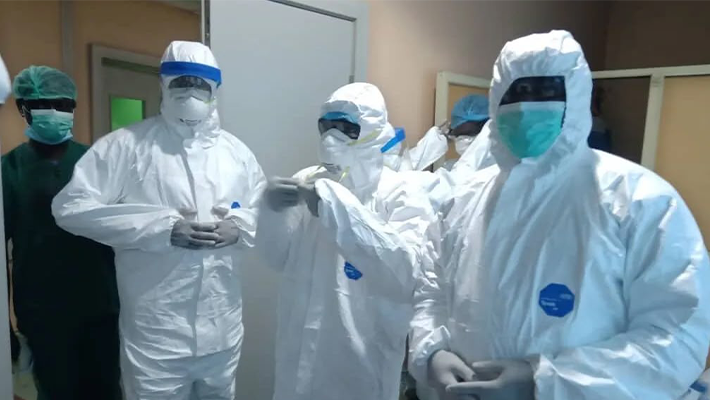
Nigeria no longer has Ebola, says WHO
WHO’s regional director for Africa says Nigeria is Ebola-free following the medical evacuation of the patient and her husband to Switzerland.

Rights
Phone-tapping: El-Rufai’s woes continue as court dismisses no-case submission
The Federal High Court, Abuja Division, on Monday dismissed a no-case submission filed by former Governor Nasir El-Rufai in his phone-tapping trial.


