

Civil society organisations oppose proposed tobacco law amendment
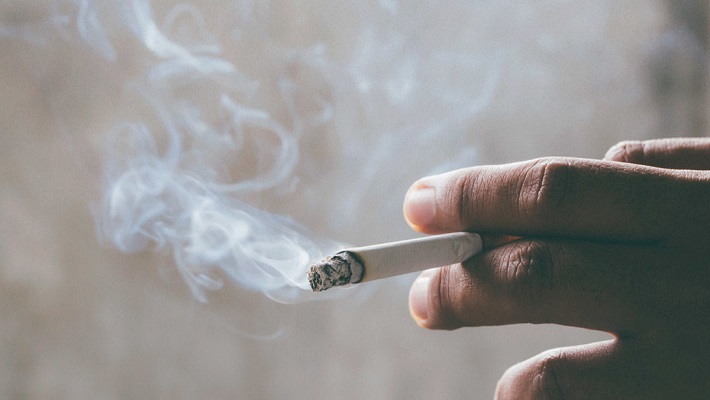
Some civil society organisations (CSOs) and public health advocates have opposed proposed tobacco law amendments, warning that some provisions could weaken safeguards around vapes, heated tobacco products and nicotine pouches.
The groups, under the Nigeria Tobacco Control Community, expressed the concerns while briefing journalists on Monday in Abuja on the National Tobacco Control Act (Amendment) Bill 2025.
Speaking on behalf of the group, the Executive Director, Corporate Accountability and Public Participation Africa (CAPPA), Akinbode Oluwafemi, called for the immediate recall of the consolidated Bill.
Mr Oluwafemi acknowledged the need to update the National Tobacco Control Act 2015 and its 2019 Regulations to address emerging tobacco and nicotine products.
He, however, said such reforms should strengthen public health protections rather than create weaker rules for newer products.
He faulted provisions that could facilitate the advertising and promotion of non-combustible products through adult publications, point-of-sale materials and online platforms.
He also raised concerns over provisions allowing tobacco and nicotine companies to sponsor cultural, social and recreational events targeted at adults.
According to him, defining publications or events as “adult” will not necessarily prevent young people from being exposed to tobacco and nicotine marketing, particularly through social media.
He said content from such events could be photographed, shared online and amplified across digital platforms, potentially reaching children.
Mr Oluwafemi also expressed concern over a proposed definition of ”adult publication” based on a readership comprising at least 50 per cent adults.
He argued that such a threshold could allow publications with a substantial proportion of underage readers to carry tobacco and nicotine advertising.
Another major concern, he said, was the proposed relaxation of restrictions on online sales and distribution of non-combustible products.
He noted that though the bill provided for age verification, such mechanisms could be circumvented, particularly where adults purchased products on behalf of minors.
He also questioned Nigeria’s capacity to effectively monitor online vendors, websites, social media platforms, courier companies and delivery channels involved in such transactions.
He further criticised provisions that would allow indoor product sampling and point-of-sale promotional materials.
He argued that the combination could transform retail outlets into promotional spaces where consumers would be encouraged to see, sample and purchase emerging nicotine products.
On heated tobacco products, he opposed their proposed classification as non-combustible products.
Mr Oluwafemi argued that the products contained tobacco and nicotine and should therefore remain subject to strong tobacco-control measures.
He also faulted the proposed packaging and health-warning requirements for novel nicotine products, saying they were weaker than existing requirements for conventional tobacco products.
He said the bill proposed text warnings for vape liquids covering no more than 30 per cent of the front of the package, while nicotine pouches would carry warnings covering no more than 10 per cent.
He further raised concerns over a provision that would exempt e-cigarette and heating devices from carrying health warnings.
According to him, relying on safety information generated and controlled by manufacturers can undermine independent public health oversight.
He expressed concern over a provision granting the Minister of Health powers to exempt non-combustible products from provisions of the proposed law on undefined public-interest grounds.
He warned that such broad discretion could create opportunities for lobbying and regulatory capture.
He alleged that several of the controversial provisions were not contained in the bills presented at the public hearing in November 2024.
He therefore demanded the publication of committee reports, voting records and stakeholder submissions that informed the development of the consolidated bill.
Mr Oluwafemi also called on the Federal Ministry of Health and Social Welfare to publicly clarify its position on the bill and indicate whether it was adequately consulted during the amendment process.
He urged the National Assembly to recall the bill and subject it to a transparent, public health-led review, while appealing to President Bola Tinubu to withhold assent should the bill reach his desk in its current form.
Michael Olaniyan, country coordinator, Campaign for Tobacco-Free Kids (CTFK), also raised concerns that the proposed amendments could weaken existing public health protections and create regulatory loopholes for tobacco and nicotine products.
Mr Olaniyan said the bill could give the minister excessive discretion to exempt certain products from regulatory requirements, while conflicting and ambiguous provisions could make enforcement difficult and create room for industry exploitation.
He also questioned provisions relating to adult publications and events, arguing that such restrictions would be difficult to enforce without exposing children and young people to tobacco advertising and promotion.
He expressed particular concern over the bill’s definition of nicotine, arguing that its reference to “naturally occurring” nicotine could potentially create a loophole for synthetic nicotine products to escape regulation.
He urged the Federal Ministry of Health and the National Assembly to protect the gains made under the National Tobacco Control Act, 2015, and ensure that any amendments strengthened rather than weakened tobacco-control measures.
Olawale Makanjuola, alliance coordinator, Nigerian Tobacco Control Alliance (NTCA), warned that the proposed amendments could worsen the health and economic burden of tobacco use in Nigeria.
Mr Makanjuola said more than 20,000 Nigerians died from smoking-related illnesses annually, while about N201 billion was spent on related healthcare costs.
He expressed concern that the growing availability of newer nicotine-delivery products, particularly vapes, was encouraging more young people to take up nicotine use.
He said weakening tobacco-control measures could reverse years of progress and undermine Nigeria’s position as a model for tobacco control in Africa.
He cited Nigeria’s efforts to regulate tobacco promotion in Nollywood and other entertainment platforms, noting that other African countries were looking to the country’s experience.
He urged the Federal Ministry of Health and Social Welfare to take greater ownership of tobacco-control efforts and listen to public health advocates.
Speaking on the public health implications of the bill, Executive Director, A New Thing International Foundation, Kenneth Anetor, expressed concern over provisions allowing product sampling at points of sale and the sale of tobacco products in small packs.
Mr Anetor said allowing product sampling could increase curiosity and encourage initiation among young people who had never used tobacco or other addictive substances.
He said exposure to addictive substances at a young age could affect decision-making and increase the likelihood of engaging in other risky behaviours.
According to him, the proposed sale of products in small packs can also make them more affordable and accessible to young people who might otherwise be unable to purchase larger packs.
”These are some of the most concerning provisions to us, and we are calling on the National Assembly to review and recall the bill and create an avenue for other stakeholders to participate in the process.”
He also appealed to Mr Tinubu not to assent to the bill, urging him to prioritise the protection of Nigerian children and young people from exposure to addictive substances.
(NAN)

We have recently deactivated our website's comment provider in favour of other channels of distribution and commentary. We encourage you to join the conversation on our stories via our Facebook, Twitter and other social media pages.

More from Peoples Gazette

States
Independence: NBA urges Nigerians to expect better future
The NBA said that ordinary Nigerians should be deriving benefit from the subsidy removal rather than hardship.

Agriculture
FG tasks ECOWAS on leveraging financing strategies for agroecology
The federal government has urged stakeholders in the agriculture and finance sectors in the West Africa region to leverage financing strategies to enhance agroecology practices

Politics
Katsina youths pledge to deliver over 2 million votes to Atiku
“Katsina State is Atiku’s political base because it is his second home.”

Economy
Oyedele proposes new law to prevent future presidents from reversing Tinubu’s controversial tax, subsidy policies
“Any ideas of returning it, we should forget about it. That economic policy framework, you will see by the time you start responding to us…,” said Mr Oyedele.

Economy
Lagos E-Commerce Crackdown: Sanwo-Olu targets deceptive online vendors, online fraud
The Lagos government has announced an initiative to protect customers from vendors delivering items that differ from what they ordered, whether online or offline.
Sport
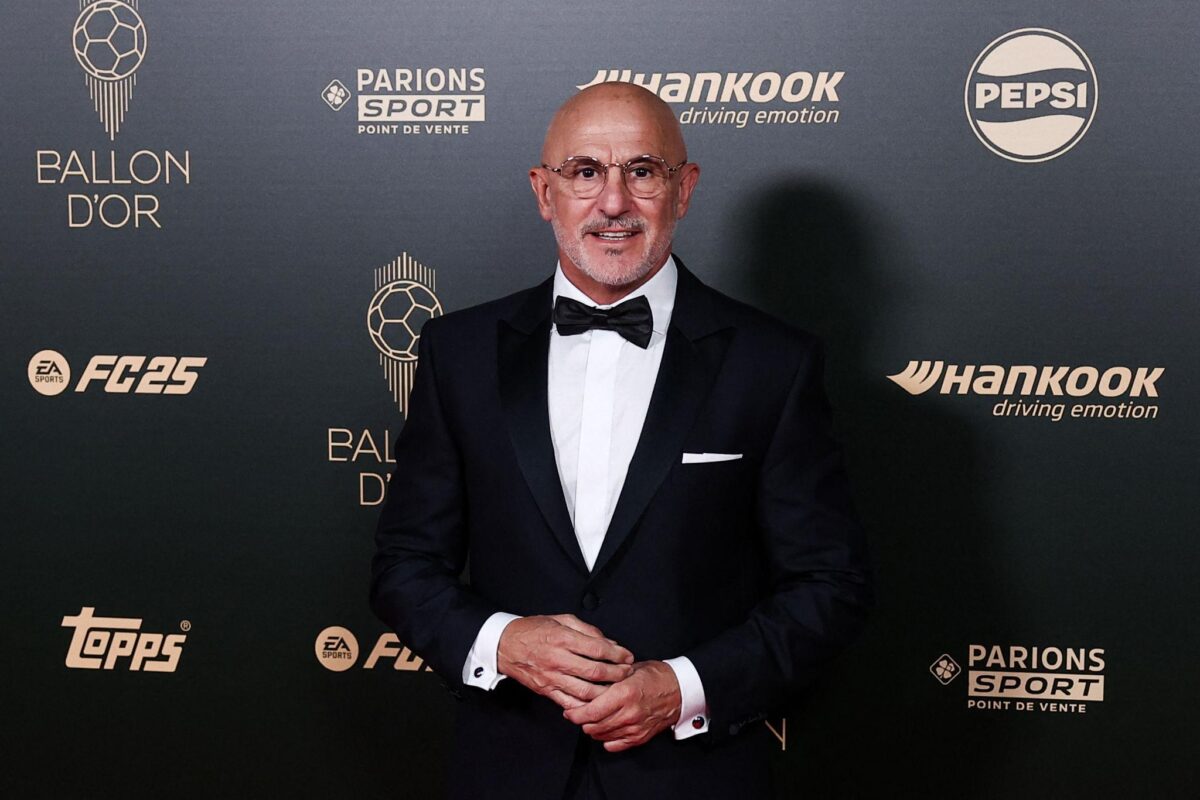
Ballon d’Or: Spain’s Luis de la Fuente wins ‘Men’s Coach of the Year’
Spain manager Luis de la Fuente won the ‘Men’s Coach of the Year’ award on Monday at the 2026 Ballon d’Or ceremony at the London Palladium, England.

Heading 4
Microsoft moves to lay off 60,000 employees to cut costs
Microsoft says it is offering buyouts to about 60,000 of its global workforce to cut costs and free up resources to fund its AI investments.

Health
Nigerians demand immediate return of N10 billion Ebola fund from Gbajabiamila
Nigerians are asking Femi Gbajabiamila, the chief of staff to President Bola Tinubu, to account for the ₦10 billion the administration approved for the Ebola emergency response.
Politics
Oyebanji asks Ekiti assembly to approve three commissioners, 10 advisers
Governor Biodun Oyebanji has sought the Ekiti State House of Assembly’s approval to reappoint three commissioners and appoint 10 special advisers.


