

Climate change reducing crop yields, increasing food prices: FG

The Minister of Agriculture and Food Security, Abubakar Kyari, says climate change poses significant risks to food security by reducing crop yields and increasing food prices.
Mr Kyari stated this at a joint news conference on Tuesday in Abuja on agricultural production utilisation of seasonal climate prediction by the Nigerian Meteorological Agency (NIMET).
He also said climate change had disrupted supply chains, particularly in vulnerable regions with limited adaptive capacity.
Mr Kyari said that the added importance of Seasonal Prediction was highlighted by the vagaries of climate change worldwide.
” It is clearly the case now that the native knowledge and wisdom on which smallholder farmers often relied to cultivate their fields are inadequate under the relentless impact of climate change.
” Accordingly, managing climate risks in agriculture through climate information and early warning services are important tools.
” In other words, integrating meteorological information as part of support services to agricultural production helps reduce losses to extreme weather events.
“It also takes advantage of maximising the benefits of favourable weather,” he said.
The minister said smallholder farmers were primary and significant players in Nigeria’s agricultural space, with rain-fed being the predominant practice.
“But rain-fed agriculture is susceptible to elements of climate change, such as flood and drought, if no concrete action is taken to adapt to erratic weather conditions,” he said.
He said the ministry and NIMET commenced implementing cascading climate information in 2023 for Cross River, Ebonyi, Kano, Oyo, Rivers, and Yobe, as well as the FCT.
NIMET’s director-general, Charles Anosike, said the agency integrates meteorological information for farmers using radio, national television, social media, the British Broadcasting Corporation (BBC), and different languages.
”So, building on the database of farmers is critical elements that we want to explore moving forward,” he added.
He said the issue of food security required consistent and deliberate efforts from all stakeholders to empower and equip farmers.
In a presentation, NIMET said crops were sensitive to climate change, including changes in temperature and precipitation.
(NAN)

We have recently deactivated our website's comment provider in favour of other channels of distribution and commentary. We encourage you to join the conversation on our stories via our Facebook, Twitter and other social media pages.

More from Peoples Gazette

States
Independence: NBA urges Nigerians to expect better future
The NBA said that ordinary Nigerians should be deriving benefit from the subsidy removal rather than hardship.
Agriculture
FG tasks ECOWAS on leveraging financing strategies for agroecology
The federal government has urged stakeholders in the agriculture and finance sectors in the West Africa region to leverage financing strategies to enhance agroecology practices

Politics
Katsina youths pledge to deliver over 2 million votes to Atiku
“Katsina State is Atiku’s political base because it is his second home.”

NationWide
Military board engages veterans over new pension rates
Mr Mohammed said the engagement also provided an opportunity for both parties to discuss pension-related issues and strengthen mutual understanding.

NationWide
Stop disputing primaries’ results, focus on winning elections, Amaechi tells ADC members
Mr Amaechi urged members of the campaign council to recognise the responsibility before them.

States
Negative perceptions discouraging youths from joining military, says Soludo
Mr Soludo described Mr Obiakor as an illustrious son of Anambra State.

NationWide
FG tasked on speedy completion of Niger Basin projects
Mr Houanye attributed the progress to institutional reforms and improved programme management.
Africa
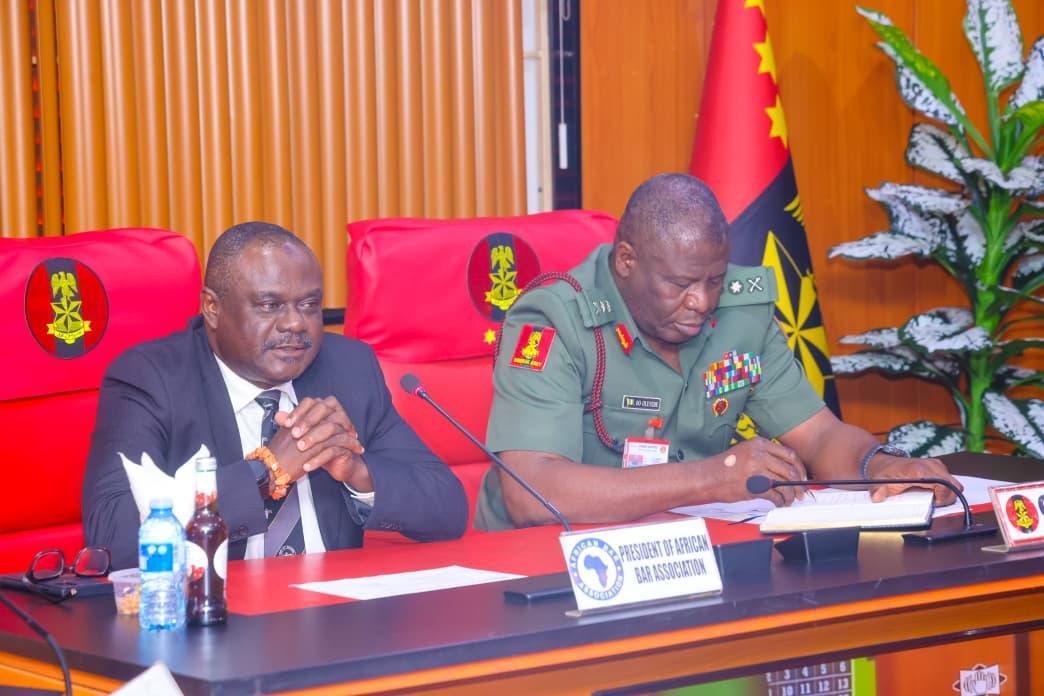
Africa bar association president advises lawyers to defend justice, freedom
Mr Mark reaffirmed that AfBA would continue to stand as a generational ally of the National Conference of Black Lawyers.

NationWide
NAF clarifies casualties in crashed aircraft, appreciates public support
Mr Ejodame said the NAF remains actively engaged with the bereaved families.


