

China-brokered Saudi-Iran deal could hurt Israel, Uighurs
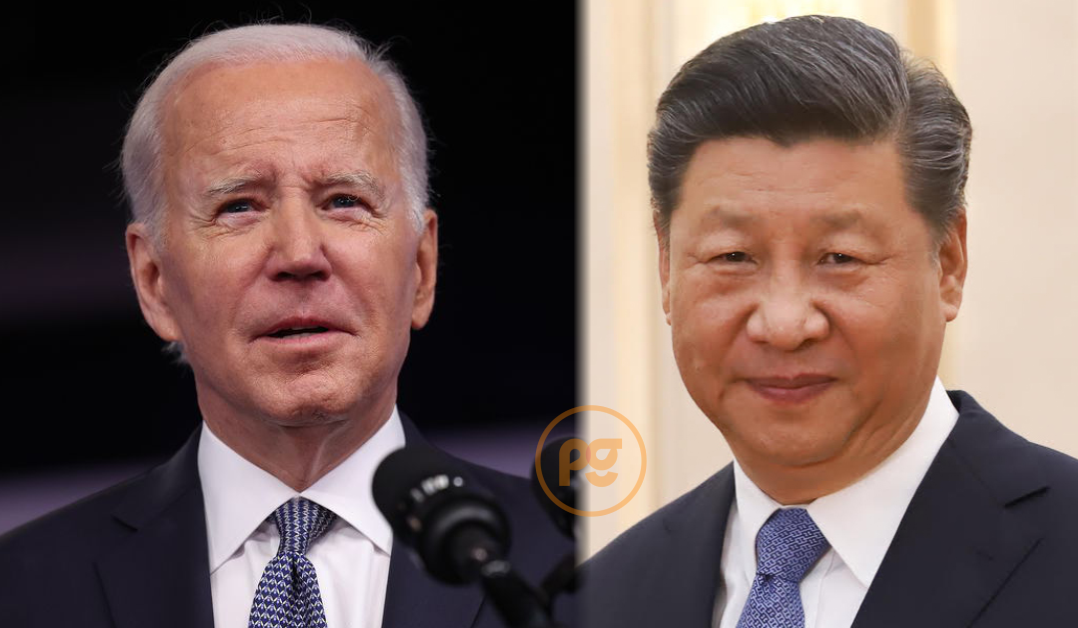
With the Saudi-Iran rapprochement, it is becoming increasingly clear that this is most likely China’s century, and we are all just living in it as tenants. In nearly every geopolitical trend, there are losers. None is more obvious in the Chinese-brokered rapprochement between Iran and Saudi Arabia than two: Israel and the Uighurs.
The Trump administration-engineered Abraham Accords, for all of their successes, failed to accomplish one major victory: over-the-top Saudi-Israel normalisation. This was not a problem for the White House, which felt that under-the-radar security cooperation between both would naturally set the course for a full-fledged normalisation in the coming years. Israel badly wanted it to happen because it needed to shore up its anti-Iran coalition in the region.
Now that China has pulled Riyadh and Tehran into a room and had them sing kumbaya, the Saudis wouldn’t be much interested in such deals, at least for now. Although talks between Iran and Saudi Arabia have been going on for close to two years with Israel’s knowledge, last Friday’s announcement still took Prime Minister Benjamin Netanyahu–who was on an official trip to Italy–by surprise, and the Israelis are not taking it well. Benny Gantz’s criticism of Netanyahu’s coalition government’s assault on the country’s judiciary, in which he mentioned the China-brokered deal, revealed as much.
Israeli foreign minister Eli Cohen was billed to visit Riyadh on Sunday, but his hosts’ lack of security assurances got him to cancel. This only means one thing: the Saudis, in a desperate search for security, understand first that the U.S. can no longer guarantee their security against Iran and its proxies, and Israel may not be able to defeat Iran in the present circumstances. It is then in Saudi Arabia’s best interest to have the elephant in the room on their side, even in the most backhanded of ways.
For us in the Global South, achieving a multipolar world with multiple key power centres is near impossible. Even with the congress system, which began at Vienna Congress in 1815 and ended in 1914, it was mostly a European affair with sub-centres of power who acted as balancers against each other.
What we are seeing right now is a return to the post-World War II era of two key power centres. The immediate biggest losers in this context are the Uighurs–the Muslims in China’s North Western Xinjiang autonomous region whose rights have been repressed by the Communist Party of China in its quest for cohesion.
China’s decision to get two of the three biggest and most significant centres of Islam into a room to get them to work for Chinese interests (energy security) is a blow to the Uighurs as it robs them of key moral international support. No major player in the Middle East will give a flying flamingo about their plight. The possible holdout, Recep Tayyip Erdogan of Turkey, has also shown that he’s interested in all of the Muslim world’s problems except that of the Uighurs.
Using the Uighurs as a case in point for the Global South: I was born five years after the fall of the Berlin Wall. I did not witness Cold War politics first-hand, but I have lived long enough to see what I read and studied play out in the rear. That rear is becoming the surface: two power centres are emerging with old, familiar patterns of East and West divides.
Both centres will be shopping for allies and neutrals. As a result, just like the main Muslim power centres are overlooking the Uighurs in their deals with China, so will the East and West, in their quest for allies and non-allied friendlies, be overlooking human rights abuses and autocratic tendencies of governments in the Global South.
As it happened in the Cold War, where smaller dictators played one power against the other to secure their rule and maximise benefits, it will happen presently and in the future. As with the Cold War, one power in the East did not care about democracy and human rights. As a result, the one which at least pretends to will sink deeper into more pretence with less substance in the coming years.
The Americans already indicated as much when, in December 2018, Trump’s National Security Adviser John Bolton laid out the doctrine of strategic competition with China and Russia as the underlying component of America’s ties with Africa. Security-themed cooperation has given dictators like Yoweri Museveni a lifeblood.
A similar relationship has made President Ismail Omar Guelleh of Djibouti one of the longest-serving heads of state in the world, having been in office since 1999. This also explains why not only has the U.S. been soft on sanctions against the Buhari administration for its anti-democratic actions, but UK Prime Minister Rishi Sunak rushed to congratulate the APC’s Bola Tinubu for being declared winner in an obviously flawed election which barely passed the basic test of what representative democracy looks like.
In the final analysis, the idea of a bipolar or multipolar world where one can balance the power of the other seems good on paper. However, a much deeper look and understanding reveals that the world may not necessarily be better off for it.
McHarry is an analyst at SBM Intelligence

We have recently deactivated our website's comment provider in favour of other channels of distribution and commentary. We encourage you to join the conversation on our stories via our Facebook, Twitter and other social media pages.

More from Peoples Gazette

States
Independence: NBA urges Nigerians to expect better future
The NBA said that ordinary Nigerians should be deriving benefit from the subsidy removal rather than hardship.

Agriculture
FG tasks ECOWAS on leveraging financing strategies for agroecology
The federal government has urged stakeholders in the agriculture and finance sectors in the West Africa region to leverage financing strategies to enhance agroecology practices

Politics
Katsina youths pledge to deliver over 2 million votes to Atiku
“Katsina State is Atiku’s political base because it is his second home.”
Abuja
FCT NLC suspends indefinite strike
The NLC chair said the suspension was agreed upon in the spirit of social dialogue and industrial harmony.

Health
Ebola: Africa CDC seeks urgent international support for Nigeria
Mr Kaseya said Africa CDC had begun mobilising support for Nigeria while intensifying response efforts in DRC, Congo and Kenya.

States
Police raid kidnappers’ hideouts in Nasarawa forests
Mr Jidda added that police personnel were already operating in the forests and would extend the operation to other forested areas.

States
Delta assembly approves state police
The majority leader said the proposed amendment would strengthen the protection of lives and property through a dual policing system.

States
Truck Accidents: FG mulls weighbridges on Lagos-Ibadan Expressway
Mr Dare attributed some road accidents to reckless driving, poor vehicle maintenance, and the removal of public infrastructure.

Anti-Corruption
EFCC secures conviction of ex-banker over unauthorised withdrawal of ₦1 million
Mr Nweke pleaded not guilty to the charge, prompting a full trial.


