

Corruption not African issue; people ‘cooking books’ are in Europe: Adesina
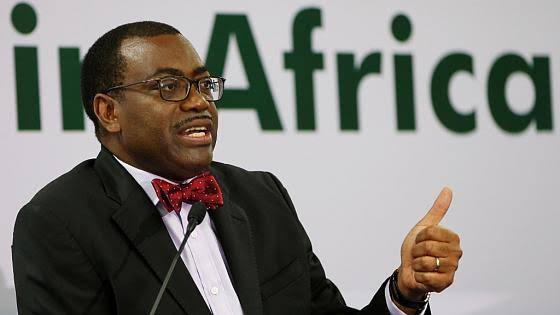
The President of the African Development Bank (AfDB), Akinwumi Adesina, says corruption is not an African issue.
In a statement in Abuja on Saturday, Mr Adesina said that what was important was to continue to improve transparency, accountability, and the use of public resources.
“The global financial crisis that brought the world down in 2008 was not in Africa. We have no Wall Street. That collapse came from greed, from corruption, and from fraud.
“You have people cooking the books that are in the financial industry in Europe, not in Africa. Corruption is not an African issue.
“The issue is not to say that there’s none. What you have to do is continue to improve transparency, accountability, and the use of public resources.”
According to Mr Adesina, he discovered during his first visit to Eritrea that the country has a zero per cent corruption record.
“During my first visit to Eritrea, I was talking to UN Development Programme staff. You know what they told me? That, in Eritrea, corruption is zero per cent.
“Why do we not talk about that? That’s the kind of thing that we want to do. For us as a development bank, we take good governance very seriously.
“As far as I am concerned, people’s resources do not belong in other people’s pockets. Governments must be accountable to their people,” he said.
According to the AfDB boss, there has to be transparency on how resources are acquired and used. That’s why we have a governance programme.
He said, “When you get money from us, we also support you technically. You are accounting for those resources.
“I don’t want to minimise that Africa has a significant amount of illicit capital flows; it does anything between 80 billion and 100 billion dollars a year.
“But guess what? Those that are doing that are the multinational companies. And so what we have got to do is bring a searchlight to that.”
On how Africa could improve its position in the global value chain, Mr Adesina expressed sadness about the continent’s constant position at the bottom of the value chain.
According to him, the fastest way to poverty is through exporting raw materials, but the highway to wealth is through global value chains.
He said this could be achieved by adding value to everything you have, from oil to gas to minerals to metals and food. We must add value.
“The issue is, we have to invest right; we have to make sure the governance environment is right; we have to make sure the incentives are right.
“Africa must take the position that it is no longer going to be at the bottom but at the top,” he said.
Commenting on the Bank’s support for food security in Africa, the AfDB boss said, “I don’t think that you can have development with pride unless you can feed yourself.”
According to Mr Adesina, the 81 shareholders of the AfDB provided it with an increase in the bank’s capital at the end of 2019, from 93 billion to 208 billion dollars.
The AfDB boss said the figure was the highest capital increase in the bank’s history.
He said the increase, however, allowed the bank to do an emergency support facility of 10 billion dollars in COVID crisis response for Africa.
Mr Adesina said the bank inaugurated a N1.5 billion emergency food production facility to mitigate the global geopolitical crisis leading to a food crisis in Africa.
On the need to restructure the international financial systems, Mr Adesina said, “What is very important for us is the issue of the Special Drawing Rights (SDRs).
“Africa needs to have a lot more resources for financing climate change, but what is actually out there is not enough.
“We have on the table right now the special drawing rights of the IMF. But when they were issued, 650 billion dollars were issued, and Africa got 33 billion dollars.”
“It’s 4.5 per cent, it is not good. You have small countries in Europe that got more, and that is not fair and not inclusive.”
According to him, African Heads of State are asking for 100 billion dollars to be re-channeled from the countries that got it but don’t use it or need it.
“We might think of maybe just adjusting it a little bit. And calling it Supporting Development Revitalisation. That’s also SDRs,” he said.
(NAN)

We have recently deactivated our website's comment provider in favour of other channels of distribution and commentary. We encourage you to join the conversation on our stories via our Facebook, Twitter and other social media pages.

More from Peoples Gazette

States
Independence: NBA urges Nigerians to expect better future
The NBA said that ordinary Nigerians should be deriving benefit from the subsidy removal rather than hardship.

Agriculture
FG tasks ECOWAS on leveraging financing strategies for agroecology
The federal government has urged stakeholders in the agriculture and finance sectors in the West Africa region to leverage financing strategies to enhance agroecology practices

Politics
Katsina youths pledge to deliver over 2 million votes to Atiku
“Katsina State is Atiku’s political base because it is his second home.”

States
NBA Ibadan to boycott Oyo judiciary’s new legal year event
The branch said it unanimously reached the boycott decision at its general meeting convened on Saturday.
Heading 1
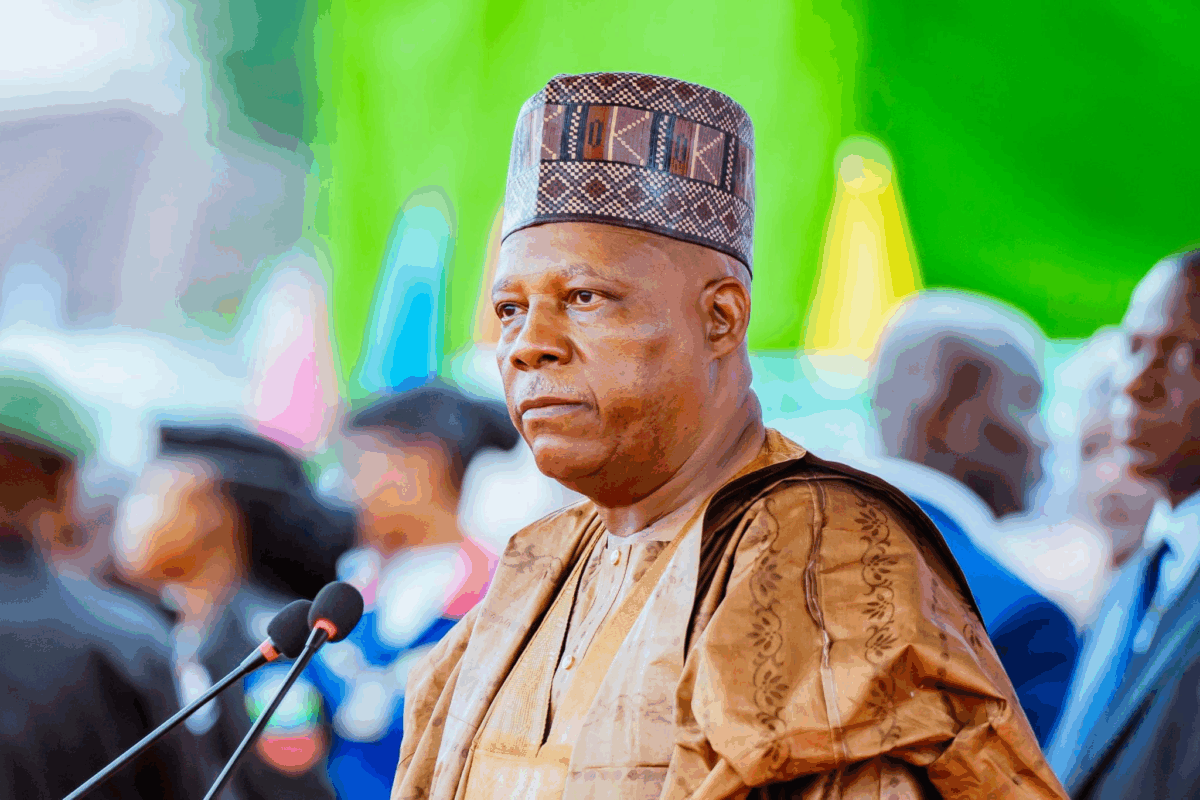
Under Buhari Nigeria was collapsing before Tinubu came as saviour: Shettima
Mr Shettima stated Nigerians should be kind towards Mr Tinubu.

States
Kano governor condoles NIPR chairman over father’s death
The governor urged the bereaved family to take solace in the good virtues and legacies left behind by the deceased.
![Vessels along Strait of Hormuz (Photo credit: Benoit Tessier/File Photo/Reuters]](https://gazettengr.com/wp-content/uploads/cxk79fQB.jpg)
World
Iran lists seven conditions to reopen Strait of Hormuz
Mr Ghalibaf said accepting the seven demands was the only way to reopen the oil passageway.
States
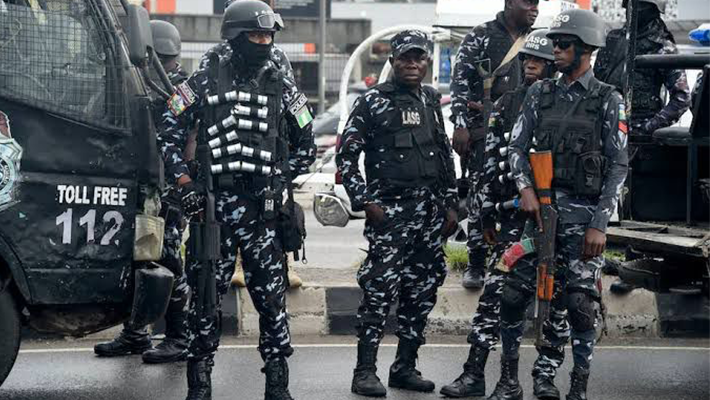
Two suspected cultists nabbed in Delta for alleged murder
Mr Edafe said the suspects were apprehended on Thursday by the command’s operatives of the Violent Crime Response Unit.

Lagos
Tinubu visits Oba of Lagos, receives monarch’s counsel, prayers
Some APC stalwarts, political associates and other dignitaries were part of the visit.


