

Court resolves dispute in suit seeking to stop Oloibiri Museum project

On Thursday, the Yenagoa Division of the Bayelsa High Court resolved a legal dispute that threatened to stop the Oloibiri Museum and Research Centre at Otuabagi, Ogbia LGA.
The Otuabagi and Otuogidi communities, where the first oil well in Nigeria and subsequent oil fields were located, had demanded a change of name to reflect their status and correct the ‘historical error’ and injustice to them.
The high court presided over by Justice Simon Amaduobogha, held that the Otuabagi Community was the host of the first oil well in West Africa, where crude was struck in commercial quantity in 1956.
The court adopted the terms of a settlement reached by the parties, following mediation by the Ijaw National Congress as a consent judgment.
The pan Ijaw socio-cultural group had waded into the crisis and approached the court for an amicable out-of-court settlement, which was granted.
The court also ruled that the Oloibiri Museum and Research Centre, Otuabagi, should remain the name of the earmarked project proposed by the federal government.
In suit number OHC/10/2021, the court ordered the Oloibiri community to cease demanding relocation of the project or any part thereof since the earmarked project can only be cited where artefacts such as the first oil well are located.
According to the 2021 contract details, the Olobiri project, located in the Otuabagi, Otuogidi, and Opume host communities of the Oloibiri field, is expected to cost N117 billion.
The court records showed that the Oloibiri Oil field within the Oil Mining Lease (OML), hitherto operated by Shell, comprised 21 oil wells.
The wells were discovered and named sequentially, starting with the first discovery on January 15, 1956, in Otuabagi, in the then Oloibiri District, Brass Division, in pre-independence Nigeria.
Otuabagi hosted wells 1, 2, 3, 5, 7, 8, 9, 10, 11,13, 14, 15, 16, 17, 18, 19, 20 and 21. Otuogidi hosted wells 6 and 12, and Opume hosted wells 4, while, Oloibiri community had none.
The Petroleum Technology Development Fund and the Nigerian Content Development and Monitoring Board are developing the project.
Other partners are Shell Petroleum Development Company of Nigeria and the Bayelsa government.
(NAN)

We have recently deactivated our website's comment provider in favour of other channels of distribution and commentary. We encourage you to join the conversation on our stories via our Facebook, Twitter and other social media pages.

More from Peoples Gazette

States
Independence: NBA urges Nigerians to expect better future
The NBA said that ordinary Nigerians should be deriving benefit from the subsidy removal rather than hardship.

Agriculture
FG tasks ECOWAS on leveraging financing strategies for agroecology
The federal government has urged stakeholders in the agriculture and finance sectors in the West Africa region to leverage financing strategies to enhance agroecology practices

Politics
Katsina youths pledge to deliver over 2 million votes to Atiku
“Katsina State is Atiku’s political base because it is his second home.”
States
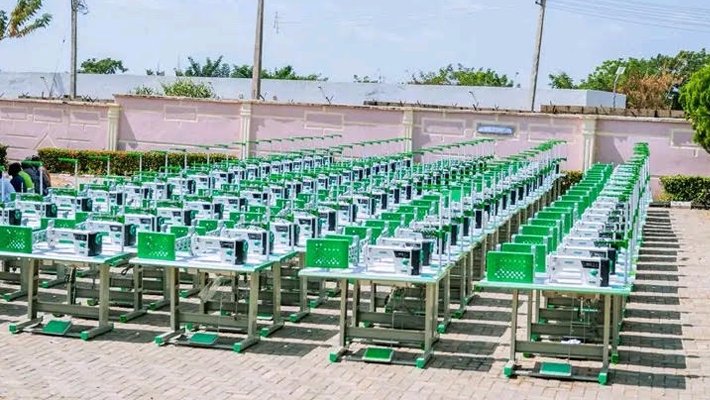
Foundation empowers Kwara residents with cars, sewing machines, solar systems
The foundation said the initiative was aimed at moving beyond handouts to creating sustainable enterprises for Kwarans.

Lagos
Lagos steps up enforcement of commercial vehicle, driver identification rules
Mr Edu said the collaboration would strengthen document verification during enforcement operations.

Economy
Kano tricycle operators decry rising cost of engine oil, spare parts
One of the operators explained that a journey that previously cost ₦300 could now cost at least ₦500.

States
Aduma-Mkpani-Ugep road will boost agricultural activities in Cross River: Senator
Some residents of the area commended the senator for facilitating the road project.

Lagos
Sanwo-Olu walks runway at Lagos Fashion Week
The governor described Lagos as a growing hub for fashion, creativity and culture.

States
Customs urge inter-agency synergy to tackle border crimes
Ms Nwala said that the complexities of contemporary border security required sustained collaboration.


