

COVID-19: WHO backs mask-wearing on long flights amid U.S. spread of Omicron variant

The World Health Organisation (WHO) on Tuesday advised that countries should consider recommending passengers wear masks on long-haul flights.
WHO said this was to counter the latest Omicron sub variant of COVID-19 given its rapid spread in the U.S.
In a news conference in Europe, WHO officials said the XBB.1.5 sub variant is being detected in small but growing numbers.
WHO’s senior emergency officer for Europe, Catherine Smallwood, said passengers should be recommended to wear masks in high-risk settings such as long-haul flights.
“This should be a recommendation issued to passengers arriving from anywhere where there is widespread COVID-19 transmission.”
U.S. health officials however said that the XBB.1.5 sub-variant, the most transmissible Omicron sub-variant that has been detected so far accounted for 27.6 per cent of COVID-19 cases in the U.S. for the week ending January 7.
However, experts said it remains unclear if XBB.1.5 will cause its own wave of infections around the world.
She said the current vaccines continue to protect against severe symptoms, hospitalisation and death.
Ms Smallwoood noted that “countries need to look at the evidence base for pre-departure testing” saying it was crucial to not be “blindsided” by an exclusive focus on one particular geographic area.
She said if travel measures are considered “our opinion is that travel measures should be implemented in a non-discriminatory manner.”
She added that it did not mean the agency recommends the testing of passengers coming from the United States at this stage.
Measures that can be taken include genomic surveillance, and targeting passengers arriving from other countries as long as it not diverts resources away from the domestic surveillance systems.
Other examples include wastewater monitoring systems that can look at wastewater around points of entry such as airports.
XBB.1.5 is yet another descendant of Omicron, the most contagious variant of the virus causing COVID-19 that is now globally dominant.
It is an offshoot of XBB, first detected in October, which is itself a recombinant of two other Omicron sub-variants.
(Reuters/NAN)

We have recently deactivated our website's comment provider in favour of other channels of distribution and commentary. We encourage you to join the conversation on our stories via our Facebook, Twitter and other social media pages.

More from Peoples Gazette

States
Independence: NBA urges Nigerians to expect better future
The NBA said that ordinary Nigerians should be deriving benefit from the subsidy removal rather than hardship.

Agriculture
FG tasks ECOWAS on leveraging financing strategies for agroecology
The federal government has urged stakeholders in the agriculture and finance sectors in the West Africa region to leverage financing strategies to enhance agroecology practices

Politics
Katsina youths pledge to deliver over 2 million votes to Atiku
“Katsina State is Atiku’s political base because it is his second home.”
States
Kebbi: Hassan-Augie wins fresh APC primary for Argungu/Augie constituency
The party said the constituency had 44,784 registered delegates, while 34,332 votes were cast in the election.

Heading 2
Catholic Church inaugurates community care, good governance initiative in Enugu
The clergyman said that religious faith should go beyond worship to positively influence people’s lives.
Heading 5
Group seeks curriculum review to tackle unemployment in Nigeria
Ms Mshelia urged parents to encourage their wards to acquire other skills in addition to Western education.
Heading 3
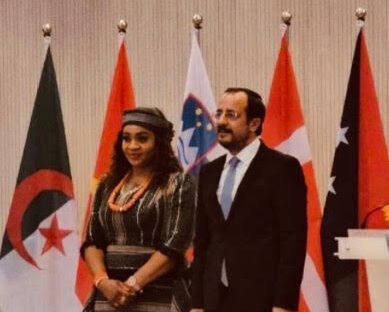
Nigeria’s envoy to Israel presents credentials to Cyprus president
The president reaffirmed the deep and enduring friendship between Cyprus and Nigeria.

States
NDPHC begins project to end 15-year blackout in Kaduna community
Mr Agim said the Rigasa project underscored NDPHC’s commitment to extending critical electricity infrastructure beyond generation.

Politics
Nigerians are happy with Tinubu’s leadership; he has earned their support: APC Chairman
Mr Yilwatda said the APC was proud to present what he described as the most competent and credible presidential candidate.


