

Creation of state police to gulp about N1 trillion; first recruits scheduled for 2027-2028: Report

The Steering Committee on the Establishment of State Police, set up by the inspector general of police, Olatunji Disu, has recommended a four-phase architecture transition.
The recommendation, among others, is contained in the steering committee’s report seen on Friday.
The committee, led by Olu Ogunsakin, the director-general of the National Institute of Police Studies, was inaugurated by Mr Disu on March 4.
The eight-man team was tasked with creating an operational framework for state police within one month.
The committee is also to oversee the implementation of state-level policing to complement the federal force to address rising national security concerns.
It is also expected to propose frameworks for recruitment, training, and resource generation to strengthen internal security.
Outlining the four-phase architecture implementation roadmap, the committee explained that phase one (months 1-12) was for legal procedures, including constitution amendment and the enactment of the State Police Act.
The second phase (months 13-24) will be for transfer. In phase three (months 25 to 42), operations commence as state police take over local policing, and the federal police service pulls back to a national mandate. Phase four (months 43-60) is for consolidation as FPS is fully reorganised.
The committee also noted that constitutional and legal architecture must precede everything.
According to the report, phase one requires constitutional amendments to sections 213 and 215 of the 1999 constitution, the enactment of a State Police Act by the National Assembly, and the passage of the State Police Laws in all 36 states and the FCT.
“It also requires the establishment of State Police Service Commissions and Ombudsman offices in every state,” the committee explained.
The committee also recommended building institutions from scratch in all 36 states and recruiting and training new state police officers.
“Each state will be required to establish, from the ground up, a fully functional State Police service, including a service commission, an ombudsman office, community policing forums at the local government level, ICT infrastructure, custody suites and forensic linkages.
“The National Police Standard Board (NPSB) must also be constituted, staffed, and made operational with inspection capacity across six zonal offices,” said the report.
The committee recommended an establishment cost of N589 billion to N813 billion, phased over five years, “precisely because it cannot be absorbed in a shorter period”.
The committee further said that each state police service must recruit and train an entirely new cadre of officers in parallel with receiving FPS transfers. It, however, explained that the first cohort of state police recruits would only be enrolled in phase two (months 13 to 24), and their deployment would not begin until phase three (months 25 to 42).
“A mandatory 40-hour CPD programme for all officers must be embedded. This training pipeline alone spans over three years,” the report said.
The report also stressed the importance of a National Police Intelligence Portal, a national criminal records system, an upgrade to the Automated Fingerprint Identification System, and full ICT integration across all 36 state police services and the FPS.
It is estimated that the cost for national ICT systems alone was N65 billion to N95 billion, adding that full integration across all services would only be completed in phase four (months 43 to 60).
The committee further said that protection of officer rights must be guaranteed, as no officer must be involuntarily dismissed, and that accrued pension and welfare rights must be fully protected.
The report added that the 60-month (four-phase) transition was the minimum operationally credible timeframe for restructuring the country’s policing architecture.
It said it would give enough time to move 273,648 officers, build 37 new police services, amend the constitution, and pass legislation at the federal and state levels.
It will also create time for the construction of ICT and physical infrastructure, embed an oversight architecture, and protect officers’ welfare while maintaining uninterrupted public security.
(NAN)

We have recently deactivated our website's comment provider in favour of other channels of distribution and commentary. We encourage you to join the conversation on our stories via our Facebook, Twitter and other social media pages.

More from Peoples Gazette

States
Independence: NBA urges Nigerians to expect better future
The NBA said that ordinary Nigerians should be deriving benefit from the subsidy removal rather than hardship.

Agriculture
FG tasks ECOWAS on leveraging financing strategies for agroecology
The federal government has urged stakeholders in the agriculture and finance sectors in the West Africa region to leverage financing strategies to enhance agroecology practices

Politics
Katsina youths pledge to deliver over 2 million votes to Atiku
“Katsina State is Atiku’s political base because it is his second home.”

NationWide
FG begins free 100MB daily data rollout for Nigerian students
The ALTON chairman said the telecommunications and wider technology industry had shown significant commitment to the initiative.
States
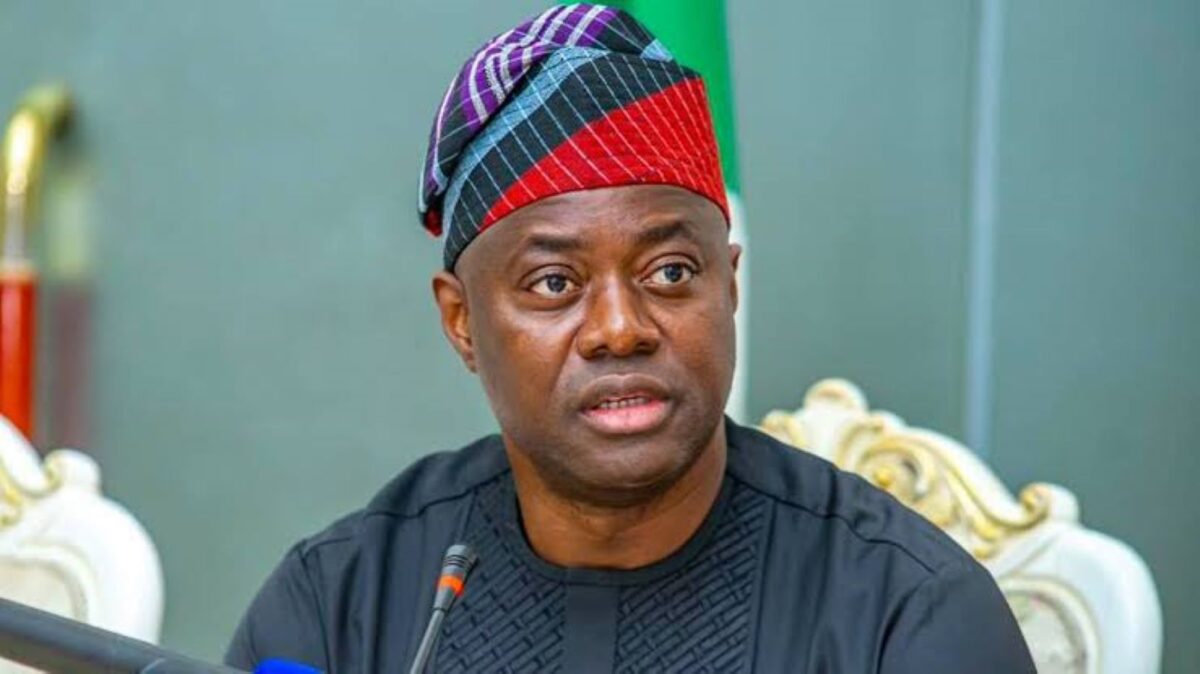
Makinde urges Nigerians to remain united, honour founding heroes
Mr Makinde urged the citizens to appreciate the sacrifices of Nigeria’s founding heroes.
States
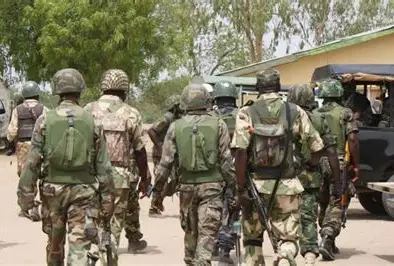
Troops eliminated 16 terrorists, rescued 10 prospective NYSC members: Nigerian Army
The report said the troops repelled the attacks, forcing the terrorists to flee towards Garkida on motorcycles.

Anti-Corruption
U.S. immigration officer jailed for accepting $6,000 bribe
Mr Dukuly pleaded guilty to “aiding and abetting the bribery of a public official in exchange for an official act.”

Uncategorized
TCN restores Kainji-Birnin Kebbi 330kV transmission line
The company said power went off in the affected areas on September 7.
States
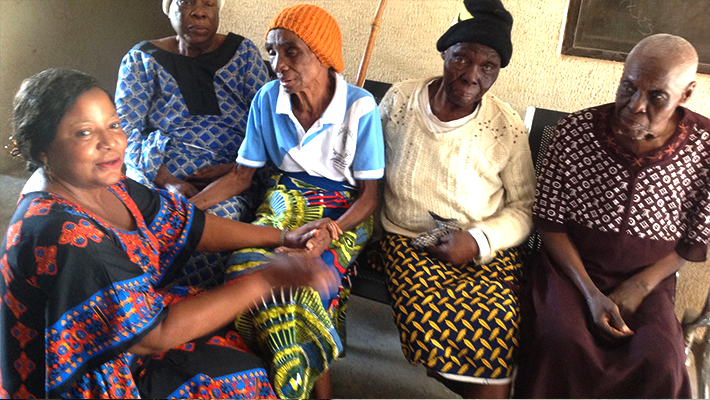
Group seeks better healthcare, social support for elderly Nigerians
Mr Oluwadamilare said growing old in Nigeria was becoming increasingly difficult due to economic hardship.


