

Dangerous nighttime heat rising globally: New Study

Nighttime Temperatures Are Increasing in 13 African Cities During Moist Tropical Weather, and in 10 During Dry Tropical Weather
From the COP30 Local Leaders Forum – a critical gathering of global mayors focused on climate action – a sweeping new scientific analysis was released of the most dangerous summer weather conditions across 100 major global cities. It revealed that while leaders have been focusing on avoiding breaching the +1.5°C threshold of the Paris Agreement, in many global cities minimum nighttime temperatures have been rising much more rapidly during oppressively hot weather situations than daytime average highs, up to 12 times faster in some cities.
The study by Climate Resilience for All, Extreme Heat and the Shrinking Diurnal Range: A Global Evaluation of Oppressive Air Mass Character and Frequency, analyzed weather data over a 30-year period from 1994 to 2024, isolating the two types of weather conditions “air masses” considered most dangerous for human health: “dry tropical” (DT) weather, which is hot and dry, and “moist tropical” (MT) weather which is hot and humid.
Heat exposure has traditionally been measured by exposure to daytime high temperatures and increasing “average” temperatures. This study points clearly to the urgent need for preventative and responsive actions on extreme heat—including early warnings, public health measures, and adaptation planning—to explicitly account for and address the rapidly rising threat of hotter nights.
This analysis is the first to examine how humidity, daytime, and nighttime temperatures are changing within dangerous summer air masses; how their frequency is shifting; and how these trends vary across climate regions, making a significant contribution to the science and helping inform urban heat and health interventions for practitioners everywhere.
The analysis found:
Increases in nighttime temperatures, and decreases in the gap between daytime highs and nighttime lows across much of the globe
- 83% of cities in the study are experiencing sustained, higher nighttime temperatures.
- In Africa, 13 out of 15 cities studied are experiencing higher nighttime temperatures in moist tropical weather, and 10 out of 14 cities are experiencing higher nighttime temperatures in dry tropical weather.
- Nighttime temperatures in African cities are rising fastest in Agadir, Morocco (dry tropical), where they are rising at a rate of 1°C every 5.6 years, and in Cairo, Egypt (moist tropical), where they are rising 1°C every 16.8 years.
- During moist tropical weather, the cities seeing decreases between daytime and nighttime temperatures are Upington, South Africa; Bamako, Mali; Abidjan, Cote d’Ivoire; Cairo, Egypt; Agadir, Morocco; Mombasa, Kenya; Espargos, Cape Verde; Brazzaville, Congo; Dakar, Senegal; Algiers, Algeria; Cotonou, Benin; Luxor, Egypt; and Reunion, Reunion Island.
- During dry tropical weather, the cities seeing decreases between daytime and nighttime temperatures are Agadir, Morocco; Cairo, Egypt; Luxor, Egypt; Espargos, Cape Verde; Cape Town, South Africa; Niamey, Chad; Dakar, Senegal; Mombasa, Kenya and Brazzaville, Congo; and Reunion, Reunion Island.
Increases in the frequency of extreme heat days
- Over the 30-year study period, summertime moist tropical weather patterns have increased close to or over 49 percent in Africa – and have grown by 37 percent globally. Cities in Africa average an increase of 1 moist tropicalday every 2.5 years.
- Dry tropical weather patterns have grown by 14 percent over the same period, with cities averaging an increase of 1 dry tropical day every 3.4 years.
- Every day’s increase in DT and MT frequency leads to a day’s decrease in the cooler, more pleasant air masses.
Global, regional, and city level data visualizations for the cities in the study can be accessed via this link.
“Before this analysis, we did not know how rapidly nighttime heat has been rising within the most dangerous air masses,” said Larry Kalkstein, climatologist, Chief Heat Science Advisor at Climate Resilience for All, and the study’s lead author. “It is critical for us to understand how the heat of summer—that sends people to the emergency room—is shifting, and what we are overlooking when we talk about it.”
Mayor Yvonne Aki-Sawyerr of Freetown, Sierra Leone, leading a city on the frontlines of extreme heat, said, “This study reflects the lived reality of so many cities in the global south. Most of our residents lack access to cooling, and women market traders facing extreme heat all day return to homes that are dangerously hot at night. As we implement our heat action plan, this study sounds the alarm on the hidden threat of nighttime temperatures and pushes us toward solutions that drive awareness and protect people.”
“We want this analysis to mobilize city and health leaders to urgently broaden their view of what is a 24-hour heat crisis. This research uncovers a critical blind spot in our understanding of extreme heat,” said Kathy Baughman McLeod, CEO of Climate Resilience for All.
High nighttime temperatures prevent the human body from cooling down, increasing risks of heat exhaustion, dehydration, and cardiovascular stress. When sleep is disrupted by heat, the body loses its ability to recover from daytime exposure, heightening the danger of illness and death—especially for older adults, women, and those living in poorly ventilated housing.
Heat warning systems are focused on high daytime temperatures and currently minimize the impact of overnight temperatures. The study offers guidance and urges health officials and policymakers to integrate these changing patterns into their work and to ramp up regionally targeted heat warning systems that account for the growing probability of multi-day, high-intensity events that offer little nocturnal relief.

We have recently deactivated our website's comment provider in favour of other channels of distribution and commentary. We encourage you to join the conversation on our stories via our Facebook, Twitter and other social media pages.

More from Peoples Gazette

States
Independence: NBA urges Nigerians to expect better future
The NBA said that ordinary Nigerians should be deriving benefit from the subsidy removal rather than hardship.

Agriculture
FG tasks ECOWAS on leveraging financing strategies for agroecology
The federal government has urged stakeholders in the agriculture and finance sectors in the West Africa region to leverage financing strategies to enhance agroecology practices

Politics
Katsina youths pledge to deliver over 2 million votes to Atiku
“Katsina State is Atiku’s political base because it is his second home.”

States
Delta declares three-day mourning period for Uduaghan
Mr Uduaghan died in the early hours of Monday, October 19, at the age of 71.
Lagos
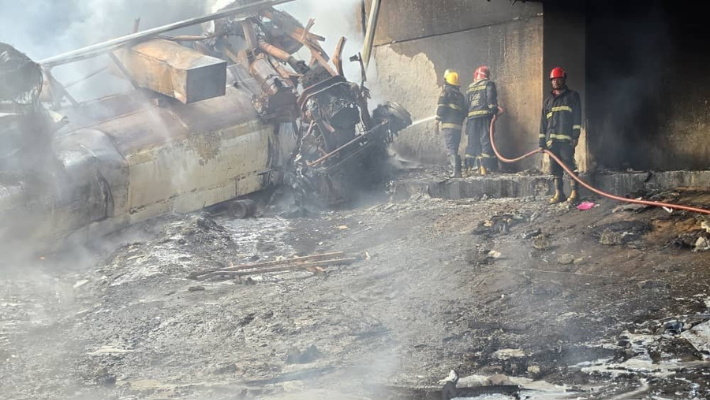
Firefighters extinguish fire from diesel-laden tanker at Otedola Bridge
Earlier in the day, a viral video showed firefighters under the bridge, trying to put out the blaze.

Heading 2
Tinubu describes Uduaghan’s death as loss to Delta, Nigeria
Mr Tinubu urged the people of Delta to draw strength from Mr Uduaghan’s years of service.

Diaspora
U.S. court sentences Chukwuemeka Amachukwu to eight years in prison over $15 million fraud
Mr Amachukwu was sentenced after pleading guilty.

States
Gov. Oyebanji inaugurates aviation fuel depot in Ado-Ekiti
The governor said the ground lighting project would cost more than N10 billion.

Anti-Corruption
FEC did not approve $6 billion Mambilla contract, former governor Imoke tells court
The former governor said he served as minister between August 2003 and November 2006.


