

Debt, supply gaps limit benefits of energy reforms: Experts
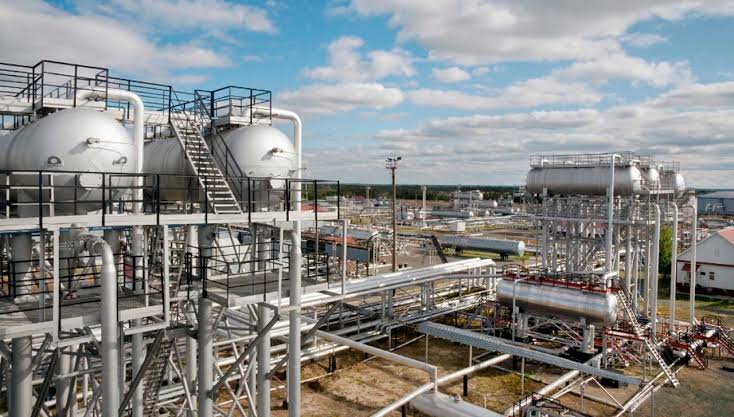
Some oil and gas experts say reforms introduced since May 2023 have reshaped Nigeria’s energy sector, but debt, infrastructure gaps and supply constraints have limited their benefits to consumers.
The experts spoke separately in Lagos on Thursday, as Nigeria marks its 66th Independence Anniversary.
President Bola Tinubu, in his third-anniversary address in May, said his administration had not solved every problem but was working to ensure that the benefits of its reforms were felt more directly in the daily lives of Nigerians.
Ayodele Oni, an energy lawyer and chairman of the Energy and Natural Resources Practice Group, Bloomfield Law Practice, said the removal of the petrol subsidy and the unification of the foreign exchange market ended an unsustainable fiscal burden and fully deregulated the downstream petroleum market.
He said the Dangote Refinery had also strengthened domestic refining capacity and reduced dependence on fuel imports.
Mr Oni said the Electricity Act 2023 changed the power sector’s structure by allowing states to regulate their electricity markets.
“The Electricity Act has succeeded as architecture but has yet to succeed as experience,” he said.
He said available electricity generation stood at 5,403.3 megawatts on September 22, compared with a peak of 5,801.84MW recorded in March 2025.
He said the figure remained far below the country’s installed generation capacity of 13,014.40MW.
Mr Oni said the generation fell below 3,000MW earlier in 2026 due to gas shortages.
He said the Nigerian Upstream Petroleum Regulatory Commission had approved more than $57 billion in Field Development Plans since 2024, while crude and condensate production reached 1.735 million barrels per day in June, the highest level since April 2020.
He, however, identified sectoral debt as a major obstacle to investment.
“The sector’s unpaid debts are what keep serious capital from walking through the door,” Mr Oni said.
He said electricity-generating companies had reported more than N7 trillion in outstanding debts, while payment constraints affecting gas suppliers were also limiting power generation.
Kenneth Ife, a development economist and president of the Institute of Professional Economists and Policy Management, said subsidy removal initially placed significant pressure on households and businesses as higher energy prices and naira devaluation increased operating costs.
Mr Ife said the Dangote Refinery had reduced reliance on imported petroleum products and introduced competition into the domestic market. He said compressed natural gas offered a cheaper alternative to petrol, with some users reporting spending about N20,000 for mileage that previously cost about N70,000 with petrol.
Mr Ife said wider adoption of CNG would require more filling stations and greater private-sector participation.
He said the key test of the energy reforms was whether they could reduce energy, transport and production costs for households and businesses.
“Higher energy, transport and input costs translate to higher food inflation, general cost escalation, lower competitiveness and deeper multidimensional poverty,” he said.
Olukayode Akinrolabu, a member of the Science and Technology Education Research Group, Lagos State University, said the results of the electricity reforms had been mixed.
Mr Akinrolabu, who is also chairman of the Eko Electricity Distribution Company Customer Consultative Forum, Festac/Satellite Town, said power generation reached a record 6,003MW in March 2025, but the national grid recorded about 22 system collapses since May 2023.
He said electricity supply averaged between 4,000MW and 5,000MW, against an estimated national demand of about 30,000MW, forcing many consumers to rely on generators.
Mr Akinrolabu said tariff reforms had improved revenue for distribution companies but had not resolved challenges across generation, transmission and distribution.
“Tariffs fixed the cash flow without fixing generation, transmission and distribution, so consumers now pay more for largely the same unstable four-to-eight hours of supply,” he said.
He said gas constraints had left about 4,000MW of generation capacity stranded.
Mr Akinrolabu called for transmission expansion, a reliable domestic gas supply, settlement of power sector debts, mass metering and stronger performance standards for DisCos. He also called for measures to reduce electricity theft and revenue leakages.
“Without these, all reforms remain on paper while households still buy diesel and PMS,” he said.
Mr Akinrolabu said the reforms must ultimately deliver reliable electricity and reduce households’ dependence on costly alternative energy sources to benefit Nigerians.
The federal government approved a N3.3 trillion plan in April to settle verified legacy debts in the power sector, aiming to restore liquidity and improve electricity reliability.
(NAN)

We have recently deactivated our website's comment provider in favour of other channels of distribution and commentary. We encourage you to join the conversation on our stories via our Facebook, Twitter and other social media pages.

More from Peoples Gazette

Agriculture
FG tasks ECOWAS on leveraging financing strategies for agroecology
The federal government has urged stakeholders in the agriculture and finance sectors in the West Africa region to leverage financing strategies to enhance agroecology practices

Politics
Katsina youths pledge to deliver over 2 million votes to Atiku
“Katsina State is Atiku’s political base because it is his second home.”

Opinion
An open letter to a distressed priest
Mr Soyinka said, “Public lies, like flies, beget maggots.”
Rights
NHRC urges FG to strengthen social protection mechanism
The National Human Rights Commission has called on the federal government to strengthen social protection mechanisms and expand universal access to basic essential services.

NationWide
NTAC boss congratulates Nigerians, preaches peace ahead of 2027
NTAC has congratulated Nigerians on the country’s 66th independence anniversary.
Abuja
FCTA takes over AYP Tech Incubation Hub to boost youth welfare
FCTA has reaffirmed its commitment to the welfare and empowerment of young people after formally taking over the FCT Adolescents and Young People Technology Incubation Hub.

Economy
Customs seizes N15 billion in smuggled goods in Ogun
The Nigeria Customs Service says it seized 327 consignments of smuggled goods with a duty paid value of N14.7 billion between December 4, 2025, and September 29, 2026.
Rights
Students demand end to victimisation of activists, journalists
The Concerned Students Movement has called on the federal government to end the continued victimisation of student activists, journalists, and civil society actors.


