

Distrust, exclusion hindering political participation: FCT Youths

Some youths in the Federal Capital Territory (FCT) have attributed their low level of political participation to exclusion, distrust of political institutions, and doubt about their impact.
In separate interviews on Monday, the youths said the government often ignored their views on policies and political decisions that directly affect them.
One of them, Foluke Adelaja, said many young people felt disconnected from the political system because politicians failed to represent their interests and values.
Ms Adelaja added that the lack of information about political processes also fuelled reluctance and nonchalant attitudes toward participation among young Nigerians.
“Many believe their participation will not make a significant difference, which leads to apathy.
“There is also a lack of trust in the electoral process, governance and leadership style. This discourages our engagement.
“However, some of us prioritise immediate concerns such as education and employment over broader political issues,” she said.
Adewale Ojo, a graphic designer, said social media’s growing influence had changed how some youths engage with political issues.
According to him, while social media provides platforms for expression and activism, it also pushes some young people to limit participation to online spaces.
“Social media creates echo chambers that lead some youths to choose digital activism over traditional political participation.
“There is a saying that youths are the leaders of tomorrow, but present leaders do not prioritise our right to full political participation,” he added.
Another youth, Paul Ogunbunmi, said repeated disappointments had eroded the confidence of many youths in the electoral process.
“My vote does not change anything. Politicians make promises before elections and forget them afterwards.
“After seeing the same cycle repeatedly, many youths feel that whether they vote or not, their lives remain the same. So they detach themselves to avoid disappointment,” he said.
Mr Ogunbunmi added that many young people viewed politics as hostile, violent and intimidating.
“Lots of young people associate politics with insults, fights and thuggery. They would rather focus on their businesses, studies or content creation.
“Political discussions and manifestos often seem too complicated, while party structures are hard to understand. It feels like a club many youths were never invited to join,” he said.
Chinesom Andrew, a student, said she felt excluded from decision-making processes.
“There is little or no youth representation or consultation on issues affecting us, such as continued strikes in tertiary institutions, youth employment and the rising cost of living.
“It is almost as if we do not matter; yet we are used a lot during political campaigns by the same leaders. This is not fair,” she lamented.
Ms Andrew added that some youths preferred online advocacy because they believed social media campaigns could produce quicker results than formal political engagement.
She also cited challenges during voter registration and elections as reasons some young people had become discouraged.
“Some youths registered to vote but never received their cards, while others found their names missing on election day. After such experiences, many lose the motivation to participate again,” she said.
Similarly, Daniel Danjuma, a commercial driver, said many youths believed that politicians only reached out to them during election periods.
“The same faces come with campaign materials, gifts and promises every four years, but after elections, many communities see little improvement.
“Roads remain bad while youth-focused programmes are often neglected. So many young people conclude that if politicians only need them for votes, there is no reason to remain engaged,” he said.
Mr Danjuma also expressed concern about intimidation and fear of victimisation.
“Some youths worry about being attacked, threatened or labelled because of their political views.
“This creates fear and discourages open participation in political discussions and activities,” he said.
He called on political leaders, institutions, and stakeholders to create more inclusive platforms to encourage youth participation and restore confidence in the democratic process.
The youth also urged government agencies and electoral bodies to strengthen voter education, improve electoral transparency and provide greater opportunities for young people to contribute to governance.
(NAN)

We have recently deactivated our website's comment provider in favour of other channels of distribution and commentary. We encourage you to join the conversation on our stories via our Facebook, Twitter and other social media pages.

More from Peoples Gazette

Agriculture
FG tasks ECOWAS on leveraging financing strategies for agroecology
The federal government has urged stakeholders in the agriculture and finance sectors in the West Africa region to leverage financing strategies to enhance agroecology practices

Politics
Katsina youths pledge to deliver over 2 million votes to Atiku
“Katsina State is Atiku’s political base because it is his second home.”
Politics
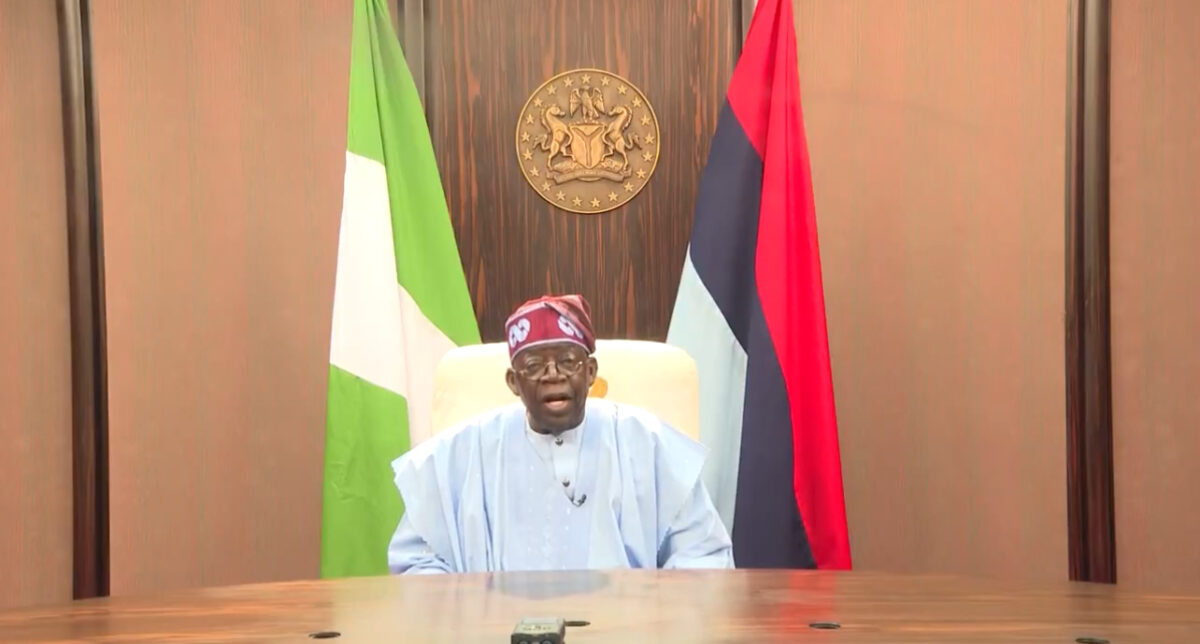
FULL TEXT: Tinubu’s October 1 Independence Day speech
Our journey has not always been easy. In truth, it has generally been too hard for too many. We have known moments of great hope and periods of profound disappointment.
Economy
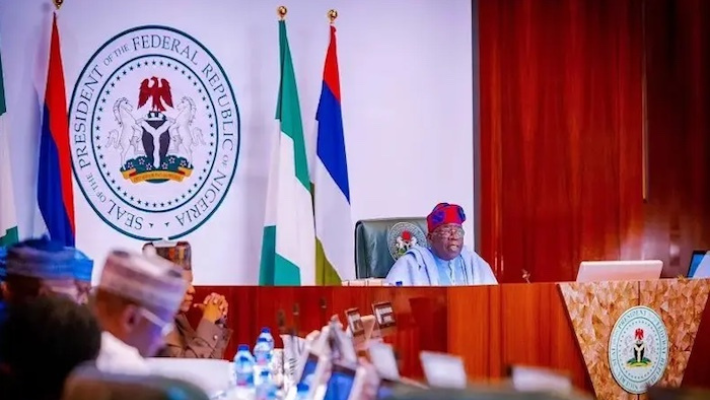
It’s time to share prosperity with Nigerians; my reforms have worked, Tinubu declares
“The emergency treatment is over,” the president declared. “The foundation has been repaired. The central economic task before us has changed.”

Economy
Tinubu shuts down ‘siren song’ of restoring fuel subsidy, says Atiku, others ‘regressive’
“Influential but regressive voices would have us abandon the treatment and return ourselves to the abuse of addictive subsidies, we must resist their siren song,” said Mr Tinubu.

World
Guterres condemns Flydubai mid-air attack, says tragedy averted
The UN chief condemned actions that could endanger passengers and compromise the safety of international civil aviation.

Economy
Obasanjo, Jonathan, Buhari bungled Nigeria’s economy; I’m doing things differently: Tinubu
“For too long, Nigeria’s leaders chose morphine while praying for a miracle that never came. They focused on symptoms while allowing the disease to take hold,” said Mr Tinubu.

Economy
Tinubu doubles down in national broadcast, says harsh reforms necessary to rescue Nigeria’s floundering economy
“The reforms that followed were difficult,” Mr Tinubu said. “The side effects were real. Yet, we must never confuse the medicine with the disease.”


