

Doubting patient free to seek second medical opinion, says expert

A medical expert, Uchechukwu Nwokwu, says seeking a second medical opinion is not an offence, emphasising that it is an integral part of medical practice that can resolve doubts.
Mr Nwokwu, National Coordinator, National Cancer Control Programme (NCCP), Federal Ministry of Health and Social Welfare, said this during an interview in Abuja on Thursday.
According to him, second opinions are routinely sought within the health system, particularly in teaching hospitals where patients’ diagnoses and investigations are reviewed by different levels of professionals.
He explained that diagnoses in teaching hospitals were rarely made by only one doctor, noting that house officers, resident doctors, senior registrars and consultants could all participate in assessment.
He added that laboratory investigations and radiological examinations could also be used to confirm or alter an initial diagnosis, depending on findings from the various assessments conducted.
Mr Nwokwu said seeking a second opinion was appropriate, particularly when there was uncertainty about a diagnosis or when a patient remained unsatisfied with the initial assessment.
“For someone to seek a second opinion is totally in order. It’s not an offence. Seeking a second opinion is not against medical practice. It’s actually an integral part of medical practice,” Mr Nwokwu said.
He, however, cautioned patients who had undergone comprehensive history-taking, clinical examination and laboratory investigations to understand that their diagnosis had likely passed through several levels of professional review.
He said patients could seek another opinion if they had consulted only one doctor, but there was less reason to repeatedly change hospitals simply because they distrusted an appropriately assessed diagnosis.
The coordinator said that healthcare professionals themselves routinely sought additional opinions because human errors could occur, while diagnostic machines could also sometimes produce inaccurate or misleading results.
Mr Nwokwu said X-rays, computed tomography (CT) scans and magnetic resonance imaging (MRI) scans could be reviewed by another radiologist, while laboratory samples could also be sent elsewhere to verify findings.
“Even when that diagnosis has been made, they also get some laboratory investigations, radiology or laboratory to confirm or to change that same diagnosis,” he said.
He said second and even third opinions could serve as a “tiebreaker” where two tests produced conflicting results, with additional testing helping specialists to establish the appropriate diagnosis.
Mr Nwokwu explained that the expertise involved, as well as the sophistication and specificity of a test, could influence the reliability of a diagnosis and subsequent treatment decisions.
He cited different levels of human immunodeficiency virus (HIV) testing, explaining that more sophisticated methods could provide greater specificity and help resolve uncertainties arising from simpler testing methods.
The coordinator also highlighted the importance of adequate samples in cancer diagnosis, particularly when tissue was removed from patients for biopsy and subsequent laboratory examination.
He said discrepancies could sometimes arise when different samples from the same patient were examined because one sample could contain cancerous tissue while another might not.
Mr Nwokwu therefore urged clinicians to take as much tissue as possible during biopsy, emphasising that the same sample should be made available when seeking a second professional opinion.
“So what will encourage our clinicians in this is to take as much sample as possible,” he said.
He explained that examining different samples could produce apparently conflicting results because one pathologist might examine tissue containing cancer while another examined tissue without cancer.
“However, if you give a different sample from what the other person saw, the person may have seen what contains cancer and the other person saw what did not contain cancer,” he said.
He said the reviewing specialist should, where possible, examine the same material that informed the initial diagnosis to determine whether the first assessment was accurate.
He emphasised that second opinions should be sought professionally and should not automatically involve condemning the first doctor or health facility involved in the patient’s care.
Mr Nwokwu urged patients with doubts about their diagnosis to seek clarification or an additional professional assessment while recognising that multiple levels of review were already built into modern medical practice.
(NAN)

We have recently deactivated our website's comment provider in favour of other channels of distribution and commentary. We encourage you to join the conversation on our stories via our Facebook, Twitter and other social media pages.

More from Peoples Gazette

States
Independence: NBA urges Nigerians to expect better future
The NBA said that ordinary Nigerians should be deriving benefit from the subsidy removal rather than hardship.

Agriculture
FG tasks ECOWAS on leveraging financing strategies for agroecology
The federal government has urged stakeholders in the agriculture and finance sectors in the West Africa region to leverage financing strategies to enhance agroecology practices

Politics
Katsina youths pledge to deliver over 2 million votes to Atiku
“Katsina State is Atiku’s political base because it is his second home.”

Politics
LG Elections: OYSIEC opens registration portal for ad hoc staff recruitment
Registration for the required positions will run from October 5 to October 20, 2026.

Diaspora
Trump moves to revoke U.S. citizenship of two Nigerians, 38 others
The prosecutors accused the 58-year-old of applying for immigration benefits under two different identities.
Economy
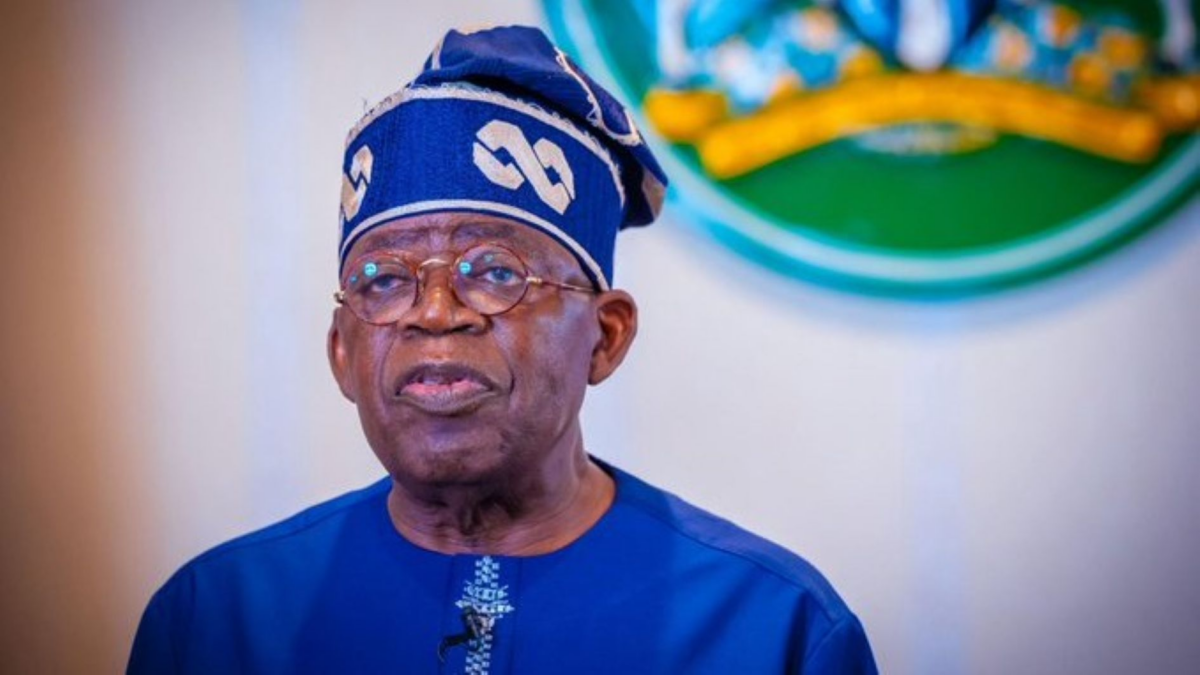
Nigeria rises four places to eighth in 2026 Bloomberg Economics Investment Risk-O-Meter
The growth was attributed to the economic policies of the Tinubu administration.
Heading 4
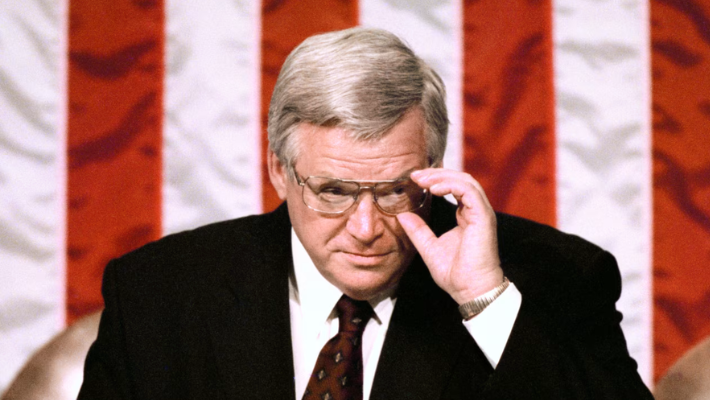
Longest-serving Republican speaker Dennis Hastert, soiled by allegations of molesting high school athletes, dies at 84
The deceased, who was speaker from 1999 until 2007, was sentenced in 2016 to more than a year behind bars.

Anti-Corruption
Witness reveals how funds were moved to private accounts in ex-Taraba governor’s trial
The judge adjourned the matter till October 6, 2026, for continuation of the evidence of PW3.

Education
JAMB moves to adopt UTME centre in Canada for 2027
The board said the centre would enable eligible Nigerians living in Canada to take the UTME without travelling to Nigeria.


