

Edo, Bayelsa, Delta drive power sector reforms, strengthen LG autonomy
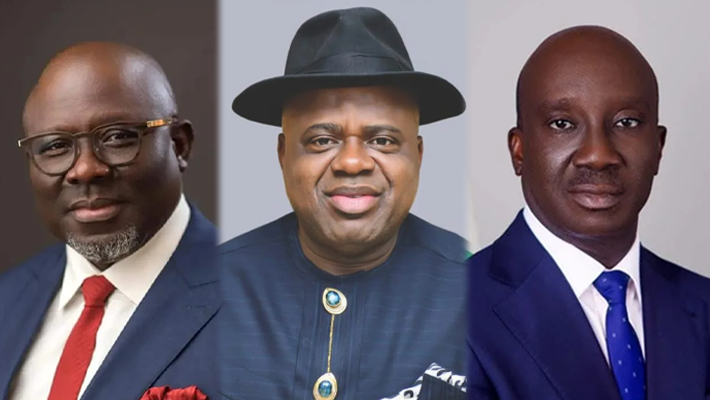
Three South-South states, Edo, Bayelsa, and Delta, are taking bold steps to implement a decentralised electricity policy and entrench local government autonomy, signaling a shift in how subnational governments manage critical infrastructure and grassroots governance.
A survey reveals that the three states have adopted key provisions of the federal government’s unbundling of the power sector. The action moves electricity generation and distribution from the exclusive to the concurrent legislative list.
This change lets states set up their own electricity markets. They can license operators and invest directly in power projects.
The states claimed their local government councils now enjoyed greater financial and administrative independence. However, stakeholders have given mixed assessments on the significance of these reforms.
Bugie Okhuemoi, spokesman for Governor Monday Okpebholo, stated that Edo was leading in implementing the federal government’s decentralisation policy, in line with President Bola Tinubu’s Renewed Hope Agenda.
The governor’s aide stated that this structure would enhance service delivery, reduce outages, improve operational efficiency, and increase internal revenue through licensing fees, tariffs, and public-private energy partnerships.
He said the state plans to invest in independent power projects (IPPs) for residential, commercial, and industrial use. The state aims to attract private sector investment using policy incentives and streamlined regulations.
On local government autonomy, Obosa Ogbeide, the chairman of the Ikpoba Okha LGA, said that the 18 local government councils were enjoying independence.
However, Solomon Idiogbe, a civil society activist, described Nigeria’s policies as one without action, lamenting Nigeria’s failed implementation strategies.
Mr Idiogbe insisted that Nigeria’s major challenge was not policy formulation but the lack of genuine strategies for effective implementation.
He argued the country was building strong individuals but not strong institutions. These institutions are necessary to enforce and sustain existing policies.
Mr Idiogbe stated that Nigeria’s decentralisation of power generation and distribution was not new; yet, meaningful implementation had remained elusive due to entrenched political interests.
According to him, there is no real commitment to reforms. Policies only exist on paper, keeping people in poverty and under political control.
Sharing his views on local government autonomy, Mr Idiogbe noted that state-level political actors still determine who becomes council chairman, thereby limiting the impact of any local government reform.
The civil society activist emphasised that as long as policymakers controlled party delegates and dictated who became chairman, there could be no true autonomy or free and fair elections at any level of governance in Nigeria.
On legislative autonomy, the immediate past deputy speaker of the Edo House of Assembly, Maria Oligbi-Edeko, described the current situation in the Edo assembly as a defining milestone in the state’s democratic evolution.
Mr Oligbi-Edeko stressed the importance of the law. She said autonomy lets the assembly function independently, promoting accountability, transparency, and balanced governance.
In Bayelsa, stakeholders stated that the state government does not interfere with local government funds, although allocations still pass through the state treasury.
A former councillor in Yenagoa LGA, Ezibeya Sinizine, said this arrangement had not hindered council chairmen from executing projects, citing a 30-bed primary health centre built in Yenagoa LGA.
“This autonomy has enabled council chairmen to execute projects like the Biseni health centre, roads in Yenagoa, and works across almost all the LGAs in Bayelsa,” Mr Sinizine said.
He insisted that this state government only supervised the third tier of government, observing, however, that council chairmen were yet to start receiving their allocation directly from the federation account.
On electricity reform, Olice Kemenanabo, managing director of the Bayelsa Electricity Company Ltd, said work was underway on a newly acquired 60MW gas turbine to guarantee steady power.
In Delta, the government announced that it would implement a decentralised mini-grid model to enhance resilience in electricity supply. Sonny Ekedayen, the commissioner for economic planning, said the domestication of the 2023 Electricity Act in the state had provided the legal basis for the initiative.
He added that the model allowed operators to tailor energy solutions to the resources available in their zones — from gas to solar and hydro. The commissioner disclosed that the State Executive Council had approved the creation of the Delta State Electricity Commission as a regulator.
He said this state also established a Rural Electricity Agency to serve underserved communities, as well as technical and market operators, to ensure minimum electricity hours and track supply data.
The approach, he said, differed significantly from the conventional centralised grid, which often left entire regions in darkness when a failure occurred at a single point in the system.
Mr Ekedayen added that the entire electricity reform would be privately funded, with the state government providing only the regulatory framework and the enabling environment.

We have recently deactivated our website's comment provider in favour of other channels of distribution and commentary. We encourage you to join the conversation on our stories via our Facebook, Twitter and other social media pages.

More from Peoples Gazette

States
Independence: NBA urges Nigerians to expect better future
The NBA said that ordinary Nigerians should be deriving benefit from the subsidy removal rather than hardship.

Agriculture
FG tasks ECOWAS on leveraging financing strategies for agroecology
The federal government has urged stakeholders in the agriculture and finance sectors in the West Africa region to leverage financing strategies to enhance agroecology practices

Politics
Katsina youths pledge to deliver over 2 million votes to Atiku
“Katsina State is Atiku’s political base because it is his second home.”
Rights
Kebbi: Gov Idris vows to resettle IDPs uprooted by bandits to their ancestral homes
“We are not here for politics, but we are here to sympathise with you over the recent bandit attacks,” the Kebbi governor said.

Anti-Corruption
Stephen Odiboh sentenced to 33 months for multi-victim wire fraud, romance scams
Stephen Odiboh has been sentenced to 33 months in prison for conspiracy to commit wire fraud. His sentencing was announced on Thursday.

Rights
Nigeria questions UN femicide data, seeks stronger action against women trafficking
Nigeria has raised concerns about the reliability of international statistics on femicide in Africa, citing inadequate data collection and reporting mechanisms.

World
Trump admin to livestream Fort Hood shooter’s public execution, says Pentagon
Mr Hegseth told Real America’s Voice that Mr Hasan would be executed by firing squad to send a message that there are consequences for terrorist acts.

Diaspora
Adetoros, Walters: Three sisters who drowned in sea like their mother died by suicide, coroner rules
Their mother, Ms Janice, drowned at sea at the age of 43.
Economy
Nigeria pushes global tax reforms, cheaper development loans at UN
Nigeria has called for urgent reforms of the international financial architecture to address high borrowing costs and persistent development financing gaps.


