

Eradicating malaria will boost economic growth, says FG

The Federal Government said significantly reducing or completely eradicating malaria in Nigeria can lead to a major boost in economic growth.
The Special Assistant to the National Coordinator of the National Malaria Elimination Programme (NMEP), Dr Aminu Umar, said this during an interview on Sunday in Abuja.
World Malaria Report 2024 noted that Nigeria bears the highest burden of malaria globally, accounting for 27 per cent of global cases and 31 per cent of global deaths.
In addition, the Coordinating Minister of Health and Social Welfare, Prof. Muhammad Pate, disclosed in 2024 that Nigeria’s economy lost over 1.1 billion dollars annually from the effects of malaria.
Mr Umar, however, emphasised that reducing malaria cases could reverse this trend.
He explained that a healthier population would mean more people actively contributing to the workforce, leading to increased productivity and economic growth.
“Additionally, the government would save significantly on healthcare expenditures, allowing funds to be redirected towards other areas of national development,” he said.
According to Mr Umar, malaria places a major strain on Nigeria’s healthcare system, with a substantial portion of the healthcare budget and resources dedicated to its treatment and prevention.
This, he noted, limits the resources available for other critical medical needs, leading to an overstretched healthcare infrastructure.
He stated, “The persistent presence of malaria leads to a high demand for hospital beds and medical personnel, further straining the already limited healthcare resources,” he said.
He added that malaria adversely affected the well-being of Nigerian citizens, reducing school attendance among children and workforce participation among adults.
“The constant burden of malaria has led to decreased productivity and economic stagnation. It has contributed to high mortality rates, particularly among vulnerable populations such as children and pregnant women,” Umar stated.
He further noted that the continuous financial burden of malaria treatment worsened poverty among families and communities.
Despite these challenges, Mr Umar reaffirmed that eliminating malaria remained a top priority for the federal government.
He pointed to the government’s Rethinking Malaria Initiative, under which key recommendations were being implemented to drive more effective malaria elimination efforts.
“Among these actions are the execution of a pragmatic, cost plan tailored at sub-national levels, and the establishment of the Advisory on Malaria Elimination in Nigeria,” Mr Umar explained.
He added that, with support from partners, evidence-based interventions had been introduced to achieve significant progress, including, increased access to and usage of insecticide-treated mosquito nets.
“Initiating a pilot programme for Larval Source Management in six states for the first time, improving the availability of malaria treatment and diagnostic services across all states, including those impacted by the recent pause in U.S. aid.”
He also mentioned ongoing efforts to strengthen health systems and improve malaria surveillance and data collection across the country.
“Nonetheless, despite these efforts, there is still a long way to go before malaria is completely eliminated in Nigeria,” Mr Umar said.
He stressed that continuous government commitment and strong partnerships with international organisations were crucial to achieving this goal.
(NAN)

We have recently deactivated our website's comment provider in favour of other channels of distribution and commentary. We encourage you to join the conversation on our stories via our Facebook, Twitter and other social media pages.

More from Peoples Gazette

States
Independence: NBA urges Nigerians to expect better future
The NBA said that ordinary Nigerians should be deriving benefit from the subsidy removal rather than hardship.

Agriculture
FG tasks ECOWAS on leveraging financing strategies for agroecology
The federal government has urged stakeholders in the agriculture and finance sectors in the West Africa region to leverage financing strategies to enhance agroecology practices

Politics
Katsina youths pledge to deliver over 2 million votes to Atiku
“Katsina State is Atiku’s political base because it is his second home.”
NationWide
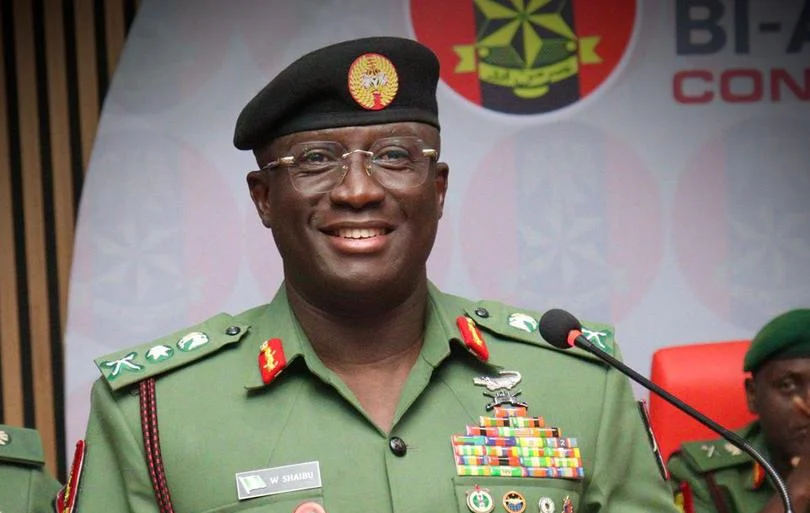
Nigerian Army prioritises personnel training to combat insecurity: Shaibu
The Nigerian Army has restated its commitment to deploying effective military arsenals and training personnel to combat terrorism and emerging security threats in the country.
Abuja
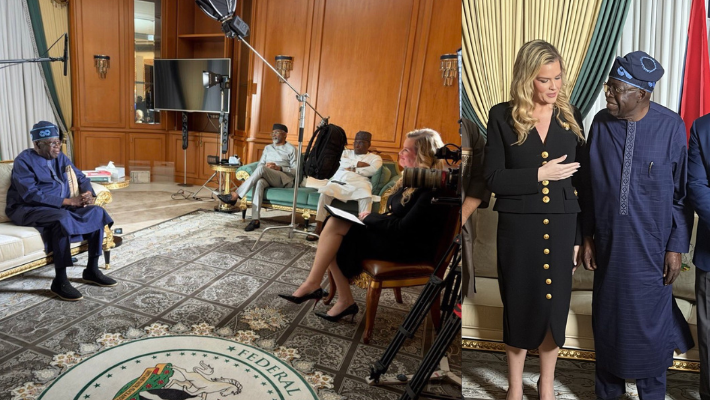
Diana London, American right-wing lobbyist who interviewed Tinubu at Aso Rock, was paid $4.5 million by Nuhu Ribadu: Documents
Adorned in a $10,000 Black Schiapparelli skirt suit, Ms London posed with Mr Tinubu in pictures posted on social media, describing Nigeria as the “America of Africa”.
Abuja
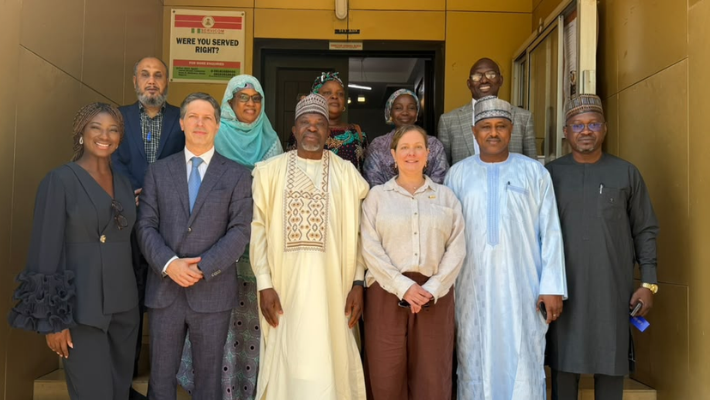
NBC reaffirms commitment to addressing transboundary challenges
NBC reaffirmed its commitment to addressing transboundary challenges and strengthening cooperation with Nigeria’s neighbouring countries.
Education
Gov Ododo orders investigation into death of Kogi nursing student
Governor Ahmed Ododo ordered an investigation into the circumstances surrounding the death of Adewumi Gift, a student of the Kogi State College of Nursing Sciences.

Sport
2027 AFCON Qualifier: Guinea-Bissau beat Madagascar, extend lead over Nigeria in Group L
Guinea-Bissau now have 10 points, Nigeria seven points, while Madagascar and Tanzania have two points each.
Africa
WHO raises concern over rising Bundibugyo Ebola deaths, insecurity in DR Congo
Mr Ghebreyesus said the outbreak, declared six months ago, had spread across 67 health zones in eight provinces in the DR Congo.


