

Expert warns of another pandemic

Ibrahim Abubakar, a professor of infectious diseases at the University College London, says there will be another pandemic, and it will not be 100 years from now.
Mr Abubakar said this at a meeting of the UN Economic and Social Council in New York. He said it was not a question of if, but when, adding that the answer was sooner than anyone wants.
The professor said this was because the global healthcare system remained drastically isolated. He noted that a pandemic could not be stopped by one country alone, adding that effective partnerships could stop the next pandemic
“Infectious diseases will not respect borders,” Mr Abubakar warned.
He said it was therefore expedient that health systems, to ensure equity, dignity, and universal access, must also be agile to implement policies across borders.
The infectious diseases expert noted that stopping pandemics and promoting broader global development required robust partnerships and consistent investment in multilateral systems, not just as an ideal, but as a practice.
Mr Abubakar noted that member states have recently adopted a pandemic prevention treaty, which endeavors to limit the likelihood of future pandemics.
Lok Bahadur Thapa, vice-president of ECOSOC, said that if the council were to meet the ambitions of the 2030 Agenda, it must reimagine cooperation.
The ECOSOC vice-president said that cooperation must not be seen as a transactional action, but rather as a dynamic, inclusive, and future-ready partnership.
Meanwhile, the High-Level Political Forum on Sustainable Development is convening at the UN headquarters in New York to discuss progress.
Delegates will also discuss progress towards the globally agreed 17 Sustainable Development Goals.
The first 16 SDGs address specific aspects of development, such as poverty, gender equality, and climate change; however, the 17th SDG outlines a path to achieve the others.
This path lies in embracing global partnerships between state governments, civil society organisations, communities, and the private sector.
(NAN)

We have recently deactivated our website's comment provider in favour of other channels of distribution and commentary. We encourage you to join the conversation on our stories via our Facebook, Twitter and other social media pages.

More from Peoples Gazette

States
Independence: NBA urges Nigerians to expect better future
The NBA said that ordinary Nigerians should be deriving benefit from the subsidy removal rather than hardship.

Agriculture
FG tasks ECOWAS on leveraging financing strategies for agroecology
The federal government has urged stakeholders in the agriculture and finance sectors in the West Africa region to leverage financing strategies to enhance agroecology practices

Politics
Katsina youths pledge to deliver over 2 million votes to Atiku
“Katsina State is Atiku’s political base because it is his second home.”

Sport
2027 AFCON Qualifier: Guinea-Bissau beat Madagascar, extend lead over Nigeria in Group L
Guinea-Bissau now have 10 points, Nigeria seven points, while Madagascar and Tanzania have two points each.
Africa
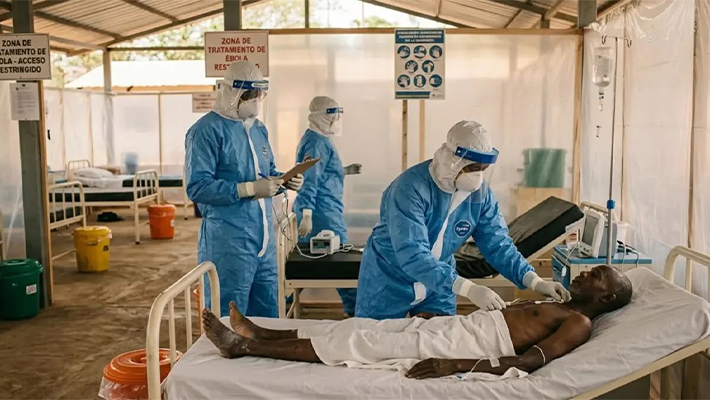
WHO raises concern over rising Bundibugyo Ebola deaths, insecurity in DR Congo
Mr Ghebreyesus said the outbreak, declared six months ago, had spread across 67 health zones in eight provinces in the DR Congo.

Africa
Afreximbank urges industries to boost intra-African trade as alternative to China in global markets
“As global markets look to diversify production beyond China, Africa must position itself as a natural partner of choice,” Mr Maayergi said.

World
Russell Brand faces probe over prison message to supporters
Mr Brand was convicted at Southwark Crown Court of one count of rape and three counts of sexual assault.
Politics
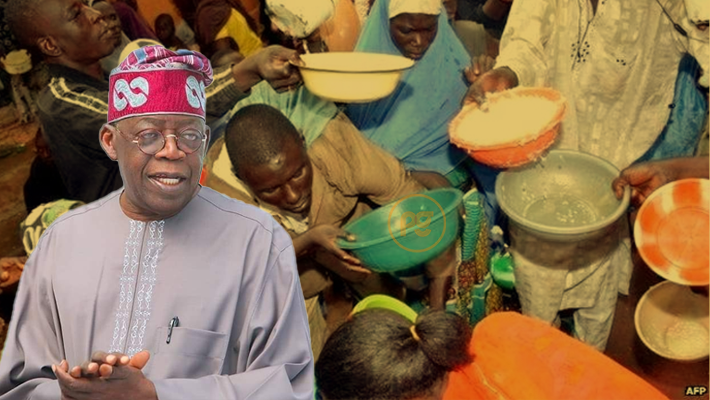
Tinubu admits cost-of-living crisis after APC dismissed widespread hunger claims
According to Mr Tinubu, the 2027 election is about the country’s future and direction.

World
WHO pushes for stronger vaccination, screening, treatment to eliminate cervical cancer
WHO said that expanding HPV vaccination, improving screening access, and ensuring timely treatment are critical to protecting women.


