

Experts alarmed by repeated national power grid collapses, seek decentralisation

Some power sector experts have expressed concern over the recurring collapse of the national electricity grid, urging the federal government to decentralise the country’s power infrastructure to improve reliability and efficiency.
The experts spoke in separate interviews with journalists in Lagos on Wednesday, following another nationwide blackout triggered by a system collapse on Tuesday.
The latest incident marked the second grid failure within a week, coming just days after a similar collapse.
It also coincided with the federal government’s signing of a N501.021 billion bond under the N4 trillion Power Sector Multi-Instrument Issuance Programme, designed to settle legacy debts owed to electricity generation companies.
Data from the Nigerian Independent System Operator showed that power generation dropped to zero megawatts at about 11:00 a.m., plunging the entire country into darkness.
Electricity distribution companies in Benin, Eko, and Ibadan confirmed zero power allocation during the outage, disrupting economic and social activities nationwide.
The repeated failures have renewed concerns over the fragility of the nation’s electricity transmission infrastructure.
As of the time of filing this report, neither the Transmission Company of Nigeria nor NISO had issued an official explanation on the cause of the collapse or a timeline for full restoration.
Although electricity supply has gradually returned to some areas, the impact of the outage remains widespread.
Speaking on the development, an energy expert, Olukayode Akinrolabu, said the power sector requires urgent structural reforms, including grid decentralisation, renewable energy integration, and market restructuring.
According to him, decentralising the grid will empower states to regulate their electricity markets, attract private investment, and promote renewable energy solutions, such as solar mini-grids, thereby reducing dependence on fossil fuels.
Mr Akinrolabu noted that ongoing market reforms, including the establishment of NISO, were intended to improve operational efficiency and restore investor confidence, but stressed that more needed to be done.
“To stabilise the grid, the power sector should be segmented by states to allow for manageable power volumes and more effective system control,” he said.
Mr Akinrolabu, who also chairs the Customer Consultative Forum for Festac and Satellite Towns, called for the immediate upgrade of Supervisory Control and Data Acquisition systems for real-time monitoring, expansion of transmission lines, and rehabilitation of ageing infrastructure.
“The national grid has become technically complex due to its extensive connectivity, making it extremely difficult to manage,” he said.
He added that the Bola Tinubu administration could improve grid performance by investing in modern transmission infrastructure.
He advocated adopting a state-centric coordination model among power operators and strengthening sub-national regulatory enforcement to attract investment.
Cdon Adinuba, a communications consultant at Geometric Power Company, said Nigeria’s transmission network required massive investment, describing it as obsolete and poorly maintained.
Mr Adinuba observed that the grid frequently collapses whenever power generation exceeds 5,000 megawatts, leaving much of the country’s estimated 13,000 megawatts of installed generation capacity grossly underutilised.
He welcomed the federal government’s renewed interest in developing a second national grid, an idea originally proposed by a former power minister, Barth Nnaji, and approved by the Federal Executive Council in 2012.
According to him, the plan includes the construction of a 765-kilovolt super grid capable of transmitting significantly more power than the existing 330-kilovolt and 132-kilovolt transmission lines.
“The proposed grid will be regionalised, not along political or geopolitical lines, but as an operational necessity,” he said.
“It will function in segments so that faults can be isolated and resolved without shutting down the entire country, unlike the current system, where a minor fault triggers a nationwide blackout,” he added.
(NAN)

We have recently deactivated our website's comment provider in favour of other channels of distribution and commentary. We encourage you to join the conversation on our stories via our Facebook, Twitter and other social media pages.

More from Peoples Gazette

Agriculture
FG tasks ECOWAS on leveraging financing strategies for agroecology
The federal government has urged stakeholders in the agriculture and finance sectors in the West Africa region to leverage financing strategies to enhance agroecology practices

Politics
Katsina youths pledge to deliver over 2 million votes to Atiku
“Katsina State is Atiku’s political base because it is his second home.”
NationWide
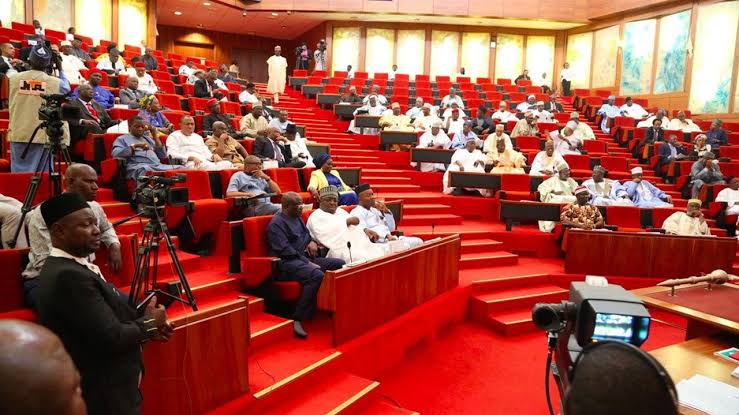
Senate approves customs’ 2026 budget, backs N11.074 trillion revenue target
Mr Jibrin said the committee assessed the service’s 2025 budget implementation before examining the 2026 estimates.
Hot news Home top
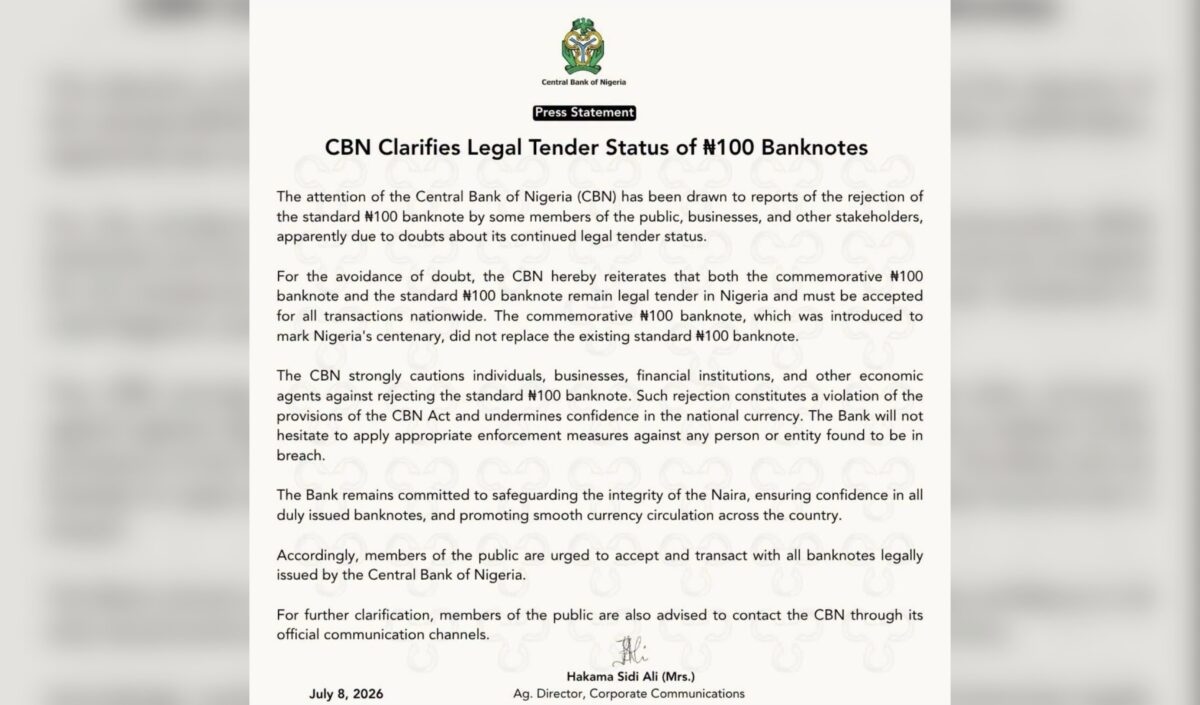
CBN warns Nigerians against rejecting standard N100 note
Mrs Ali urged members of the public to accept and transact with banknotes legally issued by the apex bank.

Africa
Eight Nigerian firms secure $1.5 million grant to expand clean energy businesses
Mr Aziebor said the beneficiaries comprised eight companies from Nigeria, six from Kenya and five from Ethiopia.
States
Bauchi man arrested for allegedly defiling minor
The police said the complainant alleged that the suspect lured the victim into his room and defiled her.
Abuja
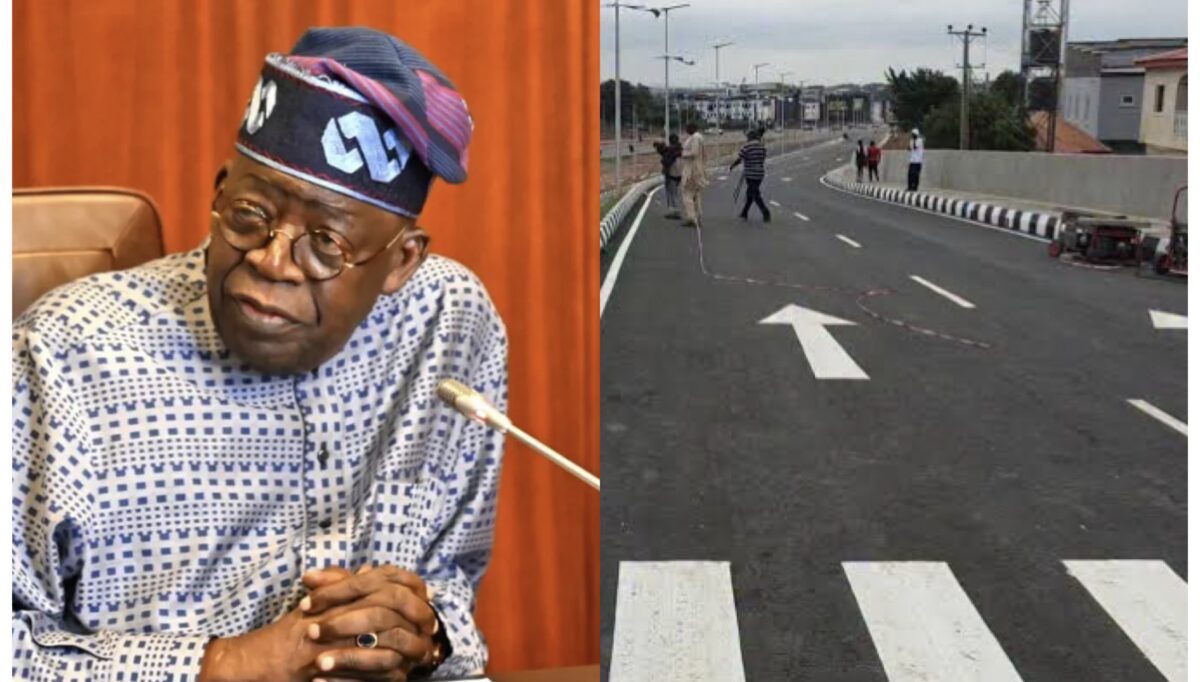
Tinubu pledges continued infrastructural support to FCT academia, institutions
Mr Tinubu described infrastructure as the greatest enabler of economic prosperity.

States
Four suspects arrested over alleged theft of 19 goats in Niger
A police source said confirmed 19 stolen goats were recovered from the suspects.


