

FG declares English sole medium of instruction, says mother tongue policy destroyed education

The federal government has cancelled the national policy mandating the use of indigenous languages as the medium of instruction in schools.
Minister of Education Tunji Alausa said this at the 2025 Language in Education International Conference, organised by the British Council in Abuja on Wednesday.
“The national policy on language has been cancelled. English now stands as the medium of instruction across all levels of education,” he declared.
In 2022, the federal government approved a National Language Policy (NLP), which stipulates that from early childhood education to primary six, the language of instruction will be in the mother tongue or the language of the immediate community.
The policy aims to promote indigenous languages, recognise their equal status, and improve early childhood learning outcomes, while English remains the official language used in later education and formal settings.
Speaking at the conference, Mr Alausa said English is now the language of instruction in Nigerian schools from primary to tertiary levels.
He said Nigerian children had been performing abysmally in public exams as a result of being taught in their mother tongue.
The minister stated that the decision to cancel the policy was based on extensive data analysis and evidence indicating that the use of the mother tongue as the primary medium of instruction had negatively impacted learning outcomes in several parts of the country.
“We have seen a mass failure rate in WAEC, NECO, and JAMB in certain geopolitical zones of the country, and those are the ones that adopted this mother tongue in an oversubscribed manner.
“This is about evidence-based governance. English now stands as the medium of instruction from the pre-primary, primary, junior secondary, and senior secondary, and to the tertiary education level.”
“Using the mother tongue language in Nigeria for the past 15 years has literally destroyed education in certain regions. We have to talk about evidence, not emotions,” he said.
According to him, data gathered from schools across the country revealed that students taught primarily in indigenous languages recorded higher failure rates in national examinations and struggled with basic English comprehension.
The minister urged stakeholders with differing views to present verifiable data to support their positions, adding that the government remained open to evidence-based dialogue that would strengthen the education sector.
He commended the British Council for its continued partnership with Nigeria in advancing education reforms and promoting inclusive language and learning policies.
The Minister of State for Education, Suwaiba Ahmed, spoke on other areas of focus by the government to address the teaching and learning crisis at the foundational level of education.
Mr Ahmad said a new training package had been designed for teachers to help with literacy and numeracy learning.
“We are training them how best to teach literacy, how best to teach numeracy, and of course, the approach,” she said.
Also, the country director, British Council Nigeria, Donna Mcgowan, pledged the council’s continued support and expertise to Nigeria’s education policies aimed at repositioning the education sector.
(NAN)

We have recently deactivated our website's comment provider in favour of other channels of distribution and commentary. We encourage you to join the conversation on our stories via our Facebook, Twitter and other social media pages.

More from Peoples Gazette

States
Independence: NBA urges Nigerians to expect better future
The NBA said that ordinary Nigerians should be deriving benefit from the subsidy removal rather than hardship.

Agriculture
FG tasks ECOWAS on leveraging financing strategies for agroecology
The federal government has urged stakeholders in the agriculture and finance sectors in the West Africa region to leverage financing strategies to enhance agroecology practices

Politics
Katsina youths pledge to deliver over 2 million votes to Atiku
“Katsina State is Atiku’s political base because it is his second home.”
Heading 1
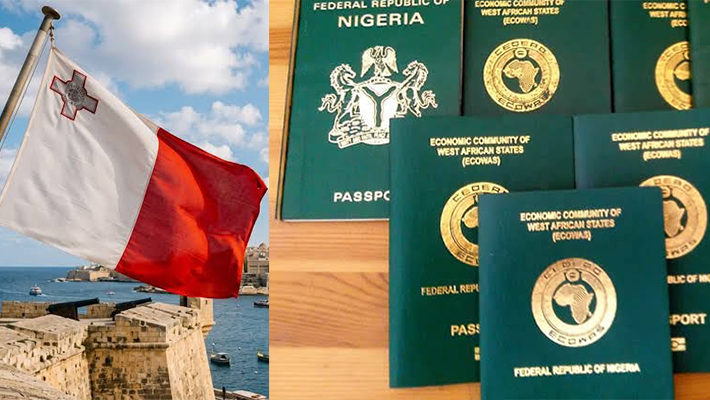
11 Nigerians among 154 foreign nationals in Malta’s detention centres
Bangladesh is the country with the highest number of detainees in Malta, with 60 of its nationals held in the European country.

NationWide
Ogaga Ifowodo wins $100,000 Nigeria Prize for Literature
Ms Adimora-Ezeigbo hailed the collection for its “exploration of religious and political violence in Nigeria using rich allegorical style.”

States
Police warn youths against blocking Kebbi-Sokoto highway
Mr Usman said the latest blockade disrupted vehicular movement for about three hours.

Africa
U.S. warns citizens travelling to South Africa over crime, terrorism, unrest
The acting national police commissioner said at least 10 vehicles were burnt in Johannesburg and 14 in Durban.

Economy
Nigeria’s $1 trillion economy depends on homegrown innovation, market access: NBTI DG
The DG said sustainable national prosperity cannot be achieved through government expenditure or natural resources alone.

NationWide
NBET begins N729 billion legacy debt payments to GenCos
Mr Odeyemi described the development as a significant milestone in implementing the debt reduction programme.


