

FG distributes emergency obstetric equipment to 251 health facilities

The federal government has commenced the distribution of comprehensive emergency obstetric and newborn care equipment to 251 health facilities across 30 states to strengthen maternal and newborn healthcare services nationwide.
The equipment, valued at about $200,000 per state, was unveiled on Friday in Abuja at an event organised by the Federal Ministry of Health and Social Welfare under the sector-wide approach initiative.
The initiative is aimed at reducing maternal and newborn deaths and improving access to quality emergency healthcare services across the country.
Speaking at the unveiling, the Coordinating Minister of Health and Social Welfare, Prof. Muhammad Pate, said no fewer than 40,000 women had already benefited from life-saving interventions under the programme.
Represented by the Executive Director of the National Primary Health Care Development Agency (NPHCDA), Dr Muyi Aina, Mr Pate described the intervention as part of President Bola Tinubu’s commitment to strengthening healthcare delivery nationwide.
“No fewer than 40,000 women have already accessed timely life-saving interventions across our CEmONC facilities.
“These are not just numbers; these are our sisters, our mothers, our neighbours who have been given a second chance at life,” he said.
Mr Pate said the newly distributed equipment would address critical service delivery gaps in secondary health facilities across the country.
“About 251 facilities across 30 states are receiving equipment that will bridge critical service delivery gaps.
“This is proof that when we combine resources, align priorities and move in one direction, we can deliver results that will reverberate across the nation,” he said.
He added that the equipment was tailored to meet specific healthcare needs identified by different states, including newborn care and oxygen supply gaps.
“One state said the biggest gap is newborn care, so you saw incubators and baby warmers.
“Some states identified oxygen shortages, so they received oxygen concentrators. These are very targeted and deliberate interventions,” he added.
Mr Pate, however, warned that equipment alone would not solve Nigeria’s maternal mortality challenges, urging states to strengthen staffing, infrastructure, and referral systems.
He also cautioned against diversion of the equipment for private use, stressing that strict accountability measures would be enforced.
The Director-General of the National Health Insurance Authority (NHIA), Dr Kelechi Ohiri, described the intervention as a major step in reducing financial hardship linked to maternal healthcare.
Represented by the Director of the Informal Sector, Dr Nnena Kalu, Mr Ohiri said the agency had supported CEmONC services in 245 facilities nationwide since 2024.
“Each of those statistics represents a life saved and a future protected,” he said.
Mr Ohiri added that neonatal care interventions had been scaled up in about 10 facilities, with more than 3,000 claims recorded so far.
He urged state governments to complement the equipment with skilled personnel, reliable power supply, and strong referral systems.
The National Coordinator of the SWAp Coordination Office, Dr Muntaqa Umar-Sadiq, said the initiative reflected implementation of the health sector compact under the Tinubu administration.
He said the programme was designed around sustainability, country ownership, and value for money.
“One of the biggest operations we run is a pay-for-results instrument.
“States do the heavy lifting of achieving priorities while we reward them for those results,” he said.
The Commissioner for Health and Human Services in Ekiti State, Dr Oyebanji Filani, said the SWAp framework was improving healthcare delivery through incentives and collaboration between federal and state governments.
“What today represents is the incentive framework.
“We are providing equipment for CEmONC while states provide infrastructure, civil works and human resources,” he said.
He added that several states had increased salaries and allowances to retain healthcare workers and reduce brain drain.
The Nigeria Country Director of the Gates Foundation, Dr Uche Amaonwu, commended ongoing efforts to reduce maternal and child mortality in the country.
Mr Amaonwu, however, said more work remained to be done to eliminate maternal mortality in Nigeria completely.
He urged states to ensure proper utilisation of equipment distributed to health facilities to achieve improved maternal and newborn health outcomes.
(NAN)

We have recently deactivated our website's comment provider in favour of other channels of distribution and commentary. We encourage you to join the conversation on our stories via our Facebook, Twitter and other social media pages.

More from Peoples Gazette

States
Independence: NBA urges Nigerians to expect better future
The NBA said that ordinary Nigerians should be deriving benefit from the subsidy removal rather than hardship.

Agriculture
FG tasks ECOWAS on leveraging financing strategies for agroecology
The federal government has urged stakeholders in the agriculture and finance sectors in the West Africa region to leverage financing strategies to enhance agroecology practices

Politics
Katsina youths pledge to deliver over 2 million votes to Atiku
“Katsina State is Atiku’s political base because it is his second home.”

Heading 2
Enugu secures $200 million solar investment to boost electricity supply
Mr Mbah pledged the state government’s support in removing institutional bottlenecks that could delay the project.
Heading 5
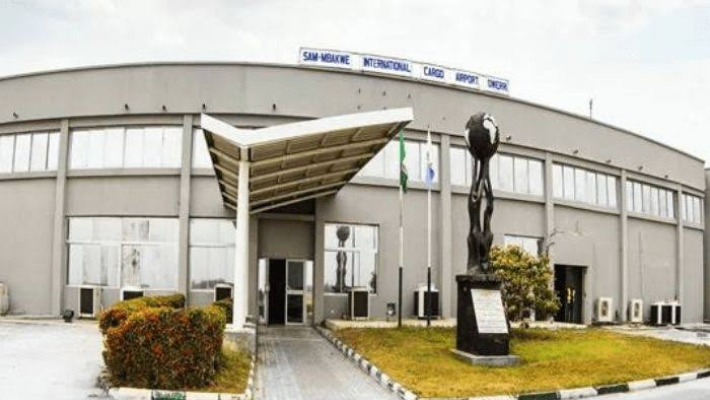
FAAN announces temporary closure of Owerri airport runway for repairs
According to Mr Agbebire, the closure was tentatively scheduled to last about 25 days.

States
Police nab three suspects over alleged murder of 65-year-old woman accused of witchcraft in Niger
The command’s spokesperson said the incident occurred on Saturday.

Health
Lassa Fever: Nigeria records 1,115 cases, 263 deaths in 24 states
The agency urged healthcare workers and the public to maintain appropriate preventive measures.

Heading 2
Police nab 47 suspects for thuggery, drug peddling in Kano
Mr Haruna-Kiyawa stated that large quantities of illicit substances and dangerous weapons were recovered from the suspects.
Heading 5
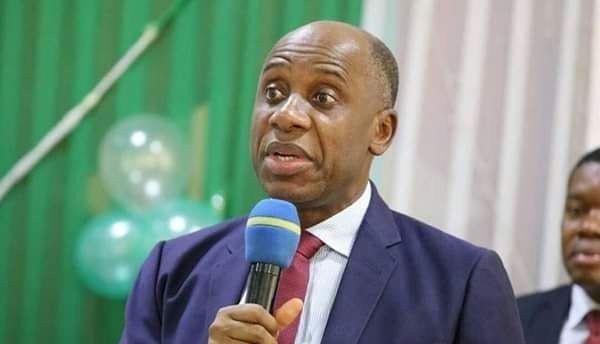
Number of votes Tinubu gets in 2027 will show number of mad people in Nigeria: Rotimi Amaechi
Mr Amaechi had recently blamed the economic hardship under Mr Tinubu for the deaths of many Nigerians, including his mother.


