

FIRS chairman urges global leaders to tackle cross-border crimes at UK summit

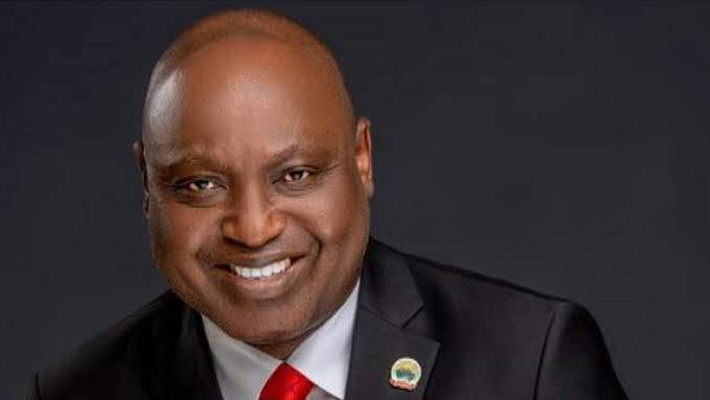
Chairman of the Federal Inland Revenue Service, Dr Zacch Adedeji, on Monday, challenged global leaders to tackle the rising cross-border crimes that have disrupted revenue mobilisation and economic growth.
Mr Adedeji threw the challenge while delivering a keynote address at the 42nd Cambridge International Symposium on Economic Crimes (CIDOEC) held at the University of Cambridge, United Kingdom.
The symposium has, for over four decades, been a crucible of ideas, a forge for strategies, and a platform where countries chart a collective course against the impact and threat economic crimes pose to countries and institutions.
The global meeting was attended by about 1,000 participants from more than 100 countries, including legislators, policy makers, law enforcement agencies, security and intelligence personnel, regulators, governance and compliance officers, and academics.
Special Adviser on Media to the FIRS boss, Dare Adekanmbi, in a statement, said Mr Adedeji was represented by the Coordinating Director of Proceeds of Crime Management and Illicit Financial Flows and immediate past chairman of the Independent Corrupt Practices and Other Related Offences Commission, Professor Bolaji Owasanoye.
The FIRS chairman stated that cross-border tax crimes undermined effort of countries to raise revenue for development.
He added that cross-border tax crimes distort fair competition because compliant companies pay a higher cost for business and appear less profitable.
“This year’s theme ‘Cross-Border Crimes’ speaks directly to one of the most complex and corrosive challenges of our interconnected world. In a global economy where capital can move faster than law enforcement, and where digital and legal arbitrage often outpace regulation, the fight against cross-border economic crime is, by necessity, both local and global, both urgent and pressing.
“Modern day cross border crimes remind us that borders and boundaries have become virtual and distance irrelevant to the perpetration of crime and the negative impact on victims,” said Adedeji, who is also the Special Adviser on Revenue to President Bola Tinubu.
On corporate or natural citizens who evade, avoid, fraudulently manipulate tax obligations by exploiting the intricacies of international trade or international finance, the FIRS boss said they have become implicated in cross border crimes.
He said, “When corporate or natural persons earn income in one country but hide same in another country, when they deceive, conceal or falsify records, they undermine the integrity and fiscal aspirations of the two countries they are manipulating.
“When they hide income and assets in secrecy in some jurisdictions to avoid home-country taxes, they are hurting the fiscal target of home country. When companies engage in abusive transfer pricing and manipulate intra-group transactions between subsidiaries in different countries to shift profits to low-tax jurisdictions, they are engaged in cross-border tax crimes.’’
Speaking on the reforms embarked upon by the current administration, Mr Adedeji said they were necessary to build a vibrant and prosperous economy.
According to him, Mr Tinubu inherited not just fiscal challenges but a system under siege by economic crimes such as abuse of fuel subsidy regime, exploitation of foreign exchange rate differentials between official and parallel markets, illicit financial flows (IFFs), base erosion and profit shifting by multinationals, and complex trade-based money laundering schemes amongst other cross border crimes.
He said that Nigeria embraced a bold and unambiguous mission under the current administration’s reform programme tagged “Renewed Hope Agenda” to safeguard Nigeria’s fiscal sovereignty, expand domestic resource mobilisation, prevent financial haemorrhage, close the channels bleeding the economy, and recover diverted economic assets for the use of the common people.
He stated, “Fiscal reforms were a major part of this vision, thus on June 26, 2025, the President assented to four landmark tax reform bills, a clear signal that our reform agenda is not aspirational but actionable. These reforms modernise our tax laws, enhance transparency, strengthen enforcement, and align Nigeria with global best practices. The new fiscal regime heralds over 400 specific changes into Nigeria’s tax laws and administration.’’
He told the gathering that the FIRS, which would soon become the Nigeria Revenue Service effective January 2026, had redefined its mandate and now a fiscal crime prevention and intelligence gathering and sharing organisation, central to Nigeria’s national security, economic stability and social development.
He said further that the foremost tax organisation had launched a technological transformation programme that includes tax data automation, e-invoicing, real-time analytics, AI-driven anomaly detection, and integrated third-party data matching.
“These tools ensure that compliance is simplified for taxpayers while evasion becomes more difficult for offenders. FIRS is also investing in a National Tax Data Warehouse that consolidates information from payment gateways, banks, customs, and other agencies.
“By applying big data analytics and machine learning, we can now forecast revenues, spot risks, and detect tax evasion patterns before they take root. This makes our tax administration predictive rather than reactive,” Mr Adedeji added.

We have recently deactivated our website's comment provider in favour of other channels of distribution and commentary. We encourage you to join the conversation on our stories via our Facebook, Twitter and other social media pages.

More from Peoples Gazette

States
Independence: NBA urges Nigerians to expect better future
The NBA said that ordinary Nigerians should be deriving benefit from the subsidy removal rather than hardship.

Agriculture
FG tasks ECOWAS on leveraging financing strategies for agroecology
The federal government has urged stakeholders in the agriculture and finance sectors in the West Africa region to leverage financing strategies to enhance agroecology practices

Politics
Katsina youths pledge to deliver over 2 million votes to Atiku
“Katsina State is Atiku’s political base because it is his second home.”

World
Trump awards Elon Musk National Medal of Science; calls him modern-day Thomas Edison
Lauding Mr Elon as a modern-day Thomas Edison, Mr Trump highlighted the impact of his innovations in different human endeavours.

Heading 1
NLC gives Tinubu govt two-week ultimatum to cut petrol price, renegotiate minimum wage
Mr Ajaero demanded that the federal government commence renegotiation of the minimum wage before the end of October.

Heading 4
Power generation utilisation hit 81% in September: NERC
NERC said that average hourly generation stood at 4,089MW, representing an average load factor of 81 per cent of the available generation capacity.
States
Gov Oyebanji presents N490.74 billion 2027 budget proposal to Ekiti assembly
Mr Oyebanji presented the appropriation bill, christened the ‘Budget of Sustained Progress and Prosperity’, at the assembly chamber.

World
U.S. accuses Venezuela’s Maduro of torturing U.S. citizens in revised indictment
The Trump administration accused Mr Maduro and his wife of partnering with narcoterrorists to flood the U.S. with cocaine.

States
Two suspects arrested over machete attacks in Uyo
The police said weapons and stolen items were recovered from the suspects.


