

Let’s talk governance
Good governance is the kernel of Nigeria’s development. Effective leadership will address a good number of today’s nettlesome challenges. The vexing problems with education, healthcare, security, unemployment, and electricity can be managed or palliated with responsible leadership. But why are we not giving currency to these crucial and experiential issues in our post-election conversations? Why is the repugnant, the vicious, and the divisive governing the public discourse?
I would hazard a guess as to why. To some, good governance is natively partial; it is selective of candidates based on kinship, religious orientation, or some manufactured puritanism. It must be their candidate as president or doom and gloom befall the country. So, they constitute themselves into a bulwark of cynicism, scorching conversations and the polity with hate, prejudice, and fear.
This is an unpatriotic and jaundiced disposition to domestic concerns. It is clear that to these ones, what matters is not whether the president-elect or the leadership is competent and sufficiently prepared to fix the country; the grouse is that he does not conform to their bias.
But being patriotic does not mean anyone must like the government or the president, it dictates citizens must commit to the peace and progress of the country regardless of who is president. We must move the conversations away from the crude to the sublime. Nigeria is too important for groundless tropes to be the definers of critical discourses.
We should set the right tone and tenor for the next administration. We should begin to study and review the Renewed Hope manifesto. We are collectively plagued by the same problems; we need food on our table; we need qualitative education for our children; we need the security of life and property; we need good healthcare; we need jobs, and we need decent living. These are existential perturbations that should arrest our attention.
We keep going through the same mill every cycle and expect a change. As citizens, we should be more purposive about governance and less obsessed with thrilling distractions.
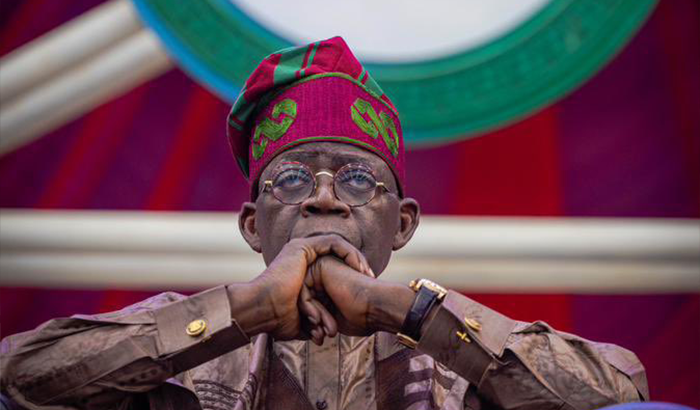
I must say Asiwaju Bola Ahmed Tinubu, even as president-elect, has begun on a pragmatic and winsome trajectory. By seeking reconciliation with those he legitimately, fairly, and squarely defeated in the presidential election and by re-affirming his commitment to be president for all Nigerians and to run a government of national competence, Asiwaju is endearing himself to Nigerians.
His deportment so far has been statesmanly and nationalistic, confounding the suggestions and assumptions of traducers. I hope he keeps this streak. Good governance will frustrate the expectations of scoffers.
Let us revisit the manifesto. In it, the president-elect delineated his plans for the country. My interest is in a cocktail of prescriptions – federalism/decentralisation of power, national security, economy, power, agriculture, education, healthcare, transportation, and foreign policy. These constitute the critical sectors of government. But I am of the view that the administration, most importantly, will be assessed on how well it manages our diversity, on security and the economy.
The president-elect started well with words of affirmation, of unity, of commonality, which will further help in building national consensus. He should maintain this expansive disposition – as always.
President Muhammadu Buhari recently signed 16 constitution alteration bills into law. Of significance is the bill on the financial independence of state houses of assembly and state judiciary and those on the removal of the railway, prison and electricity from the exclusive legislative list to the concurrent list.
I believe this offers the Tinubu administration fecundated ground to drive its vision of a more balanced democracy. Federalism and Decentralisation of power is a prominent feature of Asiwaju’s manifesto. There is still a lot of room for decentralisation of power in areas of crime prevention, stamp duties, certain forms of taxation, and resource allocation – as enumerated in the manifesto. It is expected that the president-elect will work with the national assembly to motor his vision.
On the economy, the president-elect has a fine blueprint and prescription. He says his administration will improve existing industries and sectors; adjust the revenue allocation prescription to give states greater flexibility to foster grassroots economic development; build an economy that produces more of the everyday items – both agricultural and manufactured goods; bring the national infrastructure policy to life and harmonise it with the national industrial policy to ensure optimal development of key sectors; review federal budgetary methodology, curb importation of non-essential goods, reform the tax system, as well as implement a naira-denominated monetary policy.
The president-elect says he will tackle insecurity with technology, confidence-building, citizens’ participation, intelligence-led policing, improvement of salaries and welfare of troops, creation of anti-terrorist battalions, bolstering of manpower, freeing the police from VIP security and guard duties, and again, deployment of technology.
In all, the president-elect’s team will largely account for the success of his plan for Nigeria. The president-elect has stated unambiguously that he will run a government of national competence. This is comforting and reassuring. He must succeed for the sake of Nigeria.
We should go back to the Renewed Hope manifesto to study and review it. Let us talk governance, not this babel of conspiracies and prejudices. Citizenship comes with responsibility. We are evenly plagued by the same problems, which good governance can palliate or fix. So, let us talk about governance.
May the president-elect succeed!
Fredrick Nwabufo, Nwabufo a.k.a Mr OneNigeria, is a writer and journalist

We have recently deactivated our website's comment provider in favour of other channels of distribution and commentary. We encourage you to join the conversation on our stories via our Facebook, Twitter and other social media pages.

More from Peoples Gazette

States
Independence: NBA urges Nigerians to expect better future
The NBA said that ordinary Nigerians should be deriving benefit from the subsidy removal rather than hardship.

Agriculture
FG tasks ECOWAS on leveraging financing strategies for agroecology
The federal government has urged stakeholders in the agriculture and finance sectors in the West Africa region to leverage financing strategies to enhance agroecology practices

Politics
Katsina youths pledge to deliver over 2 million votes to Atiku
“Katsina State is Atiku’s political base because it is his second home.”
Abuja
FCT NLC suspends indefinite strike
The NLC chair said the suspension was agreed upon in the spirit of social dialogue and industrial harmony.

Health
Ebola: Africa CDC seeks urgent international support for Nigeria
Mr Kaseya said Africa CDC had begun mobilising support for Nigeria while intensifying response efforts in DRC, Congo and Kenya.

States
Police raid kidnappers’ hideouts in Nasarawa forests
Mr Jidda added that police personnel were already operating in the forests and would extend the operation to other forested areas.

States
Delta assembly approves state police
The majority leader said the proposed amendment would strengthen the protection of lives and property through a dual policing system.

States
Truck Accidents: FG mulls weighbridges on Lagos-Ibadan Expressway
Mr Dare attributed some road accidents to reckless driving, poor vehicle maintenance, and the removal of public infrastructure.
Anti-Corruption
EFCC secures conviction of ex-banker over unauthorised withdrawal of ₦1 million
Mr Nweke pleaded not guilty to the charge, prompting a full trial.


