

Tinubu happens when preparation meets leadership
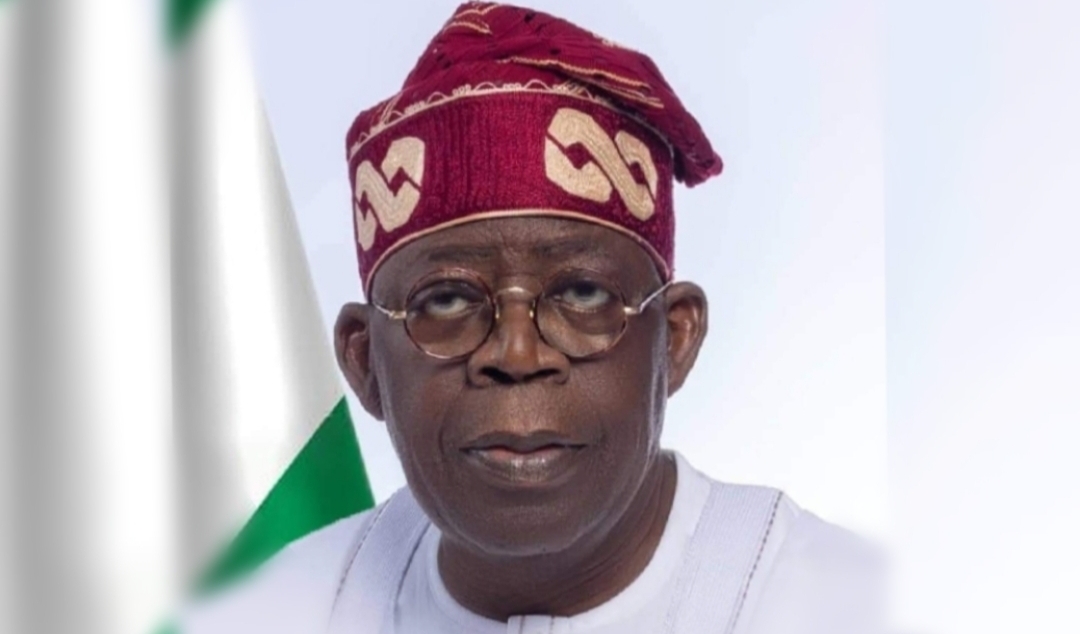
The past week has been one of the most momentous in the life of the nation. President Bola Ahmed Tinubu dared the undared and triumphed. He passed a knotty test of leadership. The first of its kind. Under a haze of threats of a strike by labour unions over the abrogation of petrol subsidy, President Tinubu showed peerless leadership, preparation, and attunement. When preparation meets leadership, Tinubu happens.
THE PETROL SUBSIDY BLUES
With mounting national debts, desiccating revenue, haemorrhaging economy, corruption, and shadowy sectoral enterprise, the removal of subsidy on petrol is coming at an auspicious time. It is either we slither down the snaky tunnel to certain economic peril, or we buck up, pull together, and confront this bogeyman menacing us for decades.
Tough decisions are expected. President Tinubu affirmed a fait accompli when he said in his inaugural address that the petrol subsidy ‘’is gone’’. The Petroleum Industry Act (PIA) 2021, signed by former President Buhari, already made the petrol subsidy regime inoperative. Although the effective abolishment of the scheme was delayed until the end of June 2023, there are no funds to finance the deficit.
But the President had been forthright and genuine about his intentions on petrol subsidy. He said during the campaigns that he would not maintain the parlous order, and that he would stop the haemorrhage.
Nigeria had been borrowing to fund petrol subsidies. The Nigerian National Petroleum Company Limited (NNPCL) was spending as much as N400 billion every month to subsidise the petrol price. According to Mele Kyari, NNPCL CEO, Nigeria has racked up $6 billion in petrol subsidy debts. The scheme is projected to have wolved over N11 trillion in eight years. This is clearly not sustainable, not even for any avidly populist government. Without accurate data of Nigeria’s daily petrol consumption quota, the petrol subsidy regime was nebulous and prone to abuse, and chronic venality. Much of the subsidised product is believed to be smuggled to neighbouring West African countries by profiteers.
The argument for petrol subsidy retention is an emotive one that obviates the filth in the system. Nigeria is a quasi-socialist country, a highly subsidised country. Corruption thrives partly because of the regime of subsidies.
EARNING PUBLIC TRUST
The President once said he had prepared himself, all his life, to lead Nigeria. His artful management of the concomitants and corollaries of the petrol subsidy removal accents this conviction. He has triumphed where many leaders failed. How did he do it?
On Monday, the Nigeria Labour Congress (NLC) and the Trade Union Congress (TUC) suspended the planned strike. Earlier, the Joint Health Workers Union of Nigeria (JOHESU) suspended its planned strike as well. A government delegation had been meeting with the labour unions, negotiating terms of the entente. The president, himself, had met with the leadership of JOHESU. He did not stay behind the ornated walls of his office while his aides do the jaw-jawing. He got his hands on the wheel.
The President was unambiguous about his proposition to the unions – providing palliatives, particularly minimum wage review — to cushion the effects of petrol subsidy removal. At a meeting with some governors, the president had said: “We need to do some arithmetic and soul searching on the minimum wage. We will have to take a look at that together, and the revenue. We must strengthen the source and application of our revenue.’’
The federal government and the labour unions agreed to ‘’establish a joint committee to review the proposal for any wage increase or award and establish a framework and timeline for implementation” and ‘’to review World Bank Financed Cash Transfer scheme and propose the inclusion of low-income earners in the programme.’’
Evidently, the President anticipated a problem and primed a solution.
During the campaigns, the President made a valiant statement on axing petrol subsidies and other economic blackholes. What many considered a political suicide attempt at the time. But he stuck to his guns.
He said: “By all means, you must have electricity. And you won’t pay for estimated billing anymore. When I become president, multiple exchange rates will go away. Write it down. How can we be subsidising the fuel consumption of Cameroon, Niger, and Benin Republic? No matter how long you protest, we are going to remove the subsidy. We can do it. We are educated enough.’’
The honesty, courage and forthrightness exemplified by the President in this instance were infectious. He did not dilly-dally or play around with the critical issue of political chicanery; he made a firm statement and asked Nigerians to hold him to his word.
And staying true to principle, his first presidential dispatch was to permanently seal the drainpipe. He showed sincerity of purpose, genuineness, and clarity of mind. Honesty is infectious. Nigerians saw the sincerity of the President and the decisiveness of his leadership. He did not get into the saddle and change from Rock and Roll to Rhythm and Blues; he maintained the same tempo; the same energy, the same oomph; the same vision, the same truth, and the same purpose. When preparation meets leadership, Tinubu happens.
The President has earned public trust and goodwill for his honesty and firmness of character. He is aware. Two days after his inauguration, two law enforcement agencies got into a public brawl. He did not dither. He did not vacillate. He did not look away. He issued a stern reprimand.
Nigeria has a leader who is not afraid of taking tough decisions for the greater good. The President may have prepared himself for leadership, but destiny prepared him for Nigeria at this time.
Fredrick Nwabufo, Nwabufo a.k.a Mr OneNigeria, is a writer and journalist

We have recently deactivated our website's comment provider in favour of other channels of distribution and commentary. We encourage you to join the conversation on our stories via our Facebook, Twitter and other social media pages.

More from Peoples Gazette

States
Independence: NBA urges Nigerians to expect better future
The NBA said that ordinary Nigerians should be deriving benefit from the subsidy removal rather than hardship.

Agriculture
FG tasks ECOWAS on leveraging financing strategies for agroecology
The federal government has urged stakeholders in the agriculture and finance sectors in the West Africa region to leverage financing strategies to enhance agroecology practices

Politics
Katsina youths pledge to deliver over 2 million votes to Atiku
“Katsina State is Atiku’s political base because it is his second home.”
States
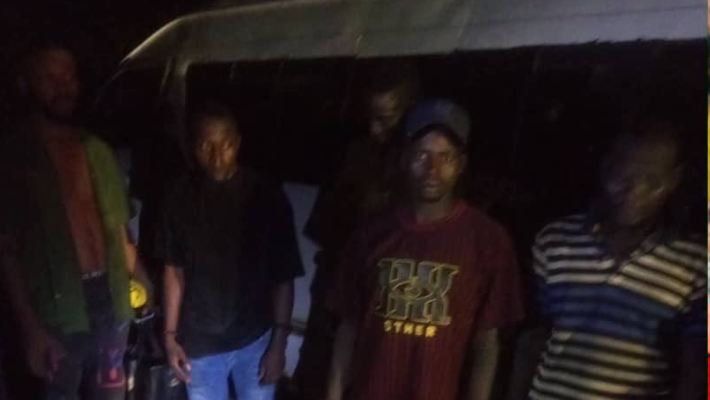
Troops foil kidnapping attempt, rescue 11 passengers in Kogi
The acting spokesperson said the incident occurred on Sunday while the troops were on routine patrol.
Heading 5
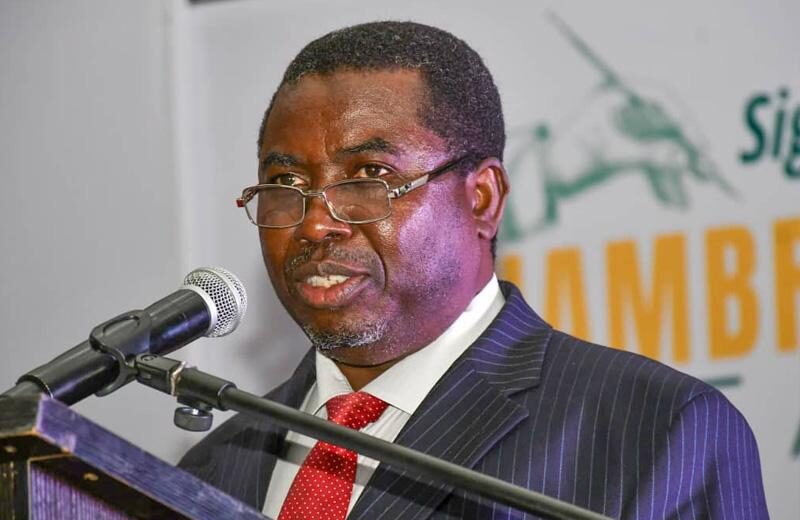
2027: Amupitan assures INEC workers of improved welfare, remuneration
Mr Amupitan urged the staff to steer clear of partisan politics.

States
Skills development key to economic renewal: Gov Sani
Mr Sani noted that the centre will efforts of the state government towards human capital development.

Hot news Home top
NAF airstrike kills ISWAP leaders in Lake Chad
Mr Ejodame said the operation was conducted on Monday.

Heading 3
WHO releases training manual to expand access to early breast cancer care
The manual comprises technical modules covering the entire continuum of breast cancer care.
Economy
Edo assembly passes N940 billion 2026 supplementary budget
The assembly, thereafter, adjourned sitting until Nov. 9, 2026.


