

From Data to Dollars: Unlocking Nigeria’s trillion-dollar natural capital and AGESI’s role

Nigeria, a nation rich in a diverse tapestry of ecosystems, stands at a critical juncture in its economic and environmental development. For too long, financing nature has been framed as a cost—a burden on the national budget. However, this perspective is fundamentally flawed.
Protecting and restoring our natural heritage is not a cost; according to the African Development Bank (AfDB), it is our single greatest economic opportunity, capable of unlocking a staggering $1.4 trillion annually for the continent. The core question isn’t whether we should finance nature, but how we can use data and innovative frameworks to transform our natural wealth into a bankable asset class.
The integrated reality: Where nature, climate, and economy converge
The first step is to reject the false dichotomy between nature and climate. In Nigeria, they are not separate issues—they are deeply intertwined, affecting our economic survival and prosperity in profound ways. This is a truth businesses are increasingly learning.
- Nature as infrastructure: Protecting mangrove forests along our coasts isn’t just about biodiversity; it’s a core business strategy. These mangroves act as living seawalls, shielding billions of dollars’ worth of coastal infrastructure from rising seas and storm surges. They decide if a fishing village thrives or is washed away.
- Nature as economic regulator: Our forests don’t just store carbon; they regulate the rainfall that our farms, and by extension our entire economy, depend on. A strong climate strategy, in turn, advances nature goals. A corporate push for carbon neutrality, for example, incentivises investment in nature-based carbon credits, directly funding the conservation and restoration projects that secure these vital ecosystem services.
Recognising this, institutions like the AfDB are now championing the bold idea of recalibrating our GDP to include our green wealth for the first time. Green wealth refers to the economic value derived from our natural resources and ecosystems. Imagine if the value of the Cross River National Park were counted with the same gravity as barrels of oil. This isn’t just an environmental metric—it’s a powerful financial asset that changes everything.
Building the Framework: From Raw Data to Actionable Intelligence
Powerful ideas do not move mountains on their own; they require a foundation built on data, strategy, and collaboration. Nigeria is actively laying these essential cornerstones.
1. The National Strategy (‘On-Ramp’)
A key component of Nigeria’s National Biodiversity Strategy and Action Plan (NBSAP) is the creation of a framework that offers a practical, actionable pathway for private sector engagement in biodiversity conservation. This approach hinges on mobilizing business support to ensure the strategy transitions from policy to implementation. Developing such a framework is a strategic way to drive long-term, scalable impact—aligning national biodiversity goals with private sector leadership, innovation, and sustainable growth.
2. Data-driven tools (The ‘compass’)
To translate strategy into investment, we need concrete, data-driven tools. The mission of the recently launched African Green Economy and Sustainability Initiative (AGESI) is… As an African-led “think tank” with its first office established in Nigeria, AGESI is designed to accelerate the continent’s transition to a green economy.
Its flagship initiative is the Green Opportunity Index (GOI). The GOI acts as a strategic compass for both investors and policymakers. It provides a granular, sector-specific view of the green economy, assessing everything from the enabling policy environment to market readiness and human capital. For an investor, it helps identify where to deploy capital for maximum impact and return. For the government, it serves as a diagnostic tool to pinpoint and address policy bottlenecks, shifting the conversation from abstract potential to concrete performance.
Unlocking the capital: Institutions and the ‘finance stack’
With a clear strategy and data-driven tools in place, the final piece is unlocking the necessary capital. This requires leadership from major financial institutions and a more sophisticated approach to funding. The AfDB’s clear message is that Africa is not poor, but its capital is underutilised. To move the needle, we must influence the systemic processes that govern capital flows.
The future lies in building a ‘finance stack’, a blended approach where no single instrument is expected to do all the work. The most successful and scalable projects will combine grants to de-risk initial stages, concessional loans for development and expansion, and market instruments, such as carbon and biodiversity credits, which can generate long-term revenue streams.
This combination of public and private sector collaboration, where governments provide the enabling environment and businesses integrate natural capital into their core strategies, is the engine that will power Nigeria’s green economic transformation.
Ultimately, success will be measured when “nature finance” is no longer a niche conversation but a mainstream, bankable asset class, and Nigeria empowers its businesses to become market leaders in the global green economy.
Dr Eugene Itua is the Executive Director of AGESI

We have recently deactivated our website's comment provider in favour of other channels of distribution and commentary. We encourage you to join the conversation on our stories via our Facebook, Twitter and other social media pages.

More from Peoples Gazette

States
Independence: NBA urges Nigerians to expect better future
The NBA said that ordinary Nigerians should be deriving benefit from the subsidy removal rather than hardship.

Agriculture
FG tasks ECOWAS on leveraging financing strategies for agroecology
The federal government has urged stakeholders in the agriculture and finance sectors in the West Africa region to leverage financing strategies to enhance agroecology practices

Politics
Katsina youths pledge to deliver over 2 million votes to Atiku
“Katsina State is Atiku’s political base because it is his second home.”

Economy
Lagos butchers seek land for Eko Ranches, plan pilot scheme
The Lagos State Butchers Association says it is seeking approval to begin a pilot ranching scheme at Oko-Oba Abattoir while awaiting land for Eko Ranches.

World
Five Nigerians appointed to UN information system consultation group
Five Nigerians have been appointed to the 92-member Multistakeholder Consultation Group of the United Nations Group on the Information Society.
States
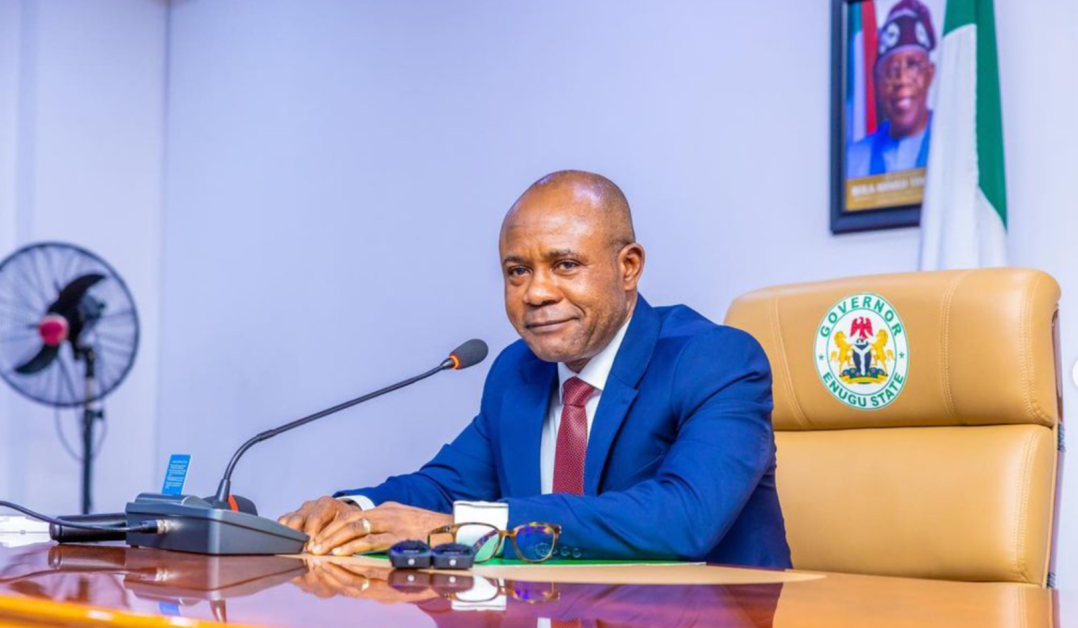
Mbah inaugurates multibillion-naira pharmaceutical company in Enugu
Governor Peter Mbah has inaugurated Anchorage Pharmaceutical Industries Limited, a multibillion-naira pharmaceutical company in Trans-Ekulu, Enugu.

Maiduguri
Shettima arrives in Maiduguri to inaugurate projects
Vice-President Kashim Shettima has arrived in Maiduguri, Borno, to inaugurate Kashim Ibrahim University Teaching Hospital, a hostel, and 104 staff housing units.
Abuja
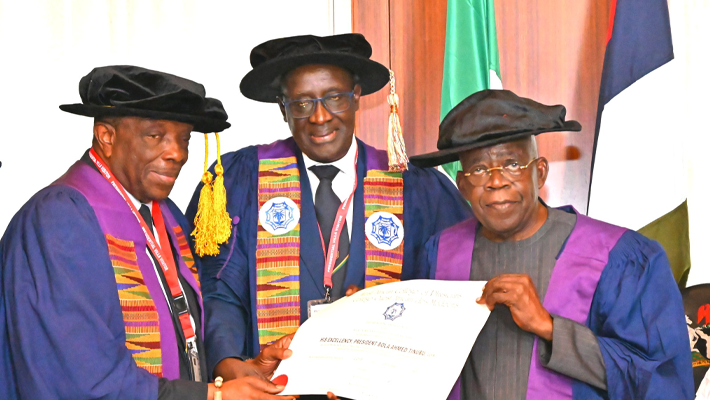
Tinubu receives medical fellowship from WACP
Mr Tinubu said his government was committed to championing comprehensive health sector reforms to make healthcare delivery more accessible and affordable.
Economy
Women-led businesses targeted as DBN, AfDB sign $61 million financing agreement
The Development Bank of Nigeria has signed a $61 million gender-focused financing agreement with the African Development Bank to support women-led businesses.


