

Fuel subsidy only benefits rich; killing Nigeria’s economy: Adesina

The president, African Development Bank (AfDB), Akinwumi Adesina, says fuel subsidy is killing Nigeria’s economy, costing it $10 billion in 2022.
Mr Adesina, who said this at a lecture in Abuja, said Nigeria’s fuel subsidies benefit the rich, not the poor, fueling their government’s endless fleets of cars at the expense of the poor.
“Estimates show that the poorest 40 per cent of the population consume just three per cent of petrol,” he added.
He called for the government’s support for the private sector and modular refineries to allow for efficiency and competitiveness to drive down fuel pump prices.
”The newly commissioned Dangote Refinery by President Buhari, the largest single-train petroleum refinery in the world, and its Petrochemical Complex will revolutionise Nigeria’s economy,” he said.
Mr Adesina also said there was an urgent need to consider the cost of governance, adding that the country spends little on development.
“The cost of governance in Nigeria is way too high and should be drastically reduced to free up more resources for development.
“Today, Nigeria is ranked among countries with the lowest human development index in the world.
“This is with a rank of 167 among 174 countries globally, according to the World Bank 2022 Public Expenditure Review report.”
Citing the report, Mr Adesina said to meet massive infrastructure needs, Nigeria will require $3 trillion by 2050.
Also, he said it would take Nigeria 300 years to provide its minimum level of infrastructure needed for development at the current rate.
He further said there was a need to raise tax revenue, diversify the economy, tackle power challenges, revive rural areas, and invest in human capital.
“We must move away from the so-called youth empowerment programmes, as youths do not need handouts; they need investments.
“What’s needed to unleash the entrepreneurship of the youth in Nigeria are brand new financial ecosystems.
“Ecosystems that understand, value, promote and provide financial instruments and platforms for nurturing youth business ventures at scale.”
On AfDB’s contribution, Mr Adesina said through its partnership with Agence Francaise de Development and the Islamic Development Bank, a $618 million I-DICE programme was initiated.
He said it was initiated to develop digital and creative enterprises, and they will create six million jobs and add $6.3 billion to Nigeria’s economy.
(NAN)

We have recently deactivated our website's comment provider in favour of other channels of distribution and commentary. We encourage you to join the conversation on our stories via our Facebook, Twitter and other social media pages.

More from Peoples Gazette

Agriculture
FG tasks ECOWAS on leveraging financing strategies for agroecology
The federal government has urged stakeholders in the agriculture and finance sectors in the West Africa region to leverage financing strategies to enhance agroecology practices

Politics
Katsina youths pledge to deliver over 2 million votes to Atiku
“Katsina State is Atiku’s political base because it is his second home.”

States
Four killed in Sokoto rainstorm
According to NEMA, many homes and critical public infrastructure, including one primary school and one hospital, were damaged.

Economy
Stakeholders push policy retention as CBN’s monetary policy committee meets
In its 305th meeting in May, the MPC retained the monetary policy rate at 26.5 per cent.

States
Man seeks court order for access to two-year-old son
The judge adjourned the case until August 11 for mention.

States
Police foil cult initiation in Delta, recover firearms
The police spokesman said recovered exhibits included one pump-action gun, one cut-to-size double-barrelled gun, seven live cartridges and two expended cartridges.
Lagos
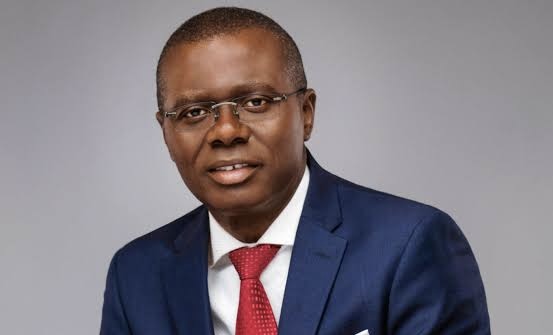
Sanwo-Olu pays N3.1 billion compensation to 300 Lagos property owners
Mr Sanwo-Olu presented more than N3.1 billion in compensation to over 300 property owners affected by government land acquisition.
Economy
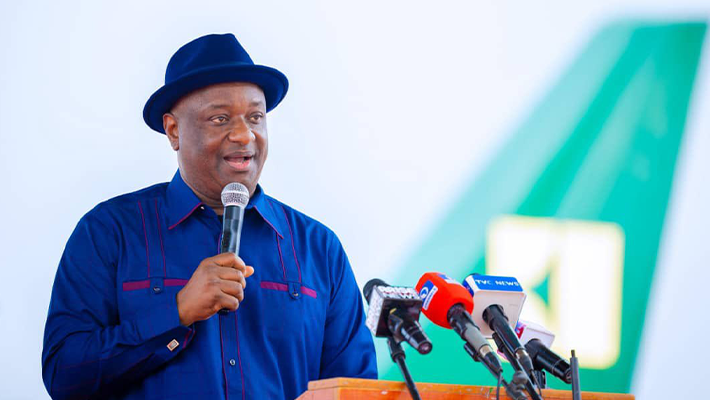
FG pledges policy support for sustainable aviation fuel
He stated that while aviation remains critical to economic growth, the sector must also contribute meaningfully to global efforts to address climate change.


