

Gates Foundation commits $1 billion to equitable AI for health, education, agriculture
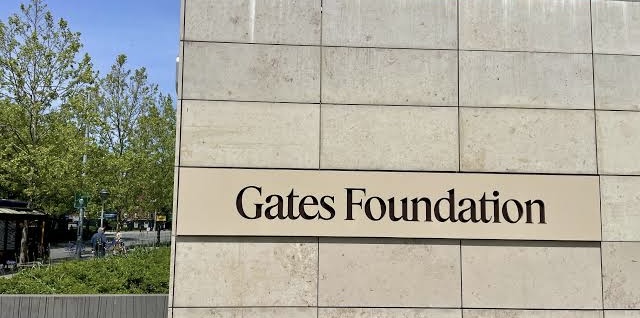
The Gates Foundation has announced plans to invest at least $1 billion over the next two years to expand access to AI.
The investment aims to ensure AI benefits reach people and communities often left behind by technological advances, according to the foundation’s 2026 Goalkeepers Report, titled ‘Make This Matter: AI, Equity, and the Choice We Can’t Delay’ released on Tuesday.
The report marks the 10th edition of the annual Goalkeepers publication. It said that AI could either become a powerful tool for narrowing global inequalities or deepen existing gaps if access and development are left largely to market forces.
It said that the direction of AI was not predetermined, adding that there is a limited opportunity to influence who benefits from the technology.
According to the report, foundation-supported partners were already applying AI in clinics, classrooms and on small farms to address practical challenges affecting people’s health, education and livelihoods.
Bill Gates, chair of the Gates Foundation, said the foundation was created partly to address a basic market failure.
“The foundation addresses the situation in which people with the greatest needs often have the least power to influence where innovation and investment were directed.
“AI presents the same challenge, only at much greater speed,” Mr Gates said.
Mr Gates said that if AI development were left to market forces alone, the most capable tools would likely be developed first for people and institutions with the greatest ability to pay. He said that those who stood to benefit the most could be left behind.
“AI could be used to improve lives and livelihoods on a large scale, but achieving this will require deliberate choices by governments and technology companies. We can harness AI for good. But it will not happen by accident,” he said.
He called for governments and companies developing AI to measure success not by what the technology could do for the most profitable users.
He urged them also to measure success by what it could do for people who stood to gain the most from it.
The report identified key areas where action was needed to ensure AI became more inclusive and useful across different regions, languages, and economic circumstances. It said one priority was ensuring AI tools worked in the languages people actually spoke.
The foundation said that more than 90 per cent of the data used to train early large language models came from English-language sources. It said that this left many communities poorly represented in the datasets on which the systems were built.
“This can limit the usefulness of AI for people whose languages, cultures and local knowledge are not adequately reflected in the technology,” it said.
The report, therefore, called for greater investment in datasets and AI systems that can understand and respond effectively in a wider range of languages. It also stressed the importance of building AI for the environments in which it will be used.
According to the report, effective tools require data, expertise and input from the communities and populations they are intended to serve.
It said countries and communities should have a role in determining how their data is collected, managed and protected, rather than being passive users of technologies designed elsewhere.
Another priority was the investment in people and access. The foundation said that doctors, farmers, teachers and developers needed opportunities to understand how AI systems work, assess their reliability and adapt useful tools to their own circumstances.
It also said that affordable access to AI would require action from technology companies, governments and philanthropic organisations.
The foundation’s new funding commitment would support partners already working to close gaps in access to AI and ensure that the technology reflects the knowledge and priorities of the people who need it most.
Under the planned allocation, 40 per cent of the funding will support education, including AI tutoring to help personalise student learning and classroom teaching tools in the United States and other countries.
Another 40 per cent will support healthcare, including diagnostics, clinical decision-making support for frontline health workers, maternal and newborn care, and the discovery of new medicines and vaccines.
Agriculture will receive 10 per cent, with funding expected to support tools that provide smallholder farmers with AI-generated advice tailored to their soil, weather and crop conditions.
The remaining 10 per cent will go towards the digital foundations required for equitable AI, including datasets in languages that current AI systems do not adequately understand.
The foundation said the funding would help scale up work its partners are undertaking over the next two years. It also called on governments, technology companies, philanthropies, and other stakeholders to contribute resources and expertise to make AI more useful, accessible, and affordable.
“Equitable access to AI will not happen automatically. Properly designed tools can, however, put knowledge and expert advice into the hands of hundreds of millions of people who have not benefited sufficiently from previous technological revolutions,” it said.
The foundation’s approach aligns with its broader efforts to apply AI to global health, education and agriculture. This includes a multi-year partnership announced earlier in 2026 to develop AI tools and shared public resources for underserved communities.
The foundation said its broader objective was to ensure that AI development was shaped by the people and systems expected to use the technology, particularly in low- and middle-income countries.
The Goalkeepers initiative seeks to accelerate progress towards the United Nations Sustainable Development Goals through data, stories and action.
Its annual reports track progress and highlight innovations aimed at tackling poverty, disease and inequality.
The foundation said the 2026 report was ultimately a call to act now to ensure AI becomes a tool for expanding opportunity, not another source of inequality.
(NAN)

We have recently deactivated our website's comment provider in favour of other channels of distribution and commentary. We encourage you to join the conversation on our stories via our Facebook, Twitter and other social media pages.

More from Peoples Gazette

States
Independence: NBA urges Nigerians to expect better future
The NBA said that ordinary Nigerians should be deriving benefit from the subsidy removal rather than hardship.

Agriculture
FG tasks ECOWAS on leveraging financing strategies for agroecology
The federal government has urged stakeholders in the agriculture and finance sectors in the West Africa region to leverage financing strategies to enhance agroecology practices

Politics
Katsina youths pledge to deliver over 2 million votes to Atiku
“Katsina State is Atiku’s political base because it is his second home.”

Hot news Home top
I don’t want migrants from other countries to turn UK into nation of ‘little ghettos’: Kemi Badenoch
The Tory leader argued that immigrants must respect the culture and values of the UK.

States
Religious leaders laud Governor Sani’s inclusive governance
The religious leaders pointed out that Kaduna State now enjoys relative peace and harmony.

Sport
NBA, Quest Water Global to build 1,000 basketball courts in Africa; 55 in DR Congo
According to the statement, the collaboration between the NBA and Quest kicked started on September 29.

Hot news Home top
Tinubu mourns airforce officers in Ondo jet crash, orders probe
The aircraft was on a routine mission from Benin to Lagos when the accident occurred.
Economy
Taiwan, UK strengthen economic, technology ties
Mr Sarwar said the discussions explored opportunities for bilateral cooperation in advanced manufacturing, clean energy and digital trade.

Heading 3
Tinubu returns to Abuja after Lagos visit
The president paid a visit to the Oba of Lagos, Rilwan Akiolu, at his Iga Iduganran Palace on Lagos Island.


