

Nigeria’s political indices: Bright or bleak future?

Let me start by congratulating Publishers of Freedom Online for yet another successful annual lecture, the fourth of such.
I am sure the organisers had the 2023 election in mind when they chose the theme for this year’s lecture to centre around the future of our dear country, Nigeria.
Indeed, I can say that the future of Nigeria is bright as a leader; both in politics and other economic indicators. I can not admit that our future will ever be bleak. I am an optimist and believe strongly that with the right decisions and policies, we can change the narratives and state of the nation currently to an enviable position within the shortest time possible.
A few days ago, I had an audience with a diplomat, and amid our discussion, the future of Nigeria came up. It was surprising for me to see that despite our current challenges, the international community still believed in a futuristic, economically buoyant Nigeria. In fact, many of them fear the endless possibilities that Nigeria can drive if we get our acts together.
But to kick start the process for development, we have to disavow our minds from the prevailing ethnicity and disunity that has enveloped our society.
At every turn in the history of Nigeria, we have never achieved anything meaningful when we tilt towards regional or ethnic self-interest. This is evident from the pre-independent struggles.
Until we formed a coalition of a united Nigeria with commitment and input from all regions and stakeholders in the country, we did not gain independence. Our Independence was to happen in 1953 after Chief Anthony Enahoro’s motion, but our disunity caused a setback.
In 1960, we were more united in the charge for freedom, and we got it. So for us to really develop the country, every stakeholder in the country must forgo whatever bitterness they nurse.
Admittedly, there have been a few missteps. Many, after our independence. And these were occasioned by the struggle for power, distrust among ethnic groups and regional scheming for relevance. A new but latent one, religion seems to be gradually creeping in.
Some policies were made with parochial interests, while some were a child of necessity – some of these decisions encapsulated into our present condition.
The advent of democracy in the fourth republic was supposed to snowball us into prosperity. But while our leaders did their best, apparently, it wasn’t good enough.
It appears that what is required for a prosperous Nigeria is beyond stylish leadership and idealism; rather, what is mainly required in today’s world is realism.
The realisation is that beyond all things, we are alone. Nobody is coming to save us, nobody will provide support to us, and the gift from any country or institution is largely of a Greek Gift in nature.
Once we imbibe this belief, then we can be more patriotic and work assiduously to self-growth.
For Nigeria to reach its potential, it does not require prayers or fasting. God has done his own work for the country; it is left for us to work to ensure our potential does not become a liability.
And when I talk about potentials, what do I mean?
Everywhere, we are being told that Nigeria is blessed with some of the best brains in the world. Human capital resources that can stand toe by toe with anyone in the world. This is rightly so, and we have seen the geniuses of innovations that have come from Nigerians both locally and internationally.
But apart from our human capital, God, in His infinite mercy, granted us a nation with mineral and material resources to sustain itself.
At every turn you take in Nigeria, there is an abundance of mineral resources that, if adequately harnessed, can sustain the entire country and even prosper the whole of Africa as a continent.
There is no single state out of the 36 without a significant mineral or natural resource.
Ogun state, which I governed for eight years, is blessed with an endless supply of limestone, bitumen and crude oil in the offshore region. We also have an enormous amount of cassava which forms the basis of ethanol.
In Zamfara, gold reigns supreme; in Nasarawa and Kogi, we have precious stones like tourmaline and emerald. In Ondo and Edo, we have bitumen, Cocoa and limestone.
In Bauchi, Kaduna, Plateau, we have sapphire, ruby, topaz, garnet, tourmaline and many more.
Our gas potential remains untapped despite having one of the highest gas deposits in the world. Russia today virtually supplies the entire Europe with its gas needs, and you can see that despite the global sanctions against the country, gas was not touched by the European countries.
Japan, the greatest automobile producer in the world, has practically nothing; No single mineral resource, yet it is one of the most developed. So for us as a nation with such much abundance, what we can achieve is best imagined.
Our task has been cut out for us. Clearly, we have to stop dreaming of a better Nigeria and start working towards achieving one. It is not enough to have passion and vision. Without a roadmap dutifully followed, we will never leave the trenches.
The only way we can leave the trenches is by putting into power individuals who are realists. We don’t need PowerPoint presentations and well-written manifestos that end up in the dustbin of history. We need leadership that, as they say in the mathematical parlance, “show workings”. Anybody can write and make promises, but we have to be intentional in ensuring that we elect those who know how to bring to life these visions.
If someone promises to create television, don’t just clap; ask the person questions on how they intend to do that.
But again, we would have lost the morality to question our leaders properly if we continued to indulge the menace threatening our democracy: vote-buying.
It is impossible to sell an item and still wish to dictate to the buyer how to use it.
Nigerians have to realise that the only way to see a developed Nigeria is to ensure that they vote with their brain and not their stomach. A night with hunger is far better than four years of pain and struggle.
The next election offers us an opportunity to rewrite the destiny of this country. The decision we make next year will be with us for arguably eight years. That’s long enough to make the country better or make it worse.
Thank you all, and God bless.
(Being Text of a Keynote Address by His Excellency, Otunba Gbenga Daniel, FNSE, FAEng, former Governor of Ogun State (2003-2011)).

We have recently deactivated our website's comment provider in favour of other channels of distribution and commentary. We encourage you to join the conversation on our stories via our Facebook, Twitter and other social media pages.

More from Peoples Gazette

States
Independence: NBA urges Nigerians to expect better future
The NBA said that ordinary Nigerians should be deriving benefit from the subsidy removal rather than hardship.

Agriculture
FG tasks ECOWAS on leveraging financing strategies for agroecology
The federal government has urged stakeholders in the agriculture and finance sectors in the West Africa region to leverage financing strategies to enhance agroecology practices

Politics
Katsina youths pledge to deliver over 2 million votes to Atiku
“Katsina State is Atiku’s political base because it is his second home.”
Sport
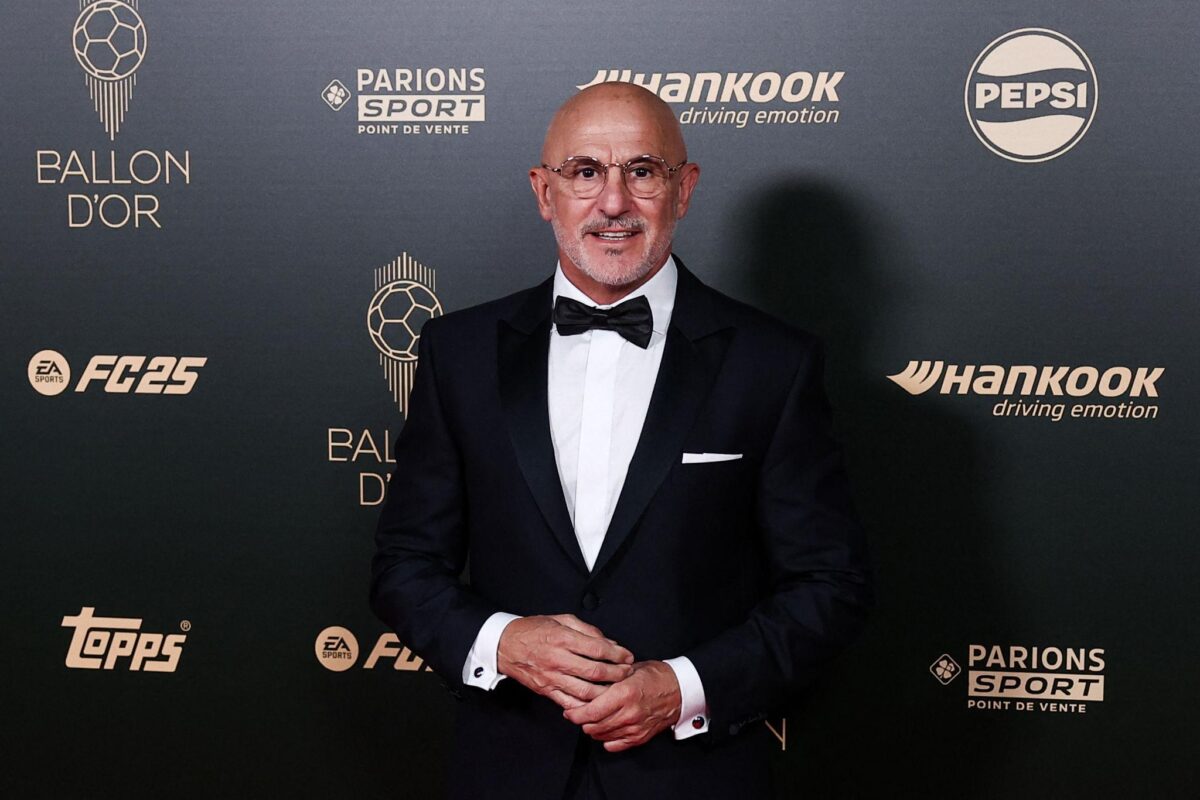
Ballon d’Or: Spain’s Luis de la Fuente wins ‘Men’s Coach of the Year’
Spain manager Luis de la Fuente won the ‘Men’s Coach of the Year’ award on Monday at the 2026 Ballon d’Or ceremony at the London Palladium, England.

Heading 4
Microsoft moves to lay off 60,000 employees to cut costs
Microsoft says it is offering buyouts to about 60,000 of its global workforce to cut costs and free up resources to fund its AI investments.

Health
Nigerians demand immediate return of N10 billion Ebola fund from Gbajabiamila
Nigerians are asking Femi Gbajabiamila, the chief of staff to President Bola Tinubu, to account for the ₦10 billion the administration approved for the Ebola emergency response.
Politics
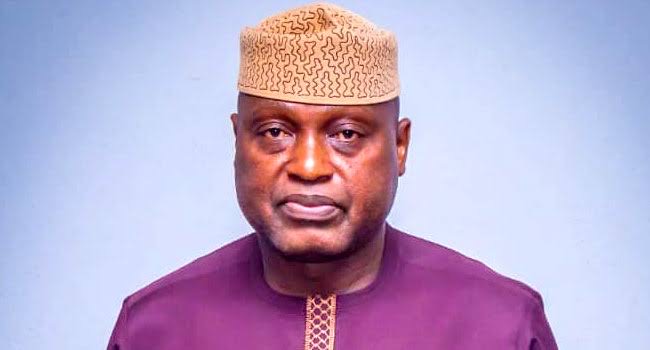
Oyebanji asks Ekiti assembly to approve three commissioners, 10 advisers
Governor Biodun Oyebanji has sought the Ekiti State House of Assembly’s approval to reappoint three commissioners and appoint 10 special advisers.
World
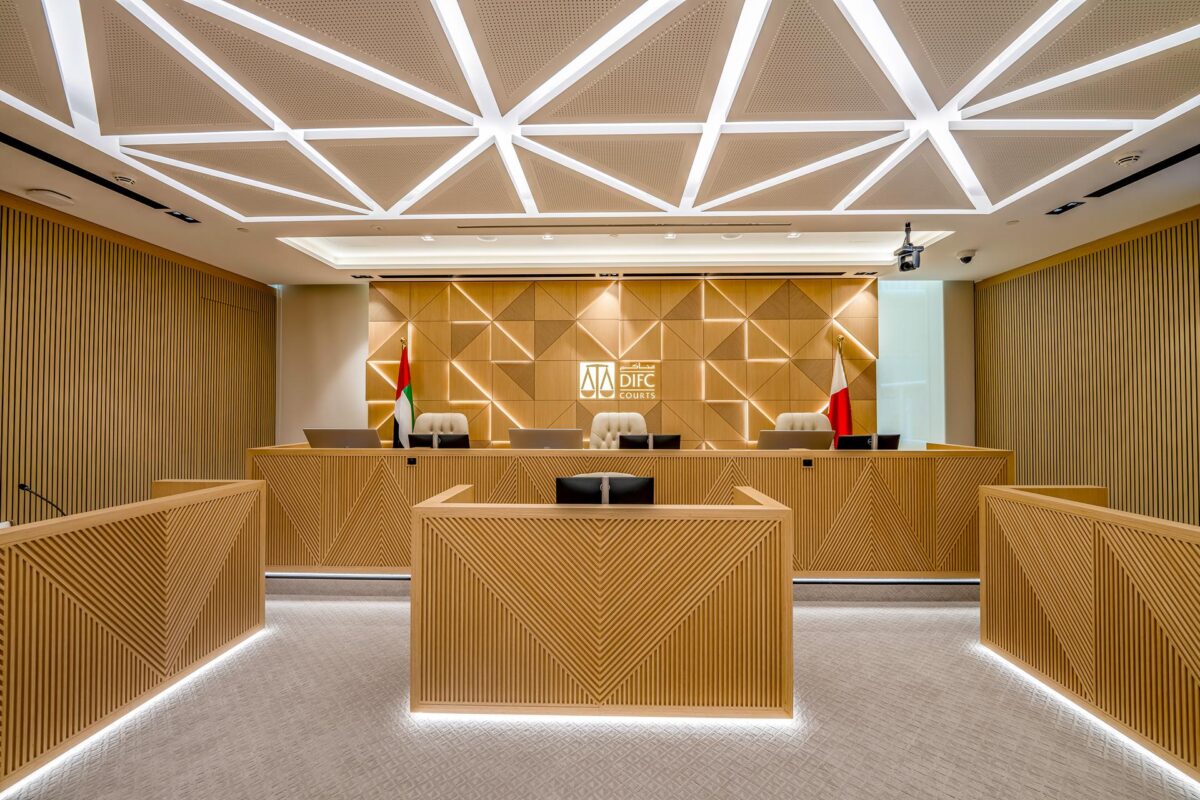
Mother stranded after daughter evicts her from inherited home
The transfer left the mother vulnerable, as the daughter became the sole registered owner of the property.
Hot news Home top
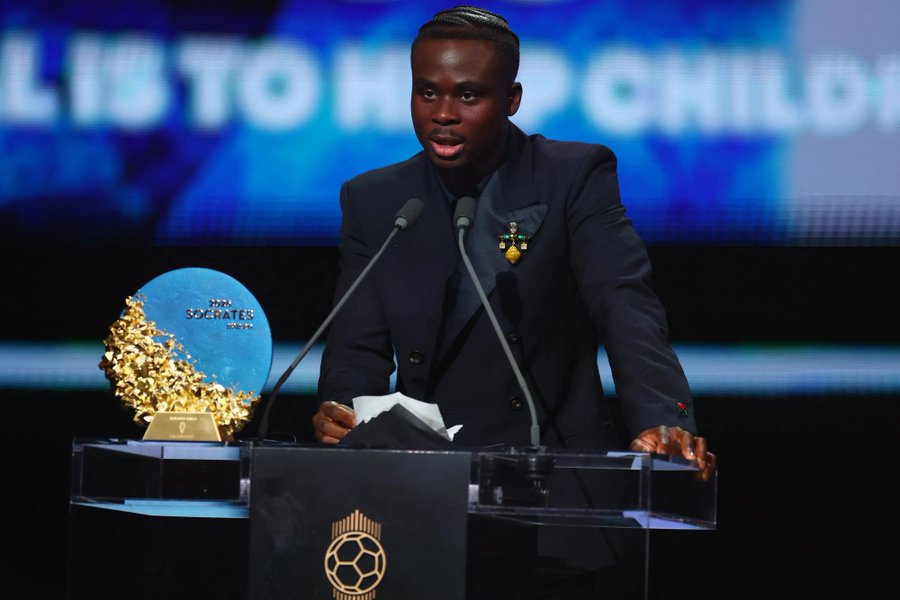
2026 Ballon d’Or: Arsenal’s Bukayo Saka wins Socrates Award for humanitarian work
Bukayo Saka wins the 2026 Ballon d’Or Socrates Award for his support of charity and humanitarian services.


