

German Chancellor Scholz wants to bring African Union into G20
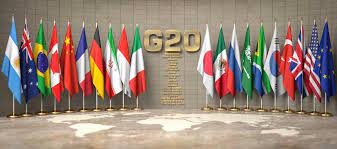
German Chancellor Olaf Scholz has spoken out in favour of the African Union (AU) joining the influential Group of 20 (G20) leading economic powers.
Mr Scholz said this on Thursday at the start of his three-day trip to Africa during a visit to the AU in Addis Ababa.
“This is dictated by respect for the continent and its many states and also its growing population,” he said.
The chancellor said he was optimistic that the G20 would decide to admit the AU in the foreseeable future.
“I have had many discussions and I have the feeling that there is broad, growing support for this,” he added.
He expects that the accession of the 55-nation AU can succeed “in the not too distant future,” he said after talks with AU Commission Chair Moussa Faki.
Currently, the G20 comprises 19 countries and the European Union, including the world’s most populous states and largest economies.
Members include the United States, China, Russia, India and Germany.
A summit is held every year, with the next one due in India this September.
From Africa, only South Africa has joined so far, a country that is currently viewed with scepticism by the West because of its closeness to Russia.
South Africa has always abstained from voting in the UN General Assembly on the condemnation of Russia’s war against Ukraine and forms the BRICS group of states with China, Russia, India, and Brazil.
By way of comparison, South America is represented by Argentina and Brazil, and Asia by China, Japan, India, Indonesia, and South Korea, as well as Saudi Arabia, which can also be geographically counted as part of Asia.
The African desire for more co-determination is not new. For decades, the continent’s states have been trying to get a seat on the UN Security Council.
However, every attempt to reform the body has failed, mainly because the veto powers – the US, France, Britain, China and Russia – block each other.
This is one of the reasons why efforts to strengthen Africa’s international representation are now focusing on the G20.
South Africa’s President Cyril Ramaphosa had already spoken out last year in favour of a place for the AU in the G20.
He received support from French President Emmanuel Macron, who encouraged future AU participation at the G20 summit in Bali.
U.S. President Joe Biden joined Macron’s push and promoted the AU’s inclusion in the G20 during a US-Africa summit in December 2022.
With 55 countries, the AU includes all African countries that are generally recognised internationally, as well as Western Sahara, a disputed country under international law.
The AU thus represents the interests of around 1.4 billion people.
By comparison, only about one third as many people – 447.7 million – live in the European Union. According to the International Monetary Fund, the countries of the AU generated around $3 trillion last year, while the EU generated almost $17.6 trillion.
Ethiopia is Mr Scholz’s first stop on his second major trip to Africa as head of government.
He also plans to discuss regional conflicts, renewable energies and the Russian war against Ukraine.
With around 120 million residents, Ethiopia is the second most populous state in Africa after Nigeria.
A two-year civil war over Ethiopia’s northernmost Tigray region resulted in hundreds of thousands of deaths and only ended in November with the agreement of a ceasefire.
In the evening, the trip continues to Kenya, Germany’s most important partner country in East Africa.
In Kenya, the German chancellor plans to turn his attention to green energy initiatives with a visit to the continent’s largest geothermal plant at Lake Naivasha.
Germany was the first country to recognise Kenya’s independence declaration from Britain in 1963.
Today, Kenya is Germany’s most important trading partner on the continent.
Mr Scholz travelled to Africa for the first time in May 2022 very early after taking office, visiting the German military forces in Niger, the West African country of Senegal and South Africa, the continent’s only G20 member.
The second trip after only 17 months in office should now show that he does not want to leave the continent to the very active competitors China and Russia.
By comparison, it took his predecessor Angela Merkel almost two years to make her first major trip to Africa.
(dpa/NAN)

We have recently deactivated our website's comment provider in favour of other channels of distribution and commentary. We encourage you to join the conversation on our stories via our Facebook, Twitter and other social media pages.

More from Peoples Gazette

Agriculture
FG tasks ECOWAS on leveraging financing strategies for agroecology
The federal government has urged stakeholders in the agriculture and finance sectors in the West Africa region to leverage financing strategies to enhance agroecology practices

Politics
Katsina youths pledge to deliver over 2 million votes to Atiku
“Katsina State is Atiku’s political base because it is his second home.”
States
Two men, pharmaceutical firm arraigned over fake Coartem tablets: NAFDAC
The agency said the defendants were arrested following an operation conducted by the Investigation.
States
NAFDAC raises alarm over counterfeit medicines, bottled water, other products
Dosunmu expressed delight at the number of participants.

NationWide
Your data secure, NIMC assures Nigerians
Abisoye Coker-Odusote, as ordering a comprehensive investigation into the matter.

States
Wike’s Rainbow Coalition self-serving, says Gov Makinde’s aide
Mr Ehilebo said the 2027 general elections transcended political parties.
World
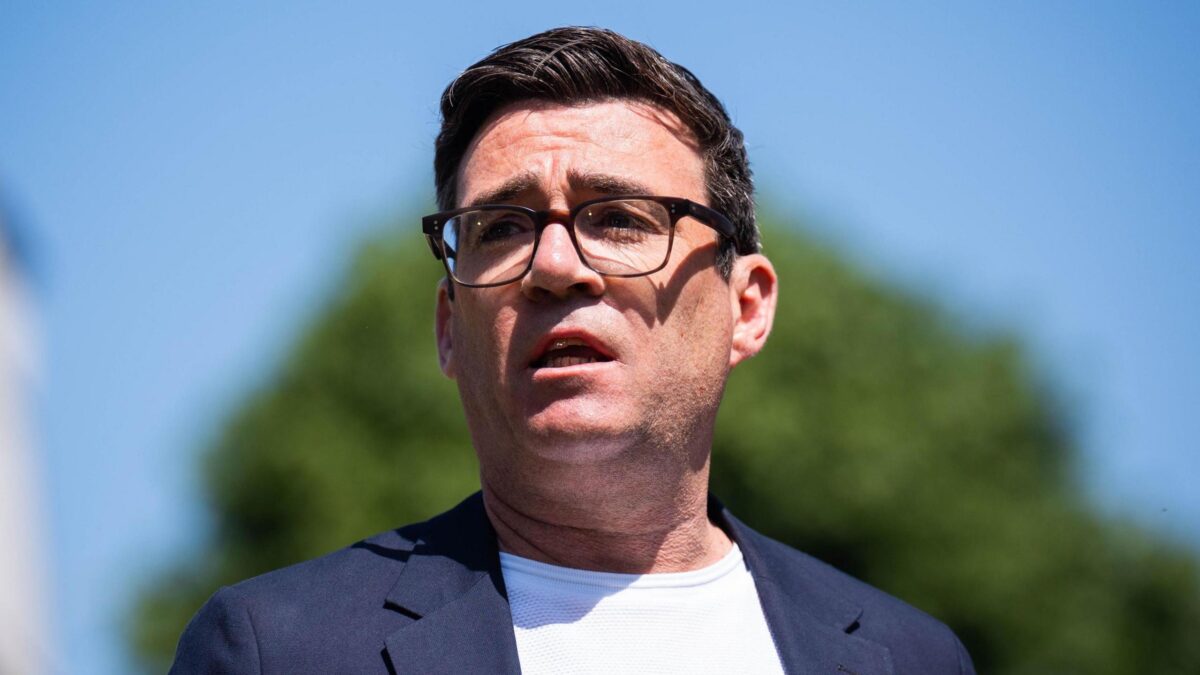
UNGA81: UK says Russian agencies spreading disinformation, vows to harness Al’s potential
Mr Burnham said the Kremlin spent around £1.3 billion annually on manipulating information.

States
39th Anniversary: Gov. Eno hails Akwa Ibom’s founding fathers’ sacrifice, patriotism
The governor said the state witnessed 39 years of faith, resilience, sacrifices, progress and unfailing grace.


