


Global economy improved despite uncertainty: IMF

The International Monetary Fund (IMF) says the global economy has improved tremendously amid uncertainty.
The IMF managing director, Kristalina Georgieva, gave the description on Thursday in Washington while making a presentation on the “Global Policy Agenda” at the ongoing annual meetings of the World Bank Group.
According to Ms Georgieva, uncertainty has continued to go up.
“Gold values too have shown such resilience in the face of uncertainty and profound transformations in geopolitics, in technology, in trade relations, and in demography,” she said.
She gave two core reasons for the global economic situation.
“Firstly, improved policy fundamentals. Since the global financial crisis, many countries, especially emerging markets, have pursued sound policies.
“They have strengthened their institutions; they have strengthened their frameworks; this investment is paying off, and if I may say, they stayed the course.
“Secondly, the adaptability of the private sector, which has shown agility in import front-loading, in supply chain strengthening, and in just navigating uncertainty, is quite remarkable,” she said.
She, however, said the outlook was underwhelming. According to her, medium-term growth prospects remain weak.
“Public debt is near record highs and continues to climb, and the global economy is excessively imbalanced.
“The forces of change are making the global economy less predictable, and it is impacting people. People are anxious; they are taking to the streets to demand better opportunities,” she said.
Ms Georgieva said the private sector handled uncertainty better and stressed that for it to thrive, countries must push ahead with broad and ambitious domestic reforms.
She urged member countries to keep trade as an engine of growth, stating that this can be accomplished when the basic building blocks of private enterprise are in place.
“This brings me to the second priority: secure sound macroeconomic fundamentals for navigating a more turbulent world.
“On fiscal policy, countries must rebuild fiscal space and reduce debt. This means relying more on domestic sources of revenue and making smart budget choices.
“On monetary and financial sector policies, the priority remains to preserve stability and guard against financial stability risks,” she said.
She also called for a reduction in global imbalances, noting that countries with excessive surpluses, like China, should boost domestic demand, including by spending less on industrial policy and more on social safety nets.
“Those with excessive deficits, notably the United States, need to reduce fiscal deficits and incentivise private savings.
“As always, at the IMF, we are focused on what we can do to strengthen economic and financial stability, resolve balance of payment problems, and build strong policies and institutions,” she said.
The IMF managing director said there were a couple of very important developments that the fund was pursuing.
“We have in motion a comprehensive surveillance review to sharpen the focus on surveillance, including our advice on trade policies and domestic reforms to rebalance the economy.
“We have an ongoing review on conditionality. It will strengthen programme design so we can better support our members and help them navigate this more uncertain world.
“To ensure our capacity to provide much-needed financing to low-income countries, we need to continue to mobilise our members to fully implement the PRGT reform agreed upon last October,” she said.
She also called on members to look carefully into the “catastrophic payment and relief trust.” According to her, it is very useful to help the poorest of the poor during COVID, but it is depleted.
”For the new shocks to come, we need to seriously consider replenishing it.
“Finally, on debt, we continue our work on the Global Sovereign Debt Roundtable. We continue to work on reviewing the debt sustainability framework for low-income countries.
“We intend to make more systematic use of our good offices to improve coordination between creditors and debtors,” she said.
According to Ms Georgieva, uncertainty is here to stay, and change is unstoppable.
“But with change comes opportunity, and in the IMF, we will continue to help our countries to pursue opportunities in front of them.
“As a prudent steward of our members’ resources, we are going to be right there for them every step of the way. I can share with you that I have had extensive meetings with regional groups across the membership.
”The interest in the fund to provide calibrated, detailed, country-specific advice for this moment in time is just overwhelming,” she said.
(NAN)

We have recently deactivated our website's comment provider in favour of other channels of distribution and commentary. We encourage you to join the conversation on our stories via our Facebook, Twitter and other social media pages.

More from Peoples Gazette

Agriculture
FG tasks ECOWAS on leveraging financing strategies for agroecology
The federal government has urged stakeholders in the agriculture and finance sectors in the West Africa region to leverage financing strategies to enhance agroecology practices

Politics
Katsina youths pledge to deliver over 2 million votes to Atiku
“Katsina State is Atiku’s political base because it is his second home.”
World
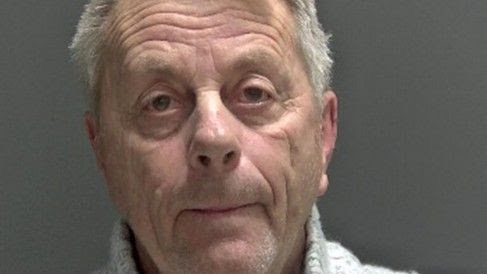
UK court jails 70-year-old man after DNA links him to sex offence in 1990s
The police described Mr Pearce as a “prolific sex offender who targeted children.”

Education
Army commander warns students against age falsification, exam malpractice
The commander urged students to embrace discipline, hard work, and academic excellence as essential foundations for success in life.

States
China tests latest research, development feats on space station
The Institute of Mechanics at the Chinese Academy of Sciences has developed a flexible gripper inspired by spider legs.

NationWide
Stakeholders recommend family-centred approach to tackling insecurity
Mr Obasanmi said that every Nigerian has a role to play in creating a secure environment where people can live and move freely without fear.

World
UAE launches passenger rail network to connect emirates
The arrival of the first train from Fujairah station at Mohamed bin Zayed City station in Abu Dhabi was marked by celebratory events.
Africa
Ghana joins international information exchange via TV BRICS
GNA is Ghana’s leading state news agency founded in 1957 with headquarters in Accra.


