

Governors urged to embrace non-custodial prison sentences

A retired controller of corrections, Francis Enobore, has urged state governments to embrace non-custodial measures and accelerate the delivery of justice to tackle persistent overcrowding in custodial centres across the country.
Mr Enobore, a former spokesman for the Nigeria Correctional Service, gave the charge in an interview on Monday in Abuja.
He said the recent disclosure by the interior minister, Olubunmi Tunji-Ojo, that 93 per cent of inmates in custody were being held for state offences highlighted the critical role of state governments in addressing prison congestion.
He also said that with Nigeria’s custodial population estimated at about 80,733 inmates, with less than 6,000 being held for federal offences, the overwhelming majority were in custody for violations of state laws.
”When concerns are raised about delays in justice dispensation and overcrowding in custodial centres, attention should naturally shift to the states whose laws have been violated and whose agencies initiated the arrests.
”What is disturbing is that many accused persons are virtually abandoned after arrest, while the machinery of justice slows down, leaving them to spend years awaiting trial,” he said.
Mr Enobore also noted that more than 65 per cent of inmates in the country’s custodial facilities were awaiting trial.
He described the development as a major contributor to overcrowding, adding that some detainees accused of minor offences remained in custody for prolonged periods despite the availability of alternatives that could resolve such cases without imprisonment.
”Nigeria’s criminal justice system has continued to rely excessively on incarceration as a form of punishment, even in cases where non-custodial sanctions would be more appropriate.
”There is a widespread belief that unless an offender is sent to prison, justice has not been served. However, there is no empirical evidence to support the notion that imprisonment is always the best deterrent.
”In many cases, excessive reliance on imprisonment creates additional challenge and undermines the objectives of correctional administration,” he said.
The former NCoS spokesman warned that overcrowded custodial centres often expose minor offenders to hardened criminals, making proper classification and rehabilitation difficult.
He added that the situation increased the risk of radicalisation, recidivism and security breaches within correctional facilities.
”When custodial centres are overcrowded, inmates are subjected to difficult living conditions and limited access to rehabilitation programmes. This not only affects inmates but also places enormous pressure on correctional personnel and infrastructure,” he stated.
Highlighting the financial implications of overcrowding, particularly for state governments, he said that at the current feeding allowance of N1,125 per inmate a day, the estimated 75,081 inmates being held for state offences would require more than N2.53 billion monthly for feeding alone.
According to him, the amount excludes expenditures on accommodation, healthcare, clothing, potable water, electricity, logistics for court appearances, security and vocational training programmes.
He noted that with the movement of correctional services from the Exclusive Legislative List to the Concurrent Legislative List, state governments would increasingly bear greater responsibility for correctional administration.
The retired corrections officer stressed that sustainable solutions would only emerge through a proper understanding of the causes of overcrowding.
”Overcrowding has continued to undermine correctional interventions by limiting access to healthcare, rehabilitation and reformation programmes. It also raises concerns about human rights, inmate welfare and staff productivity,” he said.
Enobore stressed that Nigeria already possessed adequate legal instruments for reducing prison congestion.
According to him, available alternatives to imprisonment include community service, probation, restorative justice, fines, suspended sentences, house arrest, electronic monitoring, compensation orders and other non-custodial sanctions.
(NAN)

We have recently deactivated our website's comment provider in favour of other channels of distribution and commentary. We encourage you to join the conversation on our stories via our Facebook, Twitter and other social media pages.

More from Peoples Gazette

States
Independence: NBA urges Nigerians to expect better future
The NBA said that ordinary Nigerians should be deriving benefit from the subsidy removal rather than hardship.

Agriculture
FG tasks ECOWAS on leveraging financing strategies for agroecology
The federal government has urged stakeholders in the agriculture and finance sectors in the West Africa region to leverage financing strategies to enhance agroecology practices

Politics
Katsina youths pledge to deliver over 2 million votes to Atiku
“Katsina State is Atiku’s political base because it is his second home.”

States
NILDS challenges Akwa Ibom councillors to strengthen grassroots governance
The director-general reaffirmed NILDS’ commitment to strengthening democratic governance through capacity development.

States
Abia tightens preventive measures against Ebola
The commissioner said that the ministry of health also issued preventive guidelines in its Week 43 health advisory.
Heading 2
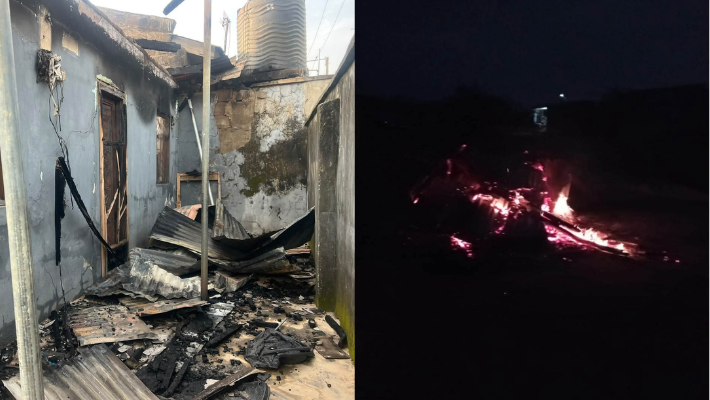
Couple, newborn rescued as fire guts multiple buildings in Kwara
The chief fire officer, Alabi Muhammed, sympathised with the affected residents, property owners and business operators over the losses recorded in the incident.

Africa
COAS, Zambian army chief seek stronger African military cooperation
Mr Zyeele commended the Nigerian army for its contributions to regional security and efforts to combat terrorism.

NationWide
FMBN launches non-interest mortgage product to expand homeownership
Kano State governor said the initiative would improve access to affordable housing for people.

Health
NCDC tasks journalists on accurate Ebola reports
Mr Idris assured the media that the agency would acknowledge and correct errors when necessary.


