

Health insurance enrollees seek improved services, decry cumbersome process

Some enrollees of the National Health Insurance Scheme in the Federal Capital Territory have called for improved services and less stress, saying they go through cumbersome measures whenever they want to access health services.
The enrollees of the scheme, now National Health Insurance Authority expressed their concerns during separate interviews in Abuja on Sunday.
Launched in 2005 as a policy for better healthcare delivery to the public, NHIS was established by Decree 35 of 1999 (now Act 35), operating as a Public Private Partnership to provide accessible, affordable and quality healthcare for Nigerians.
The mandate of the scheme, which was reviewed in 2022 and the name changed to NHIA from NHIS, is to attain Universal Health Coverage in Nigeria by 2030.
The mission is to mobilise and pool financial resources for strategic purchasing of affordable and quality healthcare for all.
NHIA is a social network programme established to provide easy, quality healthcare access to Nigerians at affordable cost.
Health Maintenance Organisations were, therefore, appointed as agents to buy healthcare services from public and private healthcare providers; thus, HMOs and NHIS work together, with the HMOs being regulated by the scheme.
However, subscribers/enrollees complained of nonchalant treatment by accredited hospitals.
While some enrollees expressed displeasure over long hours before seeing a doctor, others said major health concerns such as cancer, heart disease, sickle cell disorder, diabetes or even high blood pressure are not covered.
A civil servant and an enrollee, Ese Williams, said she was referred from the accredited hospital she had been attending for further review of her health condition to another hospital, but it took hours to see a doctor because she must provide code for every treatment.
Mrs Williams said, “The worst part is that when requests are sent to HMOs, they do not respond on time. It takes more than three hours to respond and the sick patient keeps waiting, after leaving his/her house early to access treatment. It is frustrating.”
Another enrollee civil servant, Julia Steve, also living in Abuja, said she abandoned the hospital assigned to her to access medicare under the scheme and always pay her hospital bill as a private patient “because of poor services and the way some hospitals treat patients under the scheme.
She added, “I don’t know why some accredited NHIS hospitals keep complaining that money has not been remitted to them, while drugs are always not available.”
According to her, she has not used the service for almost eight years due to the nonchalant attitude of the hospital.
She, therefore, called on the government to monitor what hospitals and HMOs are doing in terms of services to enrollees.
“If they are monitored, those not doing well should be delisted,” Ms Steve said.
Another enrollee also residing in Abuja, Emeka Ojiofor, said that the insurance policy was supposed to alleviate the financial burden of citizens on health.
Mr Ojiofor urged government to create more awareness about the scheme for enrollees to know the services and ailments covered under the programme and those not covered for patients to know.
He said that the issue of obtaining code from HMOs before a patient is attended to is cumbersome, suggesting that NHIA should deal directly with the hospitals, instead of going through HMOs.
The Chief Executive Officer of Ultimate Health, an NGO, Dr Lekan Ewenla, said there that there were optional guidelines to take care of the issue of code, where the primary provider can refer a particular enrollee to access care at the secondary level.
He explained that all that is required is pre-alteration code.
Mr Ewenla said that the code would be expected to be promptly issued by HMOs so that the facility can commence treatment.
On the issue of delay, he said that over the years, it had been confirmed that healthcare facilities use codes obtained in January until March, as well as other services.
He explained that “code given for caesarean section should not be used for fibroids. HMOs keep getting bills that are not within the approval code. Code given for specific treatment should be restricted for only that treatment.
“We have seen a situation whereby a facility will ask for code to do appendicostomy and they will extend it to other services. And by the time they are sending the bill that is meant for N80,000, you will see a bill of N325,000 coming from the facility.”
He said that the Director-General of NHIA, Dr Kelechi Ohiri, was reviewing the operational process of the authority to ensure better performance.
He added that once the challenges in the health insurance ecosystem were addressed, the regulator should play according to the rules and focus on the right things.
He advised enrollees to collect phone numbers of their health providers and then reach out to the HMOs, adding that “any HMO that is not reachable should be queried. On the issue of inferior drugs, the scheme introduced the prescription of generic medications which people assume are inferior drugs, but they are also good as the branded ones.
“NHIA has initiated a process of branding medications that would be utilised on the health insurance programmes. You will see the package as NHIA medications and it will eliminate the perception of generic medications.”
(NAN)

We have recently deactivated our website's comment provider in favour of other channels of distribution and commentary. We encourage you to join the conversation on our stories via our Facebook, Twitter and other social media pages.

More from Peoples Gazette

States
Independence: NBA urges Nigerians to expect better future
The NBA said that ordinary Nigerians should be deriving benefit from the subsidy removal rather than hardship.

Agriculture
FG tasks ECOWAS on leveraging financing strategies for agroecology
The federal government has urged stakeholders in the agriculture and finance sectors in the West Africa region to leverage financing strategies to enhance agroecology practices

Politics
Katsina youths pledge to deliver over 2 million votes to Atiku
“Katsina State is Atiku’s political base because it is his second home.”
Health
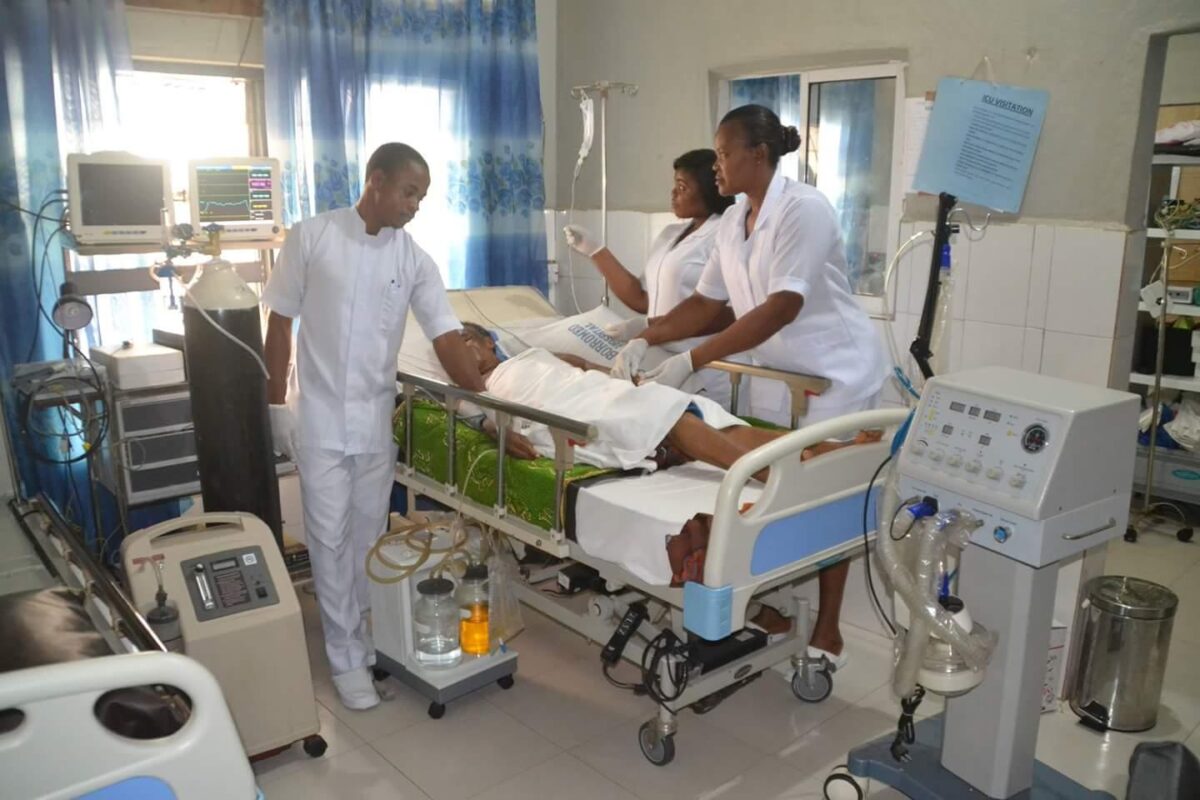
Ebola: Anambra deploys nurses to airport, activates hotlines
The Anambra government deployed nurses to Chinua Achebe International and Cargo Airport to strengthen surveillance and response to suspected Ebola cases.
![Afghan security operatives [Photo Credit: TOPSHOT AFGANISTAN SECURITY POLICE]](https://gazettengr.com/wp-content/uploads/PC8yZ5wjhNUtQEaSpT8WUk0peLue9IxBtGz58d_OKPlkSiS9WjjzcxJgYuPoviVm4WoVshpXBjFmhkXOHWs-zZWLbMsvNHQuDQVOsQgMZEJFoVcft8rF-WHc08hGqnEeT5agLBVA04OD9yDIyzoIbvftomCVxlvqEImwyS_h5Wy_gLW7ByZegchvcNIpFgL3-1200x799.jpg)
World
Three kidnappers arrested in Afghanistan, abducted pupil freed
Afghan security operatives on Wednesday rescued an abducted pupil from the clutches of kidnappers in southern Afghanistan’s Kandahar province.

Africa
Senegal’s Sall quits UN secretary-general race after Security Council vote
Mr Sall withdrew his candidacy for United Nations secretary-general after an informal Security Council vote revealed insufficient support for his bid.
States
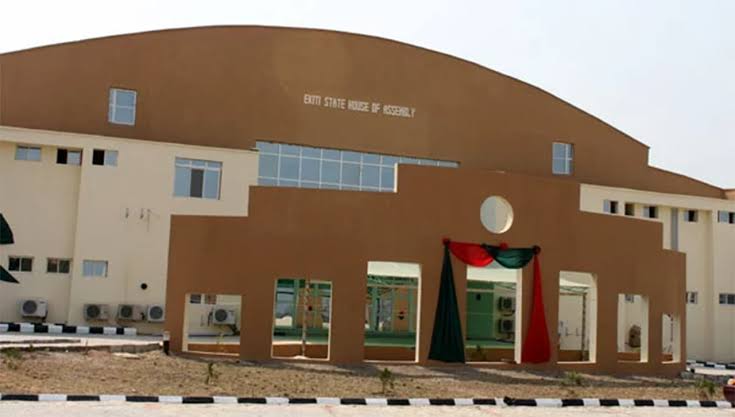
Ekiti assembly passes state police bill
Its speaker, Adeoye Aribasoye, disclosed this on Wednesday during plenary in Ado-Ekiti.
Economy
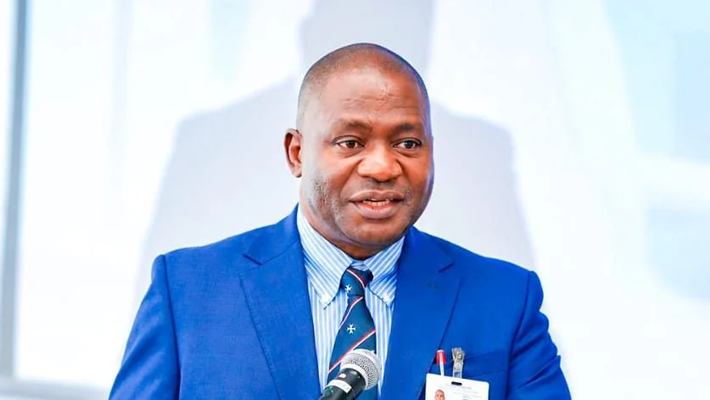
Security bedrock of Nigeria’s trillion-dollar economy ambition, says defence minister
Defence chief says sustainable national security, strong governance, and credible institutions are indispensable for Nigeria’s transition into a trillion-dollar economy.

Health
Ebola: Ogun steps up surveillance
The Ogun government says it has heightened surveillance, following the federal government’s confirmation of an Ebola case in Abuja.


