

Health Sovereignty: African leaders target 60% local manufacturing by 2040
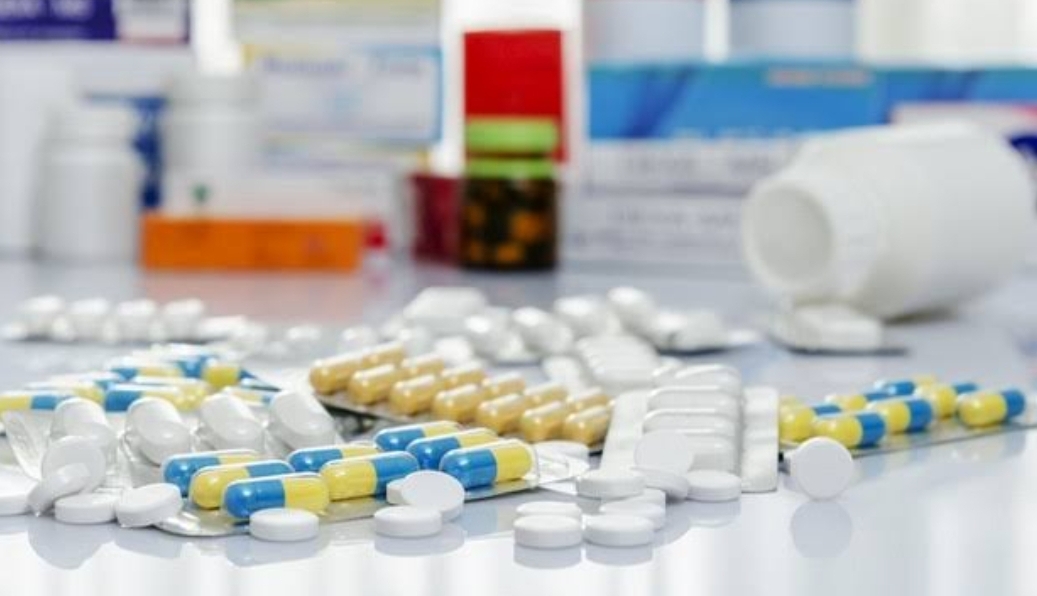
African leaders have renewed efforts for health sovereignty, adopting a presidential declaration to produce at least 60 per cent of health products locally by 2040.
The declaration was adopted at the 39th Ordinary Session of the African Union (AU) in Addis Ababa on Saturday.
It signals a shift from policy to action, including pooled procurement, financing mechanisms, and skills transfer across member states.
The Africa Centres for Disease Control and Prevention (Africa CDC) is central to the strategy.
It was gathered that Africa CDC is championing the African Pooled Procurement Mechanism (APPM) as a “Buy African” market-shaping initiative.
Despite a population of more than 1.4 billion people, Africa currently imports between 70 and 90 per cent of its pharmaceuticals and nearly all its vaccines and high-end diagnostics.
Renowned virologist Oyewale Tomori said the COVID-19 pandemic exposed Africa’s heavy reliance on imports.
This, he said, was when export bans, supply chain disruptions, and vaccine nationalism left many African countries at the back of the global queue.
Mr Tomori said the AU’s declaration aimed to reverse this trend through demand aggregation, long-term offtake agreements, and an APPM Capital Fund to support African manufacturers.
For Nigeria, he said the declaration could be a turning point, given its position as the continent’s largest pharmaceutical market.
‘’Meanwhile, Nigeria already has a growing pharmaceutical manufacturing base, including companies such as Fidson Healthcare Plc, May & Baker Nigeria Plc, Biovaccines Nigeria Ltd., and Innovative Biotech in Nigeria,‘’ he said.
Industry stakeholders said the success of the AU initiative could expand regional export opportunities for Nigerian firms under the African Continental Free Trade Area (AfCFTA).
Maimuna Abdullahi, a health economist and monitoring and evaluation specialist at the Africa Health Budget Network, said predictable pooled procurement contracts could improve manufacturers’ access to capital.
“The biggest challenge for African manufacturers is market uncertainty. If governments guarantee long-term offtake through pooled procurement, banks are more willing to finance expansion,” Mr Abdullahi said.
The declaration commits AU member states to mobilise sustainable financing and operationalise ‘’Regional Capacity and Capability Networks” to enhance skills development and technology transfer.
However, a vaccine development expert and CEO of Innovative Biotech, Simon Agwale, noted that achieving 60 per cent local production by 2040 would require regulatory harmonisation across African markets.
He also noted that stable power, industrial infrastructure, access to affordable foreign exchange, and strong national medicines regulatory authorities were required.
For Nigeria, he said, alignment among the Federal Ministry of Health, the Ministry of Industry, Trade and Investment, and financial institutions would be essential.
The declaration endorses an Extraordinary Summit on African Health Products Manufacturing in Nairobi in the second quarter of 2026.
The summit will be chaired by Kenya’s president, William Samuel Ruto, and the AU Champion on Local Manufacturing.
Observers said the Nairobi summit would test whether the political commitment translated into legally binding procurement reforms and concrete investment pledges.
One of them, public health policy analyst Gabriel Adakole, argued that local manufacturing was no longer just an industrial policy issue but a health security necessity.
“During recent global emergencies, including COVID-19 and mpox outbreaks, supply constraints limited access to essential vaccines and diagnostics across several African countries,” he said.
Mr Adakole said strengthening domestic production could reduce Africa’s vulnerability to global shocks, create jobs, and build resilient supply chains.
“For Nigeria, the question is whether this continental ambition can catalyse long-awaited reforms in industrial policy, financing, and regulatory strengthening and position the country as a regional pharmaceutical hub,” he said.
If effectively implemented, he said, the AU’s 2040 target could reshape Africa’s health economy and redefine its place in global health supply chains.
(NAN)

We have recently deactivated our website's comment provider in favour of other channels of distribution and commentary. We encourage you to join the conversation on our stories via our Facebook, Twitter and other social media pages.

More from Peoples Gazette

States
Independence: NBA urges Nigerians to expect better future
The NBA said that ordinary Nigerians should be deriving benefit from the subsidy removal rather than hardship.

Agriculture
FG tasks ECOWAS on leveraging financing strategies for agroecology
The federal government has urged stakeholders in the agriculture and finance sectors in the West Africa region to leverage financing strategies to enhance agroecology practices

Politics
Katsina youths pledge to deliver over 2 million votes to Atiku
“Katsina State is Atiku’s political base because it is his second home.”

States
Turkish Airlines increases Lagos flights from seven to 10 weekly
The statement added that the increase was aimed at meeting the growing travel demand between Nigeria and Türkiye.
States
Gov Yusuf condoles victims of bandit attack in Kano
Mr Yusuf assured residents that the state government was intensifying efforts to strengthen security through collaboration with relevant security agencies.
Africa
African Bar Association congratulates Navi Pillay for winning 2026 Nobel Peace Prize
Ms Pillay made history as the first Black woman appointed to the High Court of South Africa.

Politics
INEC includes APC’s Chinda in final list, removes NDC candidates in Kano, Nasarawa
INEC recognised Mr Chinda as a candidate in the 2027 election amid questions about the validity of his nomination.

States
Navy uncovers 31 illegal refining pits in Rivers
Mr Folorunsho said the sites were discovered in Ogbogolo community, Ahoada West Local Government Area of Rivers.
World
Russia Deal: Trump blames Zelensky for rising energy prices, calls for new Ukrainian president
Mr Trump’s remarks come a day after he announced an agreement with Russia’s president, Vladimir Putin.


