

How June 12 metamorphosed from regional day to national public holiday
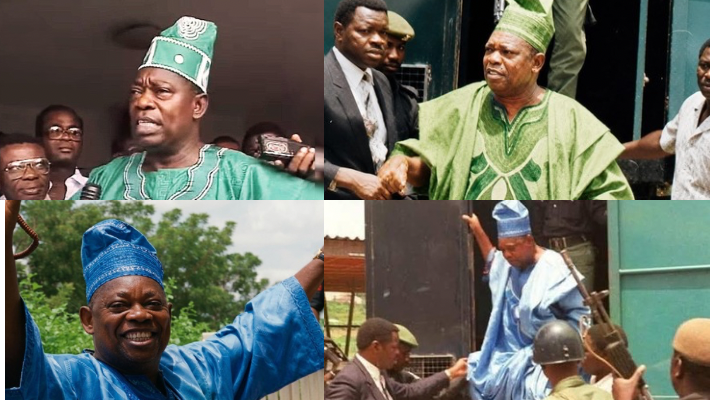
Before the late President Muhammadu Buhari’s administration officially changed Nigeria’s annual Democracy Day commemoration in 2018, the former date, May 29, and the adopted date, June 12, served different purposes.
The former Democracy Day, May 29, derived its significance from Nigeria’s return to civilian rule in 1999, following 16 years of military rule.
President Olusegun Obasanjo, elected on the platform of the Peoples Democratic Party, assumed office on May 29, signalling the beginning of the Fourth Republic.
Prior to Mr Obasanjo’s emergence, June 12 was a historic date for a section of Nigerians, particularly residents in the South-West, civil rights groups, pro-democracy activists and Nigerians conscious of the tenets of democracy.
Though not the first recorded election in Nigeria, June 12, 1993 presidential election is revered for its historical significance in the annals of the Nigerian political history, particularly as the first presidential election following the 1983 military coup d’état and the first election where Option A4 open ballot system was adopted.
The announced results, under the headship of the then National Electoral Commission chairman, Humphrey Nwosu, showed that Mr Moshood Kashimawo Olawale Abiola of the Social Democratic Party (SDP) polled 8,341,309 votes, while the runner-up, Bashir Tofa, of the National Republican Convention (NRC) polled 5,952,087 of the total votes.
Mr Abiola’s electoral victory was, however, annulled by the military despot, General Badamosi Ibrahim Babangida (IBB), on June 23, 1993, barely two weeks after the election and Nigerians were anticipating a return to civilian rule. The election is regarded as the fairest and freest poll in the nation’s electoral history.
Several civil society groups such as the Campaign for Democracy, the Civil Liberties Organisation (CLO), the Committee for the Defence of Human Rights (CDHR), the Academic Staff Union of Universities (ASUU) and the National Association of Nigerian Students (NANS), among others, considered the election epochal in the country’s history, particularly since attaining independence in 1960.
These civil groups played major roles in resisting the annulment of the June 12, 1993 presidential election, as well as in the demand for the enthronment of democracy, even after Mr Abiola’s death in prison on July 7, 1998. The annulment triggered widespread riots, with notable pro-democracy campaigners left with three choices by the despotic regime: gaol, death or exile.
In 2025; 32 years after, IBB publicly admitted that the late Mr Abiola won the June 12, 1993 presidential poll.
From 2000 to 2018, the celebration of the late business mogul and politician Mr Abiola as one of the martyrs of democracy was, for the most part, regional in honour of his stolen political mandate as the winner of the June 12 election.
The change in the national day for the celebration of democracy was realised after intense pressures on the government by activists, civil society groups and Nigerians, who believed that June 12, 1993 presidential election better represented a democratic event, rather than May 29, 1999.
Checks by the Peoples Gazette showed that several public figures which included a former Osun State governor, Rauf Aregbesola; Nobel laureate Wole Soyinka; and a former Lagos State Secretary of the All Progressives Congress (APC), Wale Ahmed, at different times clamoured for the recognition of June 12 as Nigeria’s Democracy Day.
Others included a former General Secretary of the National Democratic Coalition (NADECO) Ayo Opadokun; a former governor of Abia State, Orji Uzor Kalu; and the Aare Ona Kakanfo of Yorubaland, Gani Adams.
Hence, attention towards June 12 increased, as pro-democracy campaigners hold yearly event to commemorate June 12 and some South-West states declared public holidays in its honour.
Also, archival materials reviewed by The Gazette showed that most tributes and eulogies in form of adverts in remembrance of June 12 heroes originated from personalities in the South-West.
On June 6, 2018, the administration of late President Buhari declared the recognition of June 12 as the new Democracy Day.
Mr Buhari also asserted his administration’s readiness “to award posthumously the highest honour of the land, GCFR, to the late Chief MKO Abiola, the presumed winner of the June 12, 1993, cancelled election.”
Mr Buhari said, “In the view of Nigerians, as shared by this administration, June 12th, 1993, was far more symbolic of Democracy in the Nigerian context than May 29th or even October 1st.”
He stated that June 12 was more notable because it “was the day when Nigerians, in their millions, expressed their democratic will in what was undisputedly the freest, fairest and most peaceful election since our independence.”
He added, “The fact that the outcome of that election was not upheld by the then military Government does not detract from the democratic credentials of that process.”
A year after the declaration, Mr Buhari assented to the Public Holiday Act Amendment Bill, which formally recognised the day as a public holiday.

We have recently deactivated our website's comment provider in favour of other channels of distribution and commentary. We encourage you to join the conversation on our stories via our Facebook, Twitter and other social media pages.

More from Peoples Gazette

Agriculture
FG tasks ECOWAS on leveraging financing strategies for agroecology
The federal government has urged stakeholders in the agriculture and finance sectors in the West Africa region to leverage financing strategies to enhance agroecology practices

Politics
Katsina youths pledge to deliver over 2 million votes to Atiku
“Katsina State is Atiku’s political base because it is his second home.”
States
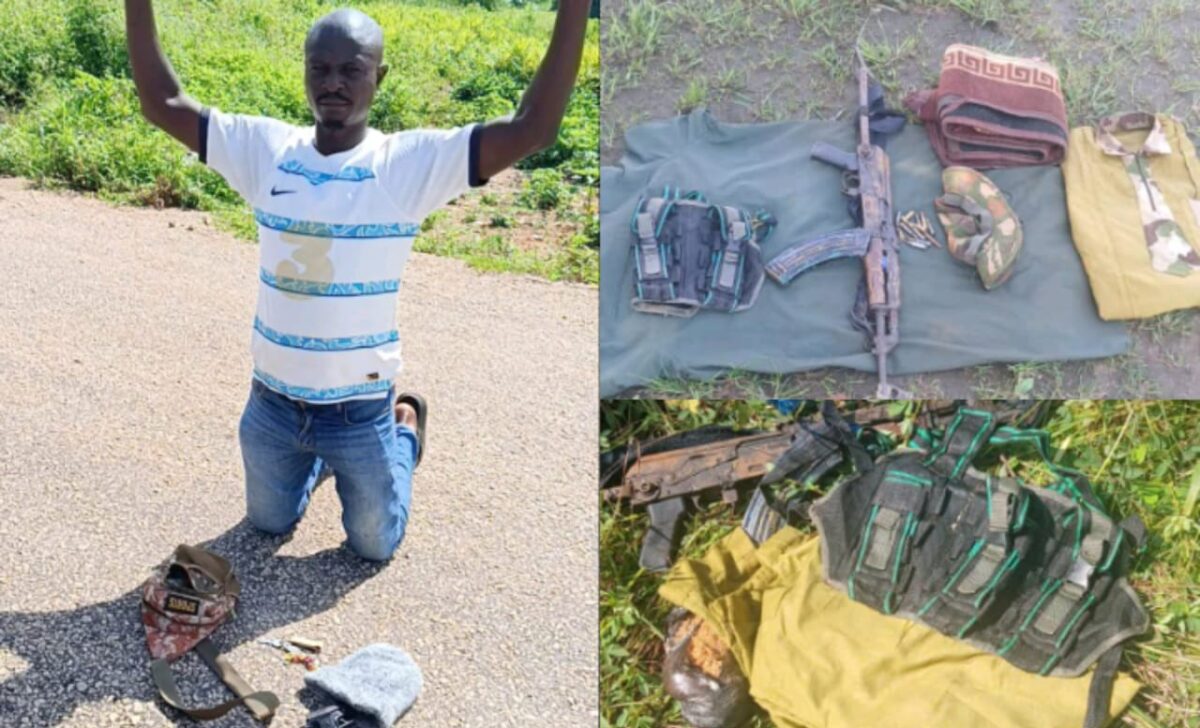
One suspect arrested as troops foil terrorist attack in Kaduna
Mr Danja said the suspect was was currently in military custody for further investigation.

States
Road users, health professionals seek prompt medical attention for accident victims
Mr Oyedele said, “Delays at any stage of that process can complicate the patient’s condition.”
Heading 1
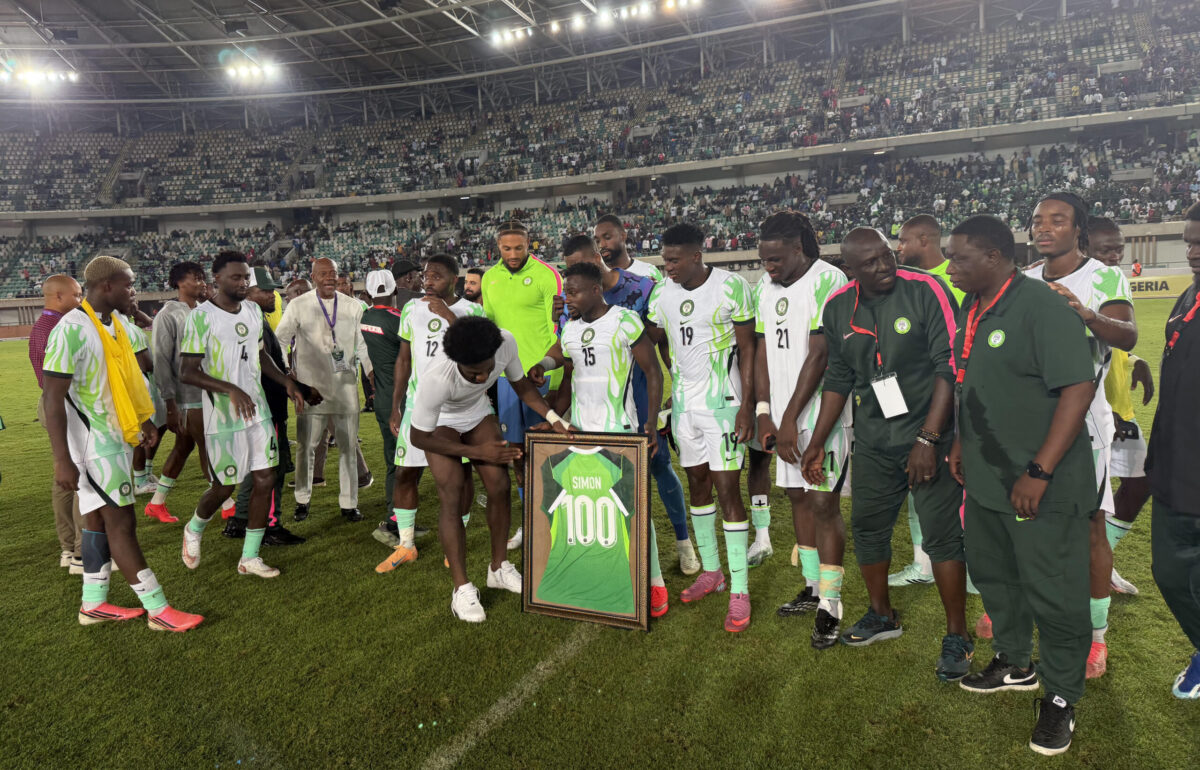
Wife cheers as Moses Simon joins Super Eagles’ 100-cap club after Madagascar win
The Paris FC winger became the fifth player to play 100 times for the Super Eagles after Ahmed Musa, Vincent Enyeama, Joseph Yobo and Alex Iwobi.

Heading 5
EFCC returns N84 million to businessman duped in Edo land deal
The EFCC said, “During investigation, it was discovered that Abraham transferred the money to Eborome but she diverted the money for her personal use.”

NationWide
Prioritise data protection, NDPC urges women tech entrepreneurs
Mr Olatunji said strong data protection could safeguard individuals.
NationWide
Fashion entrepreneur, others task youths on skills acquisition for self-reliance
Mr Obi called for government support and funding for young entrepreneurs.


