

How Nigeria can move from potential to economic prosperity: Zacch Adedeji

Chairman of the Nigeria Revenue Service (NRS), Zacch Adedeji, has canvassed a paradigm shift from dependence on raw material exports to one that embraces ideas, innovation, and the production of complex products as a pathway to sustainable economic growth and national prosperity.
Adedeji made the submission while delivering the maiden distinguished personality lecture of the Faculty of Administration, Obafemi Awolowo University (OAU), Ile-Ife, Osun State, on Thursday.
A statement by his special adviser on media, Dare Adekanmbi, said Adedeji, in the lecture entitled ‘From Potential to Prosperity: Export-led Economy,’ stressed the need to rethink growth through the lens of complexity, not just producing more of the same stuff.
He lamented that Nigeria possesses a high-tech oil sector and a low-productivity informal sector, as well as lacking “the vibrant, labour-absorbing industrial base that serves as a bridge to higher complexity.”
The NRS boss stated that Nigeria witnessed stagnation in its exportation drive for three decades between 1998 and 2023 and only added six new products to its export basket list between 2008 and 2023.
“Because of our current position, the Harvard Atlas concluded that we are positioned to take advantage of very few opportunities to diversify using what we already know.”
Adedeji urged Nigeria to learn from the world by comparative study of success and failure, like Vietnam, Bangladesh, Indonesia, South Africa, and Brazil.
“We are not just looking at numbers in a vacuum; we are looking at the strategic choices made by nations like Vietnam, Indonesia, Bangladesh, Brazil, and South Africa over the same twenty-five-year period. While there are many ways to underperform, the path to success is remarkably consistent: it is defined by a clear strategy to build economic complexity.
“When we put these stories together, the divergence is clear. Vietnam used global trade to build a resilient, complex economy, while the others remained dependent on natural resources or a single low-tech niche.
“There are three big lessons here for us in Nigeria as we think about our roadmap. First, avoiding the resource curse is necessary, but it is not enough. You need a proactive strategy to build productive capabilities.
“Vietnam’s success came from integrating itself into Global Value Chains (GVCs). They positioned themselves as the assembly hub for the world’s electronics, importing high-tech parts and exporting finished products.
“This allowed them to ‘borrow’ technology and management skills from abroad to build their own know-how.
“Nigeria, on the other hand, remains a supplier of raw materials to these chains, not an active participant within them. We must realise that productive capabilities are not permanent. The examples of South Africa and Brazil show us that you can actually lose your industrial edge if you are not careful. Over-reliance on the easy path of resource extraction creates economic and political incentives that crowd out the difficult, long-term work of building an industrial base.”
He added that for Nigeria, which is at an even earlier stage of development and even less diversified than these nations, the warning is stark.
“Relying solely on our natural endowments isn’t just a path to stagnation; it’s a path to regression. The global economy increasingly rewards knowledge and complexity, not just what you can dig out of the ground. If we want to move from potential to prosperity, we must stop being just a source of raw materials and start being a source of ideas, innovation, and complex products,” Adedeji said.
He added that President Bola Tinubu has already begun the difficult work of rebuilding the economy to ensure collective knowledge to innovate, produce, and build a resilient economy.
“The journey from potential to prosperity is not a short one, but with the right map and the right resolve, it is a journey we can finally complete,” he added.

We have recently deactivated our website's comment provider in favour of other channels of distribution and commentary. We encourage you to join the conversation on our stories via our Facebook, Twitter and other social media pages.

More from Peoples Gazette

States
Independence: NBA urges Nigerians to expect better future
The NBA said that ordinary Nigerians should be deriving benefit from the subsidy removal rather than hardship.

Agriculture
FG tasks ECOWAS on leveraging financing strategies for agroecology
The federal government has urged stakeholders in the agriculture and finance sectors in the West Africa region to leverage financing strategies to enhance agroecology practices

Politics
Katsina youths pledge to deliver over 2 million votes to Atiku
“Katsina State is Atiku’s political base because it is his second home.”

Heading 2
Human remains discovered along Switzerland-Germany border
Investigators suspect that it was a homicide.
States
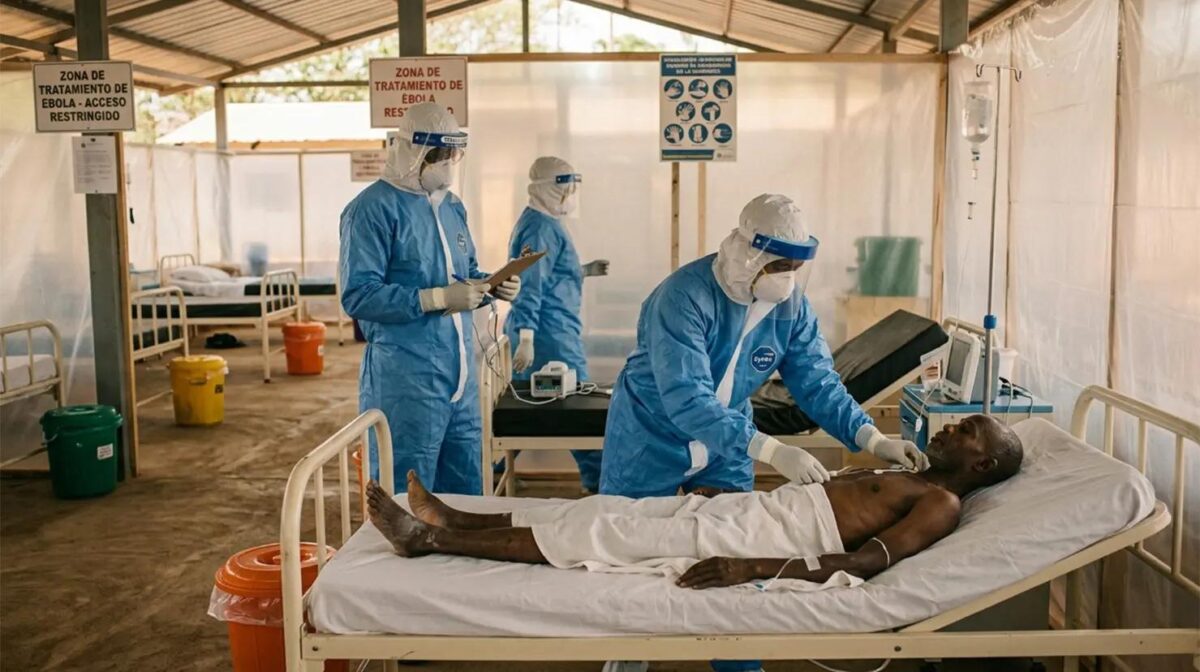
Ebola: Cross River trains 34 health workers
The commissioner said no Ebola case had been reported in the state at the time of the training.
Heading 4
Russia committed crimes against humanity in Ukraine, UN panel says
The UN panel said Russia violated the rights of recruits through deceptive employment practices.

World
Anthropic warns of catastrophic AI risks to humanity ahead of IPO
According to the company, these are risks, not inevitable outcomes.

Diaspora
U.S. forces capture wanted Lagos Yahoo Boy Adetunji Abudu six years after fleeing
The 34-year-old Lagos native was arrested on Monday at Logan Airport in Boston.

Sport
Ballon d’Or releases 2026 top 10 finalists as football fans await winner
The winner will emerge from the 10 finalists tonight.


