

How Nigerian police stations monetise ‘bail is free’ policy: Lagos Stakeholders
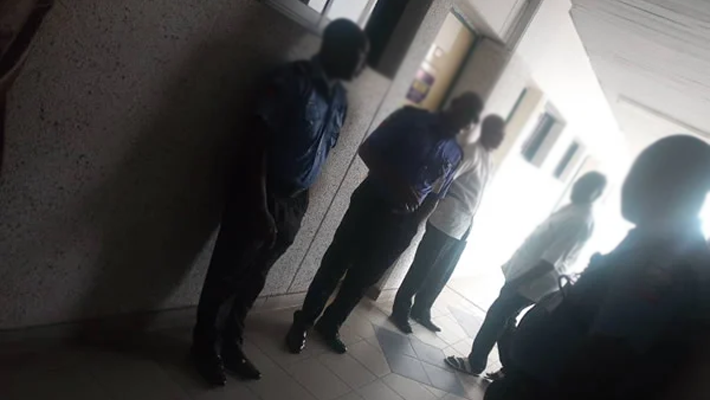
Mixed reactions have trailed bail procedures for securing suspects in police detention, with some stakeholders calling for a review of the enabling laws to reflect current realities, based on stakeholders interviewed in Lagos.
The stakeholders, which cut across police prosecutors, lawyers, non-governmental organisations and rights activists, agreed on the need for a review of the enabling laws.
Section 62(1) and Section 64(1) of the Police Act 2020 specify that an officer in charge of a police station must release a suspect on bail if it is not practicable to bring charge them to court. Section 35(1) and (4) of the 1999 Constitution stipulates that anyone arrested must be brought before a court within a reasonable time and, if not tried, must be released on bail.
This stems from the principle that bail itself is a conditional right, and the police as well as other authorities could not legally demand payment for it.
The convener of the Vanguard for Judicial Independence, Douglas Ogbankwa, said that money was often paid to secure bail in spite of the ‘bail is free’ inscription at police stations.
“Bail is free, but you must pay to go home,” Mr Ogbankwa said.
He said where an allegation is made against a person, their citizenship is almost suspended, and such a person is left to rot in jail or ‘cough up’ huge sums of money to buy their freedom.
Mr Ogbankwa noted that lawyers were not important in the matrix of the country’s criminal justice system if the police were allowed to remand their clients at will.
He, therefore, called for a review of lawful provisions on bail, adding that the Nigerian Bar Association, the National Judicial Council, the judiciary and the bench must rise up in defence of the criminal justice system.
“Security agencies in Nigeria have no powers to impose conditions for bail. They should release citizens forthwith, without any scruples,” he said.
Also speaking was a rights activist, Spurgeon Ataene, who described bail as a right which is both constitutional and legal and lamented that it is often monetised in administration.
He added that petitioners often inflate allegations so that the police will refer to them when bail is processed and perfected administratively.
Mr Ataene harped on the need for a review of the enabling laws, adding that there must be the will to effectively administer bail, without which no positive impact could be achieved.
“Even if you amend the Police Act many times without a corresponding spirit and intent to administer this aspect of justice, it will not work. It is an illusion and academic exercise to say bail is free. We may reframe it to say that bail is expensive,” he said.
Anthony Makolo, founder of the MAEF Foundation for Indigent Inmates, described the concept of free bail as a mirage.
According to him, bail is written as free, but it is never free at the police station, and this can cost as much as N3 million.
While underscoring the importance of a review of the Act, he urged that realistic measures be adopted to breathe “life to its letters”.
“An amendment of the Police Act cannot solely correct the situation. There ought to be an instruction from the office of the inspector general of police, through the commissioners of police, mandating officers to confirm forthwith. If this is not done, the issue of free bail is only lip service,” he said.
Also reacting, another Lagos-based lawyer, Kehinde Nubi, principal counsel at Kehinde Nubi and Associates, asserted that bail appeared to be free only on paper.
According to him, Sections 62 to 64 of the Police Act 2020 make it clear that any person arrested for a non-capital offence is entitled to be released on recognisance with or without a surety.
He said that recognisance simply means a written undertaking by the suspect to appear in court whenever required.
“Neither the constitution nor the Police Act envisages the payment of money as a condition for bail. Unfortunately, the everyday reality in Nigeria tells a different story; most citizens still end up paying for bail,” he said.
He noted that this was not because the law required it, but because of a mix of ignorance and impunity.
On his part, a former prosecutor, Tony Dania, believed that bail at the police and even the courts was due for a review.
Mr Danian oted that the slogan ‘bail is free’ was similar to the slogan ‘the police is your friend’.
“The truth is that bail, realistically and practically, is not usually free. Bail at the police and even the court requires a review. To sort out this issue, the jurisdiction of the magistrate should be increased so that they can take some cases. This is because it is a court of summary jurisdiction, and everything can be done summarily.
“The constitution should be reviewed such that when a person commits an offence and it is reported to the police, the DSS or any other security agency, such persons should not stay in custody beyond 24 hours, provided it is not a capital offence.
“Where such persons are remanded in custody beyond the lawful period without being released on bail, then the security agent should be dealt with,” he said.
According to him, civil transactions are often criminalised by the police, and where a suspect fails to “settle”, he is denied bail and charged in court.
“Punitive measures that can seamlessly be executed should be put in place,” he said.
He urged that issues of stringent bail conditions at police stations be revisited and reviewed so as not to be seen as punishment.
Meanwhile, Monday Omo-Osagie, superintendent of police and prosecutor, formerly in charge of the legal department of the Nigeria Police Zone II Command Headquarters, insisted that bail is free.
Mr Omo-Osagie, however, noted that Nigerians have chosen to monetise the same because of desperation.
“Once a citizen is arrested, the relations and friends begin to pile up pressure on the investigating agency, instead of allowing due process to play out. Hence, they entice the officers with money to quickly set the suspects free, without thorough investigation,” he said.
Mr Omo-Osagie noted that the same was the case when a court granted bail and its officials were not allowed to follow due process but rather were influenced financially to fast-track the release of the accused.
He, therefore, blamed the situation on desperate individuals who preferred a “shortcut” and would rather choose to monetise the process.
Mr Omo-Osagie called for a change of public orientation.
(NAN)

We have recently deactivated our website's comment provider in favour of other channels of distribution and commentary. We encourage you to join the conversation on our stories via our Facebook, Twitter and other social media pages.

More from Peoples Gazette

States
Independence: NBA urges Nigerians to expect better future
The NBA said that ordinary Nigerians should be deriving benefit from the subsidy removal rather than hardship.

Agriculture
FG tasks ECOWAS on leveraging financing strategies for agroecology
The federal government has urged stakeholders in the agriculture and finance sectors in the West Africa region to leverage financing strategies to enhance agroecology practices

Politics
Katsina youths pledge to deliver over 2 million votes to Atiku
“Katsina State is Atiku’s political base because it is his second home.”
Politics
LG Elections: OYSIEC opens registration portal for ad hoc staff recruitment
Registration for the required positions will run from October 5 to October 20, 2026.
Diaspora
Trump moves to revoke U.S. citizenship of two Nigerians, 38 others
The prosecutors accused the 58-year-old of applying for immigration benefits under two different identities.
Economy
Nigeria rises four places to eighth in 2026 Bloomberg Economics Investment Risk-O-Meter
The growth was attributed to the economic policies of the Tinubu administration.
Heading 4
Longest-serving Republican speaker Dennis Hastert, soiled by allegations of molesting high school athletes, dies at 84
The deceased, who was speaker from 1999 until 2007, was sentenced in 2016 to more than a year behind bars.
Anti-Corruption
Witness reveals how funds were moved to private accounts in ex-Taraba governor’s trial
The judge adjourned the matter till October 6, 2026, for continuation of the evidence of PW3.

Education
JAMB moves to adopt UTME centre in Canada for 2027
The board said the centre would enable eligible Nigerians living in Canada to take the UTME without travelling to Nigeria.


