

How Sultan’s permanent chairmanship of Nigerian traditional rulers revives legacy of conquest
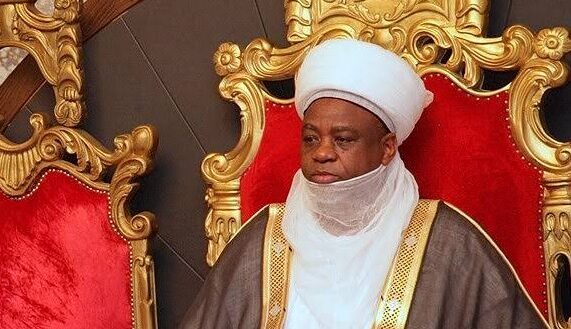
In a country as divided and volatile as Nigeria, proposing the Sultan of Sokoto and Ooni of Ife as permanent co-chairmen of the National Council of Traditional Rulers of Nigeria (NCTRN) is not just reckless; it risks inflaming historical grievances and undermining the delicate balance of ethnic and traditional parity that holds this fragile federation together.
Thankfully, prominent groups across the country, including Ohanaeze Ndigbo, the Middle Belt Forum, and the Concerned Hausa Stakeholders, have strongly rejected the bill’s controversial and politically insensitive inclusion of a permanent co-chairmanship clause.
Ohanaeze Ndigbo described the bill as “distasteful, reprehensible, and objectionable.” The Middle Belt Forum warned against “the institutionalisation of the Sultan of Sokoto.” And the Concerned Hausa Stakeholders decried the move as “ethnically biased,” and rightly reminded Nigeria’s lawmakers that the country is not a “federation of Fulani and Yoruba.”
Imposing the Sultan and Ooni as permanent co-chairs of a council representing Nigeria’s traditional institutions sidelines revered monarchs like the Oba of Benin, Shehu of Borno, Obi of Onitsha, Obong of Calabar, Olu of Warri, Attah of Igala, Ohinoyi of Ebiraland, Etsu Nupe, Oba of Lagos, Alaafin of Oyo, Igwe of Nnewi, Alake of Egbaland, Olowo of Owo, Tor Tiv, Ochi’Idoma, and many others.
The majority of these monarchies (including the Ooni of Ife) predate the Sokoto caliphate by centuries. Attempting to position the Sultan as a lifetime co-chair over these ancient kingdoms fuels suspicions of ethnic domination, especially given the history of the Sultan’s inherited legacy, rooted in the 19th-century overthrow and replacement of Hausa kingdoms.
While the Ooni’s influence spread through cultural diplomacy rather than military conquest, the Sultan of Sokoto, on the other hand, is a successor of Uthman dan Fodio, whose 19th-century jihad uprooted several Hausa kingdoms and established the Fulani-led Sokoto caliphate.
Though presented as an Islamic reform movement, Uthman dan Fodio’s jihad resulted in a complete political overthrow of established Hausa monarchies and the consolidation of Fulani political authority. Hausa kingdoms such as Gobir, Zazzau (Zaria), Katsina, Kano, Kebbi, Daura, and Bauchi saw their monarchies dethroned and replaced by Fulani emirs, marking a profound shift in the political and ethnic landscape of the region that has lasted till this day.
Critics argue that the push to enshrine the Sultan as a permanent co-chair of the Traditional Rulers Council alongside the Ooni risks reviving historical grievances rooted in the legacy of conquest, especially among the Hausa, whose ancestral kingdoms were violently overthrown and replaced by Fulani rule during the militarised and expansionist Sokoto jihad.
That the historical origin of the Sokoto sultanate is rooted in conquest does not mean that Nigerians would accept a permanent seat for the Ooni either. The resistance to the Sultan’s elevation reflects broader opposition to any arrangement that elevates one monarchy above their peers. As a federation, the chairmanship of the Traditional Rulers Council should and must reflect the equal status of Nigeria’s diverse ethnic nationalities and uphold the parity of its traditional institutions.
Though the bill has passed second reading, the National Assembly must strike out the permanent co-chair clause. In its place should be a rotational leadership system that respects and reflects Nigeria’s rich, independent, and plural traditional heritage.
The National Assembly stands as a representative body for all the kingdoms and monarchies across the country. Therefore, any serving Senator or House member who is not a subject of the Sultan or Ooni, yet endorses the co-chairmanship clause, is betraying the very people they swore to represent, and would be failing in their duty to represent their constituents fairly.
It bears repeating: the Sultan and Ooni, like other revered monarchs, are equals. No federal arrangement should suggest otherwise. For the sake of national unity, the National Assembly must respect this parity, lest it reinforce the perception of Fulani ethnic dominance over indigenous monarchies that long predate the coming of the Sokoto Caliphate.
Maduekwe runs Discussing Africa Media. Write him: mrmaduekwe@gmail.com

We have recently deactivated our website's comment provider in favour of other channels of distribution and commentary. We encourage you to join the conversation on our stories via our Facebook, Twitter and other social media pages.

More from Peoples Gazette

States
Independence: NBA urges Nigerians to expect better future
The NBA said that ordinary Nigerians should be deriving benefit from the subsidy removal rather than hardship.

Agriculture
FG tasks ECOWAS on leveraging financing strategies for agroecology
The federal government has urged stakeholders in the agriculture and finance sectors in the West Africa region to leverage financing strategies to enhance agroecology practices

Politics
Katsina youths pledge to deliver over 2 million votes to Atiku
“Katsina State is Atiku’s political base because it is his second home.”

Economy
Pension defaulters must pay penalties before getting clearance certificates: PenCom
The PenCom DG said recovery agents were examining employers’ records to establish outstanding liabilities and recover unpaid contributions.

World
U.S. actress Selma Blair arrested for allegedly attacking flight attendants
The incident happened around 23:00 local time aboard Delta Airlines Flight 938.

Showbiz
Again, court adjourns singer Odumodublvck alleged assault trial
The claimant is seeking an order directing the defendant to pay his medical expenses and to issue a public apology.
World
Sweden’s parliament to vote on PM nominee amid coalition deadlock
Ms Andersson was first tasked with exploring the formation of a new government on September 18.

NationWide
Stakeholders seek fair competition, reforms to tackle challenges facing Nigerian businesses
Mr Ekechukwu said foreign competition could improve product quality, service delivery and business standards.

Africa
ICRC warns El Niño floods could plunge millions further into hunger in Somalia
ICRC warned that above-normal rains and subsequent flooding were expected to deepen hunger levels across the country.


