

IMF forecasts global growth will hold steady at 3.2% in 2024, 2025
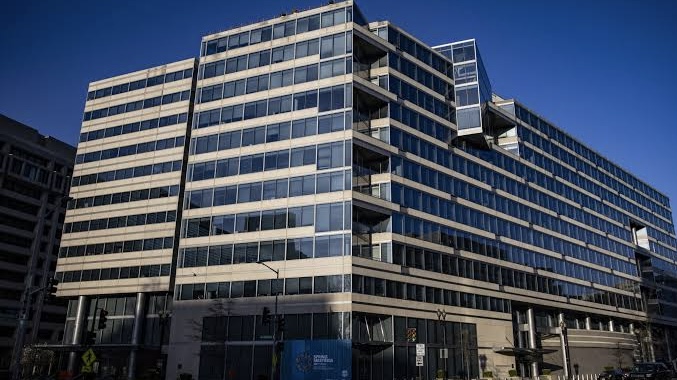
The International Monetary Fund (IMF) projects that global growth in 2024 and 2025 will hold steady at 3.2 per cent, the same pace as in 2023.
This is according to the IMF’s latest World Economic Outlook (WEO) Update Report for April 2024, ‘Steady But Slow: Resilience Amid Divergence,’ which was released on Tuesday in Washington, D.C.
The report said the 2024 forecast was revised up by 0.1 percentage points from the January 2024 WEO update and by 0.3 percentage points from the October 2023 WEO.
It said the pace of expansion was low by historical standards, owing to both near-term factors, such as still-high borrowing costs and withdrawal of fiscal support.
“Also by longer-term effects from the COVID-19 pandemic and Russia’s invasion of Ukraine; weak growth in productivity; and increasing geoeconomic fragmentation,” it said.
The report said there would be a slight acceleration for advanced economies, where growth was expected to rise from 1.6 per cent in 2023 to 1.7 per cent in 2024 and 1.8 per cent in 2025.
It said emerging markets and developing economies would witness a modest slowdown from 4.3 per cent in 2023 to 4.2 per cent in both 2024 and 2025.
The forecast for global growth five years from now at 3.1 per cent is at its lowest in decades. The report showed growth in Sub-Saharan Africa was projected at 3.8 in 2024 and 4.0 in 2025.
It revealed that economic growth in Nigeria was projected at 3.3 in 2024 and 3.0 in 2025. The report said global headline inflation was expected to fall from an annual average of 6.8 per cent in 2023 to 5.9 per cent in 2024 and 4.5 per cent in 2025, with advanced economies returning to their inflation targets sooner than emerging market and developing economies.
It added, “The pace of convergence toward higher living standards for middle-and lower-income countries has slowed, implying persistence in global economic disparities.”
It said on the downside, new price spikes stemming from geopolitical tensions, the war in Ukraine, and the conflict in Gaza and Israel, could raise interest rate expectations and reduce asset prices.
“This is along with persistent core inflation where labour markets are still right. A divergence in disinflation speeds among major economies could also cause currency movements that put financial sectors under pressure.
“Amid high government debt in many economies, a disruptive turn to tax hikes and spending cuts could weaken activity, erode confidence, and sap support for reform and spending to reduce risks from climate change.
“Geoeconomic fragmentation could intensify, with higher barriers to the flow of goods, capital, and people implying a supply-side slowdown,” the IMF report explained.
On the upside, it said that looser fiscal policy than necessary and assumed in projections could raise economic activity in the short term, although risking more costly policy adjustments later on.
The report explained, “Inflation could fall faster than expected amid further gains in labor force participation, allowing central banks to advance easing plans. Artificial intelligence and stronger structural reforms than anticipated could spur productivity.”
The report said that as the global economy approached a soft landing, central banks’ near-term priority was ensuring that inflation touched down smoothly.
“They should do this by neither easing policies prematurely nor delaying too long and causing target undershoots,” it stressed. “At the same time, as central banks take a less restrictive stance, a renewed focus on implementing medium-term fiscal consolidation to rebuild room for budgetary manoeuvre and priority investments, and to ensure debt sustainability, is in order.”
The report said cross-country differences called for tailored policy responses.
It said intensifying supply-enhancing reforms would facilitate inflation and debt reduction, allow economies to increase growth toward the higher pre-pandemic era average, and accelerate convergence toward higher income levels.
The report added that multilateral cooperation “is needed to limit the costs and risks of geoeconomic fragmentation and climate change, speed the transition to green energy, and facilitate debt restructuring.”
(NAN)

We have recently deactivated our website's comment provider in favour of other channels of distribution and commentary. We encourage you to join the conversation on our stories via our Facebook, Twitter and other social media pages.

More from Peoples Gazette

Agriculture
FG tasks ECOWAS on leveraging financing strategies for agroecology
The federal government has urged stakeholders in the agriculture and finance sectors in the West Africa region to leverage financing strategies to enhance agroecology practices

Politics
Katsina youths pledge to deliver over 2 million votes to Atiku
“Katsina State is Atiku’s political base because it is his second home.”
States
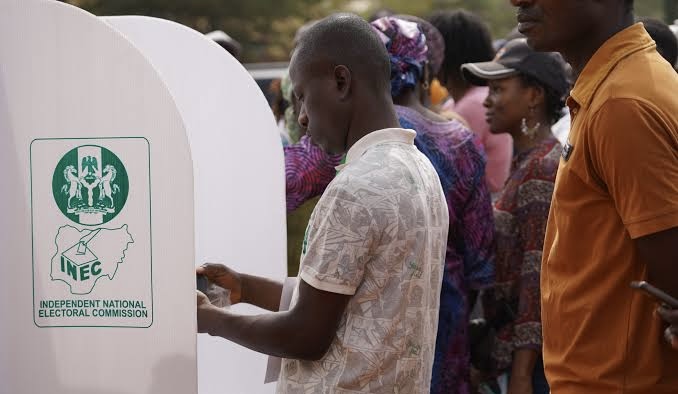
Edo LG Polls: APC leaders hail turnout, peaceful process
Mr Edusei described the voter participation as encouraging, saying it surpassed what he had witnessed in previous elections.

States
Edo LG Poll: Motorists, commuters disregard movement restriction in Benin City
Vehicular and commercial activities were observed around major areas including Ring Road, Airport Road, and the New Benin axis.
NationWide
ITF begins screening of artisans for global competitiveness training
Mr Ogun noted that the ITF was expanding its partnerships with additional international certification bodies.

States
NAF destroys terrorist enclaves, kill several fighters in Borno airstrike
The NAF’s spokesman, Ehimen Ejodame, said the operation was carried out on Friday, July 10, 2026.

World
Top Afghan retired general extradited to U.S. over drug, firearm trafficking
The U.S. noted, “The Drug Enforcement Administration led an investigation that ended Qadeer’s audacious criminal activity.”
NationWide
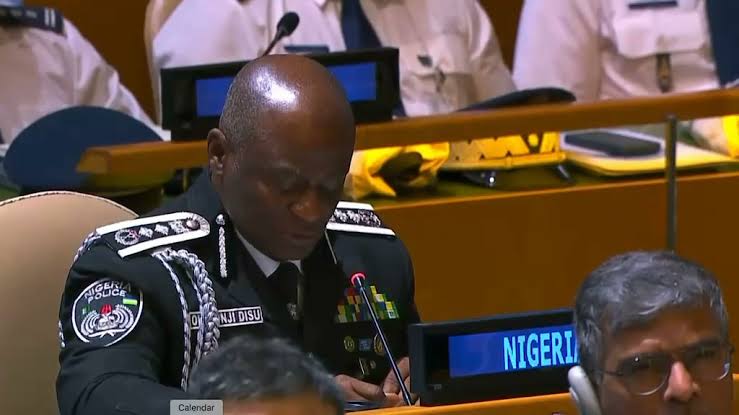
IG assures international community Nigeria safe for investment, tourism
The IG said negative global perceptions of Nigeria often differed from realities experienced by visitors to the country.


