

Improved water use could create 245 million jobs, World Bank says

The World Bank Group has called for a global rebalancing of water use in agriculture to sustainably meet future food demand and generate up to 245 million long-term jobs, particularly in Sub-Saharan Africa.
This is contained in a statement by the World Bank Online Media Briefing Centre on a report titled “Nourish and Flourish: Water Solutions to Feed 10 Billion People on a Livable Planet,” unveiled on Thursday.
The report noted that current agricultural water management practices, characterised by overuse in some countries and underuse in others, could sustainably support food production for only about half of the world’s population.
It said it had been projected that by 2050, 10 billion people would need to be fed.
According to the report, addressing both excessive water use in stressed regions and inadequate utilisation in water-abundant areas will be key to meeting this future demand.
The report introduced a framework linking water availability to food production and trade by categorising countries by water stress levels and their food import or export status.
“The framework identifies areas where expanding rain-fed agriculture can boost food production, where irrigation investments can unlock jobs and growth, and where water use must be rebalanced to protect ecosystems.
“It also highlighted the role of trade as a more sustainable alternative to local production in certain contexts,” the report said.
Paschal Donohoe, managing director and chief knowledge officer of the World Bank Group, was quoted as saying, “The way we manage water for food will have profound implications for jobs, livelihoods, and economic growth.
“By making smarter choices about where crops are grown, how water is allocated, and how trade supports food security, we can strengthen resilience, expand opportunity, and safeguard critical resources.”
The report emphasised the need for increased private-sector participation and financing, alongside public investment, supported by effective policies, institutions, and regulations to boost food production, create jobs, and promote sustainable growth.
It noted that public funding alone would be insufficient to deliver the innovation, scale, and services required to expand irrigation, improve performance, and maintain results.
Guangzhe Chen, vice president for Planet at the World Bank Group, was quoted as saying, “When investments in infrastructure, business-enabling policies, and private capital mobilisation come together, the impact can be greater than the sum of its parts.
“By linking global evidence with country realities, this framework can help policymakers navigate trade-offs and adapt food production to today’s water and climate realities—delivering food, jobs, and resilience together.”
The report estimated that expanding and modernising irrigation systems, where water is available, would require an additional $24 to $70 billion annually through 2050.
It added that governments already spend about $490 billion yearly on agricultural support, largely on subsidies, suggesting that redirecting part of this funding could attract private investment.
“Redirecting a portion of current spending, combined with regulatory reform, use of blended finance, and public-private partnerships, will crowd in private capital, including co-investment by farmers themselves, and support financially sustainable water and food security,” the report said.
The World Bank Group said it remained committed to supporting countries through policy reforms, public investment, and private capital to strengthen food systems, create jobs, and protect natural resources.
It said the group had committed to doubling its annual agribusiness financing to nine billion dollars by 2030 and to mobilising an additional five billion dollars annually under its AgriConnect initiative to support smallholder farmers.
(NAN)

We have recently deactivated our website's comment provider in favour of other channels of distribution and commentary. We encourage you to join the conversation on our stories via our Facebook, Twitter and other social media pages.

More from Peoples Gazette

Agriculture
FG tasks ECOWAS on leveraging financing strategies for agroecology
The federal government has urged stakeholders in the agriculture and finance sectors in the West Africa region to leverage financing strategies to enhance agroecology practices

Politics
Katsina youths pledge to deliver over 2 million votes to Atiku
“Katsina State is Atiku’s political base because it is his second home.”

Agriculture
FG engages 200 youths to drive innovation, growth in agriculture
Ms Liman urged youths to explore opportunities in agriculture, technology and other sectors.

States
Stakeholders seek improved health budget implementation in Kaduna
Mr Guje described CSOs as representatives of communities.
States
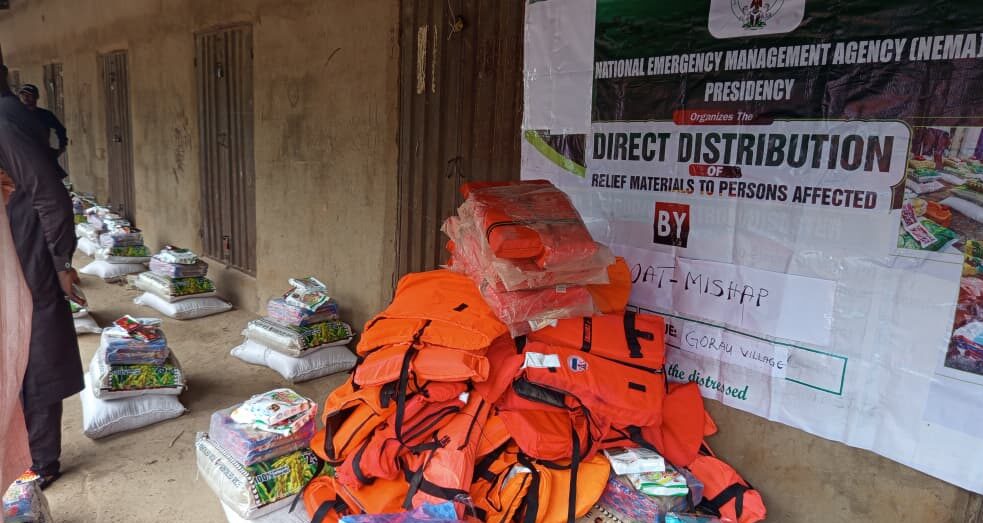
NEMA distributes life jackets, relief materials to Gorau boat accident victims
Gorau village head, Aliyu Magaji, was one of the survivors of the boat accident.
Agriculture
Plant breeders seek increased investment in research to boost food security
Mr Adetimirin said investment in plant breeding was essential to developing improved crop varieties with higher yields.

NationWide
Gani Fawehinmi Lecture: Groups demand reforms to tackle insecurity, hardship
Participants at the event stressed the need to sustain the late Mr Fawehinmi’s struggle for justice.

States
Postmortem reveals Davido’s ally Ubiribo died from complications of penis enlargement surgery in Thailand
Ubiribo, 43, was on holiday with his wife, Danielle Simba Allen, when he underwent the procedure.


