

Incumbency power, religious sentiment can’t stop hungry, angry Nigerians from voting Tinubu out
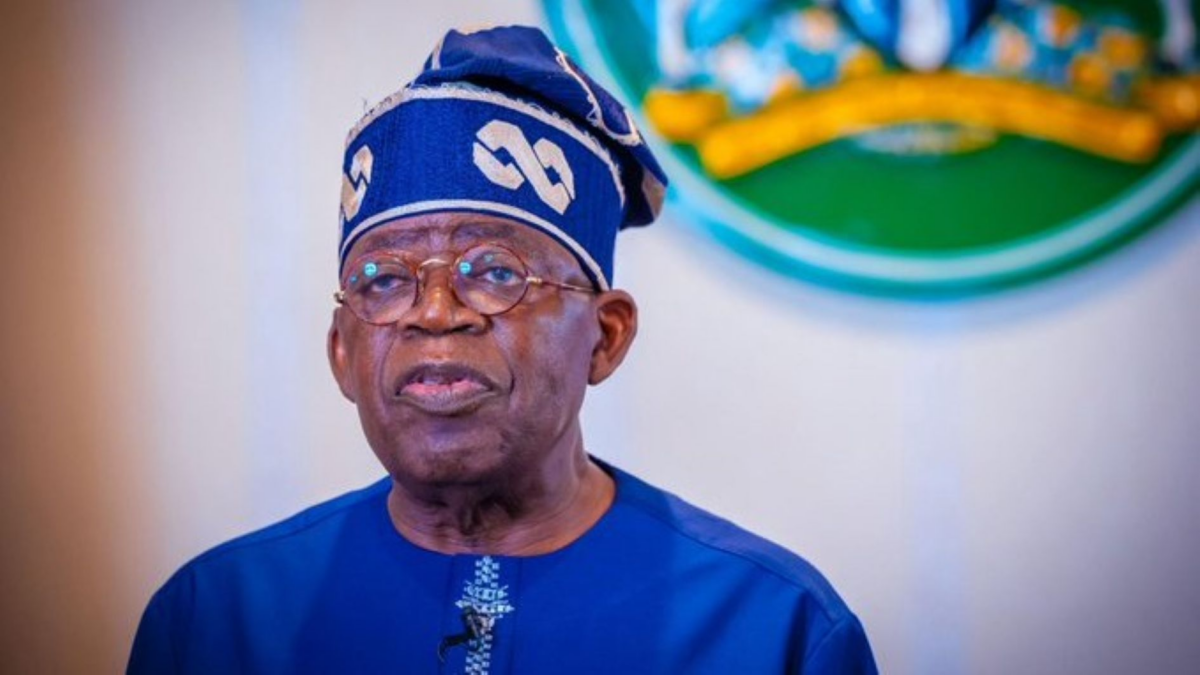
The argument that Nigerians may return President Bola Tinubu to office despite widespread hardship is more than a prediction about one election. It rests on a troubling assumption: that voters have become so accustomed to insecurity, economic pain and political disappointment that they will accept them as permanent.
That assumption should be challenged.
The Economist article points to incumbency, political machinery, low turnout and the influence of religion as factors that could shape the election. These factors matter. But they are not the same as public consent, and none can tell us how Nigerians will vote in January. A forecast is not a verdict.
The article is right to describe the devastation facing Borno, but it would be wrong to mistake the people’s suffering for passivity or surrender. Behind every statistic are farmers who cannot safely reach their fields, traders forced to seek customers across the border because people at home can no longer afford their goods, and mothers fighting to keep their children alive despite hunger and displacement. These are not signs of a docile people; they are evidence of a community enduring hardship that its government has a duty to confront. A mother’s gratitude for medicine is gratitude for medicine—not blanket approval of the government’s record. And hunger does not understand tribe or religion: it empties the stomach of a Muslim or a Christian, a northerner or a southerner, with the same cruelty. The people of Borno have their own judgement, dignity and political agency. Tinubu and the ruling party should not mistake hardship, silence or the difficulty of voting in an insecure environment for consent. When Borno’s people have the opportunity to make their voices heard, they will surprise those who assume their votes are already decided.
Across the country, the cost-of-living crisis is not an abstract economic debate. Families feel it at the market: a parent goes out with a fixed amount of money and returns with less food, smaller portions and more items left on the list. Workers spend more of their wages getting to work, while transport operators raise fares as fuel and vehicle costs climb. Small businesses pass the cost of running generators and moving goods on to their customers. Parents struggle to pay school fees, buy books and keep up with electricity bills—all from incomes that no longer stretch far enough.
When a family has to choose between buying food, paying for medicine or keeping a child in school, this is a crisis in people’s homes. Inflation stood at 15.39 per cent in August, while food inflation was 19.57 per cent year-on-year. A slower rise in prices does not mean food has become cheaper; prices are still rising while families struggle to make ends meet. Nigerians measure the economy by what their income can buy, what they must go without and whether they can provide a decent life for their families.
That is why Atiku Abubakar has put the cost of living at the heart of his campaign. His message is direct: “Tinubu made life expensive. I will make life affordable again.” He has apologised to Nigerians for the hardship they have endured under the present administration. That apology recognises their pain; the promise that follows is to change the policies driving up the cost of daily life.
Atiku’s production-subsidy plan is a practical part of that change. From Day One, support would go only to fuel refined in Nigeria, including by modular refineries, not to imported fuel. The subsidy follows the barrel. It would be capped, budgeted and independently monitored so the benefit reaches consumers through a lower pump price. Lower fuel costs can ease pressure on transport fares and businesses, and reduce the cost of moving food and goods around the country. The plan is to fund the support by cutting waste, without imposing new taxes or taking support away from minimum-wage earners and students.
The same care is needed when interpreting low turnout. In 2023, only about 27 per cent of registered voters cast a valid presidential vote. That should concern every democrat. Low participation may reflect apathy, insecurity, distrust, logistical barriers or the belief that voting will make no difference. But it is not proof that most Nigerians support the winner. Tinubu won the election; he did not receive the votes of most registered voters.
Nigerians determined to change the cost-of-living reality will turn that resolve into action at the ballot box. To support Atiku’s plan to make life affordable again, they will come out en masse to vote Tinubu out and elect Atiku. The change they seek in their homes, markets and workplaces will begin with their choice on election day.
The coming election will be decided by Nigerians and by the issues that shape their daily lives. Across party, religious and regional lines, families want relief from the cost-of-living crisis, greater security and a fair chance to build a better future. Atiku has offered a clear plan to make life affordable again. Nigerians who want that change will carry their demand to the ballot box and vote for the candidate whose policies answer their needs.
No newspaper, pollster, consultant or political party can decide this election in advance. Nigerians will judge this administration by what they experience every day, and they will judge Atiku by the credibility of his plan to bring down the cost of living. The election is scheduled for 16 January 2027. Until then, predictions about Tinubu’s re-election remain predictions. The people will deliver the verdict.
Phrank Shaibu is the director of strategic communication, ADC Presidential Campaign Council

We have recently deactivated our website's comment provider in favour of other channels of distribution and commentary. We encourage you to join the conversation on our stories via our Facebook, Twitter and other social media pages.

More from Peoples Gazette

States
Independence: NBA urges Nigerians to expect better future
The NBA said that ordinary Nigerians should be deriving benefit from the subsidy removal rather than hardship.

Agriculture
FG tasks ECOWAS on leveraging financing strategies for agroecology
The federal government has urged stakeholders in the agriculture and finance sectors in the West Africa region to leverage financing strategies to enhance agroecology practices

Politics
Katsina youths pledge to deliver over 2 million votes to Atiku
“Katsina State is Atiku’s political base because it is his second home.”
Anti-Corruption
Lawyer petitions EFCC to probe Makinde’s spending, N30 billion Bodija explosion fund
A legal practitioner, Akinloye Olusegun, has petitioned EFCC to investigate Governor Seyi Makinde’s expenditures from his assumption of office in 2019 to 2026.
Education
Gov Zulum seeks AU support to return 800,000 out-of-school children to classrooms
Mr Zulum pledged to strengthen the state’s partnership with the African Union to expand access to education for about 800,000 out-of-school children.

Rights
KSACA moves to standardise premarital medical certificates in Kano
It said the engagement also aimed to develop practical mechanisms for issuing and disseminating uniform premarital medical certificates across Kano’s 44 council areas.

Lagos
Lagos: At least one killed in Fadeyi building collapse
The Lagos government said the cause of the collapse had not yet been determined and relevant regulatory agencies would investigate it.
Anti-Corruption
APC presidential campaign alleges Tinubu ministers paid billions for appointments to loot
A lot of ministers pay billions and billions, and you know, to get themselves appointed, the first thing they think of is how to recoup that money,” said Mr Hassan.

Politics
Tinubu’s Presidential Campaign: Police restrict movement of heavy-duty vehicles in Kaduna
The police have restricted the movement of heavy-duty vehicles in Kaduna from midnight to 8:00 p.m. on Saturday ahead of President Bola Tinubu’s visit.


