


Insecurity: FG warns media, Nigerians against harmful narratives

The federal government, on Wednesday, warned against careless language in security, media, and public discourse, noting that vague definitions could deepen divisions and erode national unity.
The Minister of Information and National Orientation, Mohammed Idris, gave the warning in Abuja at a two-day conference on “Contextualising Definitions and Terminologies to Address Stereotyping and Ethnic Profiling in Discourses and Security Operations in West Africa”.
The conference, jointly organised by BEACON Security and Intelligence Limited and Whiteink Institute for Strategic Education and Research (WISER), aims to promote professionalism and inclusivity in security operations.
It is also supported by UK International Development, SPRING, and the Institute for Peace and Conflict Resolution (IPCR).
Mr Idris, represented by the Executive Secretary of the Nigerian Press Council (NPC), Dili Ezughah, noted that words used in describing security threats and affected communities could carry weight and consequences.
According to him, definitions and labels used in security operations, media reporting, and public discourse can influence how communities are seen and treated, and can also build trust or deepen divisions.
He cited Nigeria’s experience, with hundreds of ethnic groups and multiple religious traditions, as an example of how managing diversity requires fairness and discipline in policy and communication.
The minister emphasised that security was not only about force and enforcement, but also trust, adding that citizens must be seen as partners in efforts to address security challenges.
He noted that Nigeria was currently facing complex security challenges, including terrorism and organised crime, and was strengthening its security architecture to address these threats.
He called for accuracy in language, accountability in actions, and a clear distinction between criminal behaviour and identity, with a view to preventing profiling of entire communities.
Mr Idris also stressed the critical role of the media in promoting responsible reporting and verified information, as well as the need for regional cooperation to address shared security challenges.
Maj.-Gen. Adamu Laka, national coordinator of NCTC, Office of the National Security Adviser (ONSA), in his address of welcome, noted that the way security issues were defined, described, and communicated could either strengthen cohesion or deepen distrust among communities.
“The words we use in describing security threats and affected communities can carry weight and consequences.
“Responsible terminology is therefore an operational necessity that directly impacts trust and legitimacy,” Mr Laka said.
He emphasised that sustainable security could not be achieved through kinetic measures alone, but required prevention, trust-building, and responsible communication.
Mr Laka reaffirmed the NCTC’s commitment to supporting initiatives that promote professionalism, inclusivity, and responsible communication in security.
Also speaking, the Director-General of the IPCR, Joseph Ochogwu, called for adequate investment and capacity building for local actors to address conflict and violence in the country.
“We must build the capacity of our local actors, because conflict is local, violence is local, so also peace is local, and the people are central to it. We must not disconnect the people,” he said.
The Chief of Army Staff (COAS), Lt.-Gen. Waidi Shaibu, represented by Maj.-Gen. Umaru Yusuf, urged productive deliberations and insightful discussions that would shape more effective strategies for conflict resolution, peacebuilding, and security enhancement.
He encouraged participants to leverage the platform to forge partnerships and drive initiatives that would make lasting impacts in addressing stereotyping and ethnic profiling in discourse and security operations.
The British High Commissioner to Nigeria, Richard Montgomery, represented by Ukoha Ukiwo, team lead for the Strengthening Peace and Resilience in Nigeria Programme (SPRiNG), pledged the support of the commission to peacebuilding in Nigeria.
“As part of this long-standing support, the UK government has, in partnership with the Government of Nigeria, designed SPRING to work with Nigerian institutions and actors to promote non-violent resolution of conflicts, as well as enhance adaptation and resilience to the pressures of climate change.
“The SPRING programme is an evidence-based programme on what research has found to be the issues that drive violence and undermine resilience in Nigeria,” he said.
The president and founder of WISER, retired Brig.-Gen. Saleh Bala, warned that the use of labels and terminologies in describing crimes and ethnic groups could fuel conflict and breed stereotypes.
“When you slap labels that are stereotyping and profiling, you’re only dealing with the symptoms rather than the origin of the issue,” Mr Bala said.
He emphasised the need to understand the historical and anthropological contexts of names and labels.
He stressed that elites had a responsibility to sensitise themselves to the harm caused by using sweeping labels and terminologies, and to promote responsible communication.
He said the conference would help promote awareness among elites on the dangers of language that could fuel stereotypes and conflict, with the goal of building a more harmonious society.
(NAN)

We have recently deactivated our website's comment provider in favour of other channels of distribution and commentary. We encourage you to join the conversation on our stories via our Facebook, Twitter and other social media pages.

More from Peoples Gazette

Agriculture
FG tasks ECOWAS on leveraging financing strategies for agroecology
The federal government has urged stakeholders in the agriculture and finance sectors in the West Africa region to leverage financing strategies to enhance agroecology practices

Politics
Katsina youths pledge to deliver over 2 million votes to Atiku
“Katsina State is Atiku’s political base because it is his second home.”

Heading 3
OsunDecides LIVE: Voting, news analysis, results as Adeleke, Oyebamiji, Salaam lock horns
Mr Adeleke is seeking a second term, which either Messrs Oyebamiji or Salaam could deny him. The election build-up has been characterised by deadly violence between the APC and AP.
NationWide
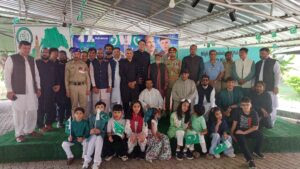
Pakistanis in Nigeria celebrate their country’s 79th independence anniversary
Mr Savera extended warm felicitations to members of the Pakistani community in Nigeria.
States
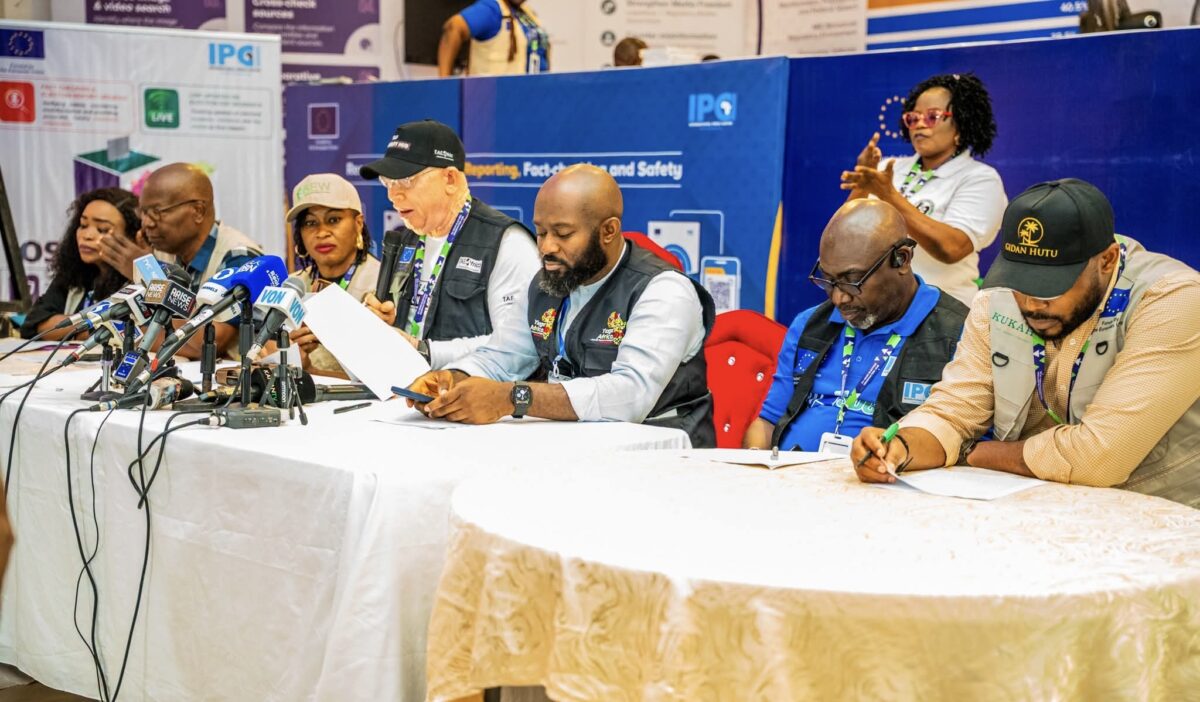
Osun 2026: EU-SDGN tasks INEC on seamless electronic transmission of results
The group urged the commission to also “publish a clear protocol explaining the end-to-end results-transmission process.”
Economy
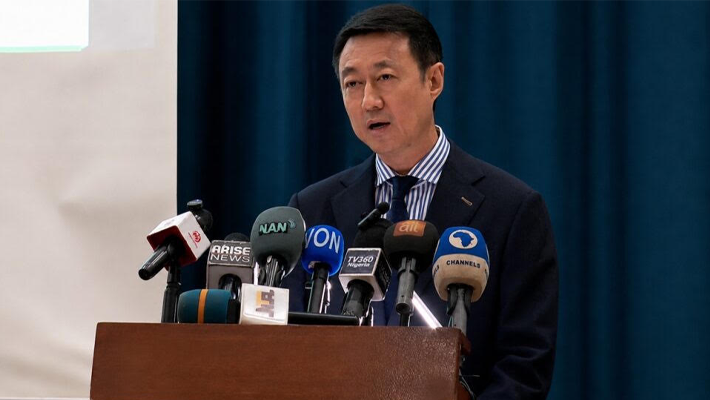
China’s imports from Nigeria rose by $2.3 billion in six months: Envoy
He urged Nigerian businesses to increase investment in value addition and meet Chinese market standards.

Sport
3SC appoint Salisu Yusuf as new technical adviser
The club on Sunday announced that it had parted ways with Nurudeen Aweroro.

Heading 5
Girls facing life challenges deserve second chance at education, says Remi Tinubu
She urged the state to ensure the effective operation and proper maintenance of the schools.


