

Israel’s sustained occupation of Palestinian territory ‘unlawful’: ICJ
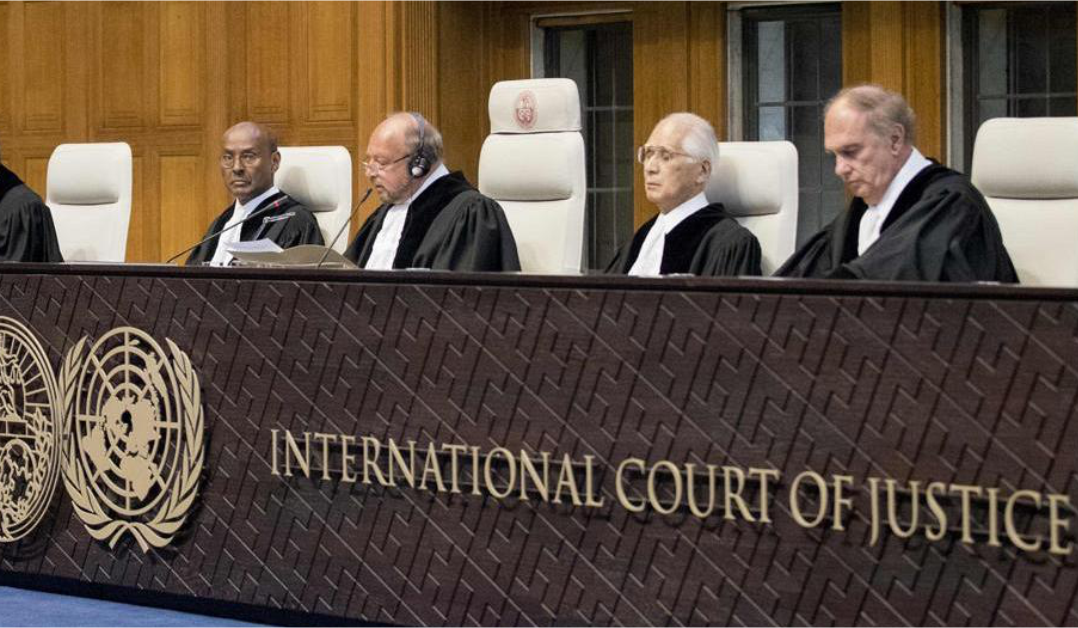
The UN International Court of Justice on Friday declared that Israel’s continued presence in the Occupied Palestinian Territory “is unlawful.”
It stated that states were under an obligation not to recognise the decades-long occupation.
The court was responding to a request for an advisory opinion by the General Assembly on the legal consequences arising from the policies and practices of Israel in the Occupied Palestinian Territory, including East Jerusalem.
The advisory from the ICJ is a legal opinion provided by the court on questions of international law.
Unlike judgments in contentious cases between states, advisory opinions are non-binding and are sought by United Nations bodies such as the General Assembly or the Security Council.
While not legally binding, advisory opinions can shape international policies, increase moral pressure, and unilateral measures adopted by individual states such as sanctions.
In its advisory opinion, the ICJ concluded that Israel’s continued presence in the Occupied Palestinian Territory is unlawful and that it was under an obligation to bring to an end its unlawful presence “as rapidly as possible.”
Israel is also “under an obligation to immediately cease all new settlement activities and to evacuate all settlers from the Occupied Palestinian Territory,” recommending “reparation for the damage caused to all natural or legal persons concerned.”
It further stated that “all States are under an obligation not to recognise as legal the situation arising from the unlawful presence” of Israel.
States are also under the obligation to “not to render aid or assistance in maintaining the situation created by the continued presence of the State of Israel in the Occupied Palestinian Territory.”
For international organisations, including the UN, the court noted the “obligation not to recognise as legal the situation arising from the unlawful presence” of Israel.
The ICJ further noted that the UN, and especially the General Assembly and the Security Council, “should consider the precise modalities and further action required to bring to an end as rapidly as possible the unlawful presence of the State of Israel in the Occupied Palestinian Territory.”
Following the issuance of the opinion, UN Secretary-General António Guterres reiterated his call for the parties to re-engage on the “long-delayed political path” towards ending the occupation.
He also called for a resolution to the conflict in line with international law, relevant UN resolutions and bilateral agreements.
Mr António Guterres’s spokesperson noted in a statement, “The only viable path is the vision of two States – Israel and a fully independent, democratic, contiguous, viable and sovereign Palestinian State – living side by side in peace and security within secure and recognised borders, on the basis of the pre-1967 lines, with Jerusalem as the capital of both States.”
The statement also noted that the UN chief would promptly transmit the advisory opinion to the General Assembly, which had requested the court’s advice.
The statement added, “It is for the General Assembly to decide how to proceed in this matter.’’
According to media reports, Israel’s Foreign Ministry rejected the ICJ’s opinion as “fundamentally wrong” and “blatantly one-sided.”
It also repeated its stance that a political settlement in the region could only be reached through “direct negotiations.”
The General Assembly adopted a resolution in December 2022, which among other points requested the ICJ to provide its opinion under Article 96 of the UN Charter and Article 65 of the Court’s Statute.
The opinion pointed out the legal consequences of Israel’s “ongoing violation” of the rights of the Palestinian people to self-determination, from its prolonged occupation, settlement and annexation of territories occupied since 1967.
It also laid out legal consequences for the discriminatory measures, including those affecting Jerusalem’s demographic composition and status.

We have recently deactivated our website's comment provider in favour of other channels of distribution and commentary. We encourage you to join the conversation on our stories via our Facebook, Twitter and other social media pages.

More from Peoples Gazette

Agriculture
FG tasks ECOWAS on leveraging financing strategies for agroecology
The federal government has urged stakeholders in the agriculture and finance sectors in the West Africa region to leverage financing strategies to enhance agroecology practices

Politics
Katsina youths pledge to deliver over 2 million votes to Atiku
“Katsina State is Atiku’s political base because it is his second home.”

World
U.S. issues security alert to Americans worldwide as Iran kills two soldiers
The U.S. government issued a warning to all Americans worldwide amid the escalating war against Iran.

Heading 3
Tinubu’s scorecard is 139 million Nigerians in poverty; he should resign, not seek re-election: ADC
“The evidence of 139 million people living in poverty and 17 million at risk of starvation is President Tinubu’s scorecard,” the party said.

Lagos
Lagos govt working to tackle flooding, says SSG
She said the government was assessing critical drainage channels and other vulnerable locations to strengthen ongoing flood control measures.

States
Three killed, four injured in Anambra road crash: FRSC
The FRSC said the accident occurred on Friday along the Nnobi–Agulu–Awka road.

Politics
2027: Group asks ADC, Atiku to drop Amaechi as vice-presidential candidate
The group accused Mr Amaechi of desperation, saying that he lacked the grassroots strength required to win the election.
![Jens Spahn. [PHOTO CREDIT: ZDF]](https://gazettengr.com/wp-content/uploads/Jens-Spahn.jpg)
Heading 4
German lawmaker resigns after backlash for welcoming child through surrogacy
The 46-year-old politician and his party, the Christian Democratic Union (CDU), had backed a ban on surrogacy.


