

Joshua Opanike: As Tinubu clocks one year as Nigeria’s president, time to make meaningful impact shrinks

In a few days, we shall be in the second year of the Bola Ahmed Tinubu presidency. It emerged from a keenly contested election that threatened the nation’s unity. Although several irregularities marred the election, the country has moved on—perhaps too quickly—from those events.
The president had promised to ‘hit the ground running’, a phrase that these days easily passes for a jesting expression because, from all indications over the past year, the administration is still floating. Not so much in Tinubu’s defence, but really, we simply have on our hands the mishap curated by the preceding Buhari administration.
Perhaps the only reason former President Buhari has not been justly vilified by the current administration, as he did his own predecessor, was because they were of the same political party or that it was politically inconvenient. Definitely not because Tinubu abhorred dirty politics.
When Buhari’s former spokesperson, in his usual distasteful manner, mentioned that Buhari would be missed by Nigerians after his tenure, it was because they all knew that Buhari had grounded the nation much so that his predecessor, whoever he may be, would not be able to do much about it.
People have said that Buhari himself was a good man and that he just had ineffectual people around him. But only ineffectual people are drawn to their kind. Buhari, as he himself had confessed, had no business in Aso rock. Those eight years were an unjust deprivation of his poor cattle of stellar herdsmanship he is famed to possess.
While the previous administration’s performance alone was enough reason to turn against the APC, Tinubu’s emergence is perhaps the most politically convenient alternative. He alone had the political arsenal to withstand the ensuing crisis of the past year.
The abysmal state of the opposition is testament to this fact. The opposition is passionless and does not pretend to be serious stakeholders. A poorly organized opposition, however sensational it may be, adds no substantial value to Africa’s largest democracy.
Nonetheless, Tinubu is also responsible for a number of failings. The most significant one was the reckless manner by which the petrol subsidy was removed. He should have known, if he was not a little drunk on power, that it takes tact and care to execute a necessary policy decision that several administrations have failed to execute. Perhaps the president will not forget that crucial lesson of not mistaking hundreds of millions of Nigerians and a global audience for party faithful in a town hall meeting anytime he picks the microphone.
Subsidy removal has been followed by an erratic policy that has only repressed local investors and scared off foreign ones. Nigeria recently lost a multibillion-dollar investment to Angola because of this unstable business climate. The rate at which policies are instituted and then suspended shows that government officials are not doing their due diligence.
Needless to mention our worsening security situation and continued dilapidating infrastructure despite the humongous budgetary allocation for them. The current administration looks exactly like its predecessor, not giving much to desire.
However, one would say that it is rather premature to give verdicts on a one-year-old administration that is in ideal conditions. Most administrations in Nigeria barely have three years for serious governance, the fourth year of the tenure is solely dedicated to the next election. And they rarely outperform their first year in office.
That is why they blow their own horns and reel out ‘achievements’ of their first 100 days in office, first 365 days in office, etcetera. These are usually overblown, and no one is certain what this administration will present as its scorecard or what its next three years will be. However, one thing is sure: for the Renewed Hope team, one year is gone.
Joshua Opanike is a medical doctor in southwest Nigeria and an alumnus of the Millennium Campus Fellowship

We have recently deactivated our website's comment provider in favour of other channels of distribution and commentary. We encourage you to join the conversation on our stories via our Facebook, Twitter and other social media pages.

More from Peoples Gazette

States
Independence: NBA urges Nigerians to expect better future
The NBA said that ordinary Nigerians should be deriving benefit from the subsidy removal rather than hardship.

Agriculture
FG tasks ECOWAS on leveraging financing strategies for agroecology
The federal government has urged stakeholders in the agriculture and finance sectors in the West Africa region to leverage financing strategies to enhance agroecology practices

Politics
Katsina youths pledge to deliver over 2 million votes to Atiku
“Katsina State is Atiku’s political base because it is his second home.”

Heading 3
El Niño: Experts warn of heat-related illnesses
She said prolonged heat could cause dehydration, heatstroke, cardiovascular strain and kidney complications.
Heading 4
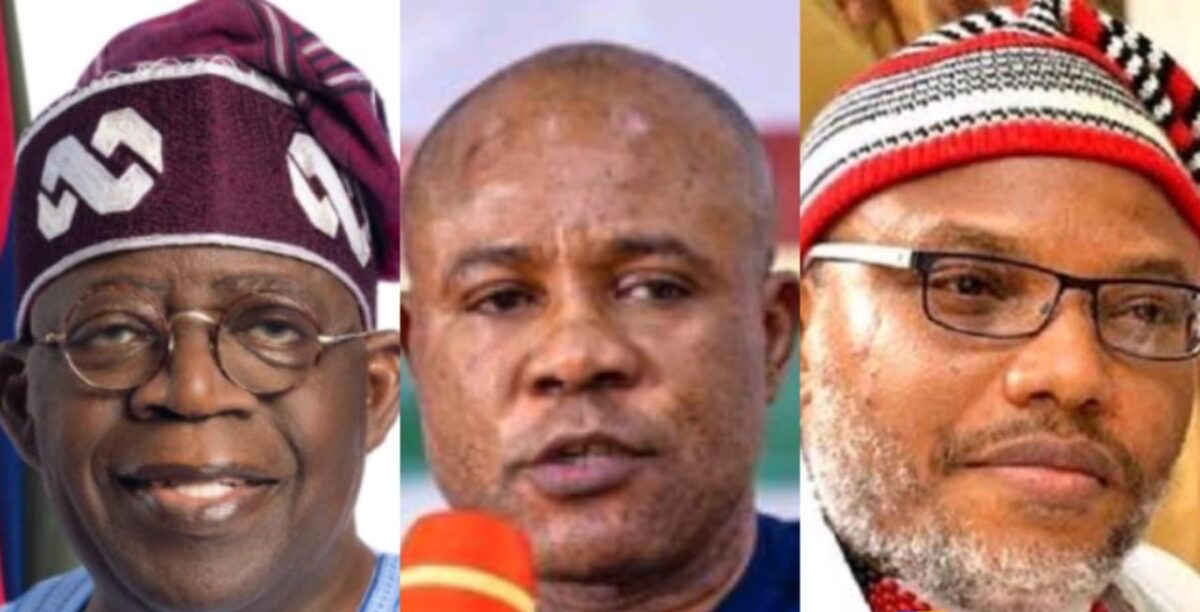
Enugu community backs Tinubu, Mbah for 2027, seeks Nnamdi Kanu’s release
The traditional ruler urged political opponents to conduct their campaigns peacefully.
Education
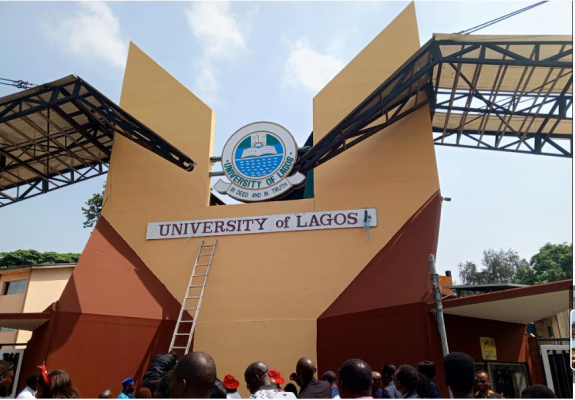
UNILAG to test new students for drugs, substances in toxicology screening
UNILAG urged newly admitted students to visit its website for further information.
Heading 1
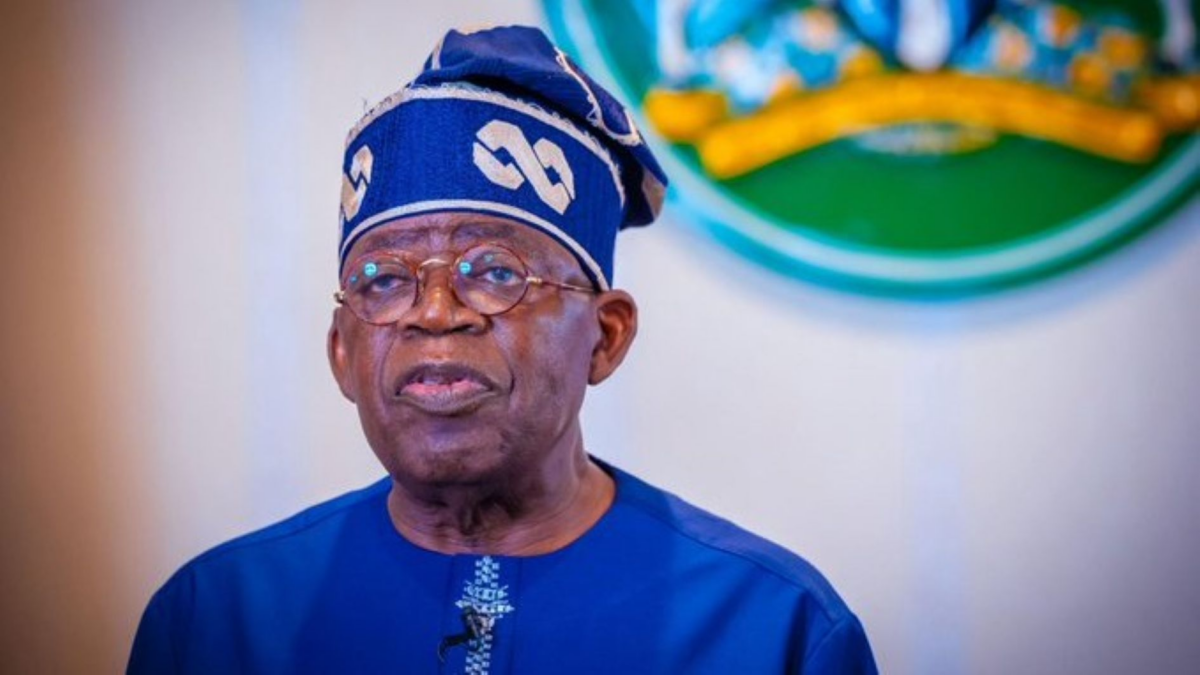
2027: DMI backs Tinubu’s reforms, forms alliance with president’s support group
She maintained that DMI’s ultimate mission was to promote stronger institutions.
Heading 4
ADC kicks off 2027 campaign in Imo, promises grassroots development
Mr Ihedioha explained that he associated with the party’s candidates because of their integrity.
States
Kebbi: Hassan-Augie wins fresh APC primary for Argungu/Augie constituency
The party said the constituency had 44,784 registered delegates, while 34,332 votes were cast in the election.


