

Kagame praises Macron for admitting France’s failure to stop Rwandan genocide
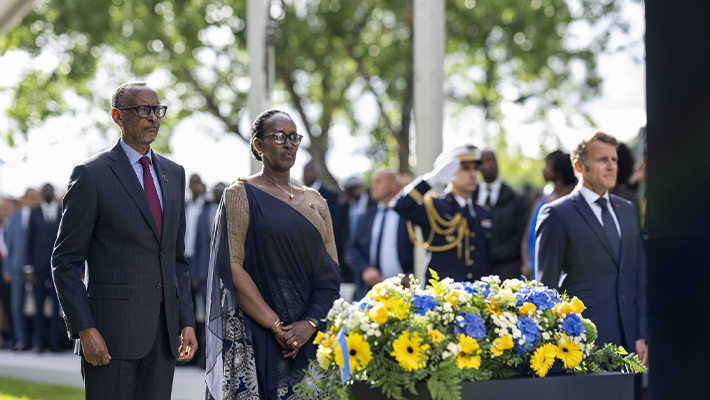
Rwandan President Paul Kagame has praised French President Emmanuel Macron for showing “courage and humanity” in acknowledging France’s role in the 1994 genocide against the Tutsi.
During the inauguration of a monument in Paris honouring victims of the genocide last week, Mr Kagame hailed Mr Macron for acknowledging that France failed to stop the killings when it should have done so.
The Rwandan president said taking responsibility for past actions requires “real” courage because of the backlash it could provoke from those implicated.
“President Macron, I want to commend you on both counts: courage and humanity,” Mr Kagame said at the event, which was also attended by Mr Macron. “You acknowledged that France could have stopped the genocide, but did not.”
Mr Kagame said Mr Macron’s acknowledgement of France’s role represented a “truth” that was more “valuable than an apology,” praising former French President Nicolas Sarkozy for “first opening the door” to that process.
The Rwandan president said the genocide against Tutsi, which lasted for more than 100 days between April and July 1994, was “foreseeable and, in fact, foreseen.”
He argued that, given its relationship with the Rwandan government at the time, France was in a position to act but failed to do so.
The president noted that it took too long for France to acknowledge its role, “causing additional pain” to survivors.
“And on some points, we still have not found consensus. I fully understand the feelings of those survivors and advocates who remain dissatisfied with the official record. But I believe that our common work has initiated a journey towards truth, which is irreversible,” he said.
Mr Kagame said several other countries also failed to respond to the genocide. However, he said France was ahead of others in “accepting its part in the tragedy.”
The genocide, led by extremist elements within the Hutu majority, targeted the Tutsi minority and resulted in the deaths of more than 800,000 people. More than two million Rwandans also fled the country during the violence.
France, an international ally of the then-Rwandan government, supplied military equipment, training, and political support for the East African country prior to the genocide.
After the killings began in 1994, France launched a United Nations-backed military intervention in Rwanda called “Operation Turquoise,” and it said it aimed to protect civilians.
However, there were allegations that France’s intervention came too late and helped shield some of the killers.

We have recently deactivated our website's comment provider in favour of other channels of distribution and commentary. We encourage you to join the conversation on our stories via our Facebook, Twitter and other social media pages.

More from Peoples Gazette

States
Independence: NBA urges Nigerians to expect better future
The NBA said that ordinary Nigerians should be deriving benefit from the subsidy removal rather than hardship.

Agriculture
FG tasks ECOWAS on leveraging financing strategies for agroecology
The federal government has urged stakeholders in the agriculture and finance sectors in the West Africa region to leverage financing strategies to enhance agroecology practices

Politics
Katsina youths pledge to deliver over 2 million votes to Atiku
“Katsina State is Atiku’s political base because it is his second home.”

States
Zulum seeks stronger military operations around Lake Chad
Mr Zulum stressed that military clearance operations must be followed by effective stabilisation measures.
Africa
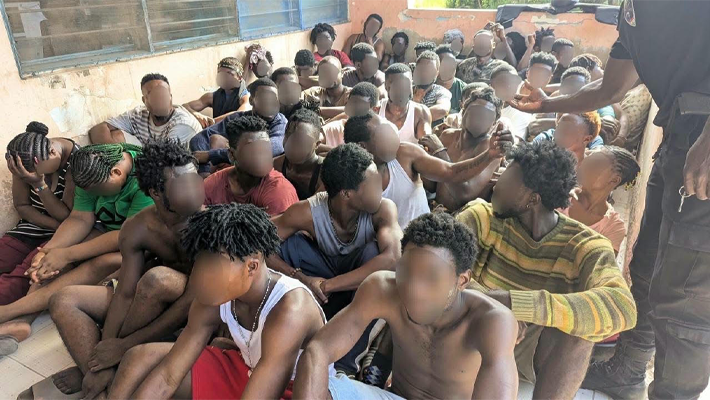
Police arrest 41 suspects over alleged drug activities in Ghana
The police said the suspects were arrested on Thursday during raids on targeted locations.

States
Health workers’ strike disrupts services at Katsina public hospitals
The Assembly of Health Professionals embarked on a one-week warning strike.
States
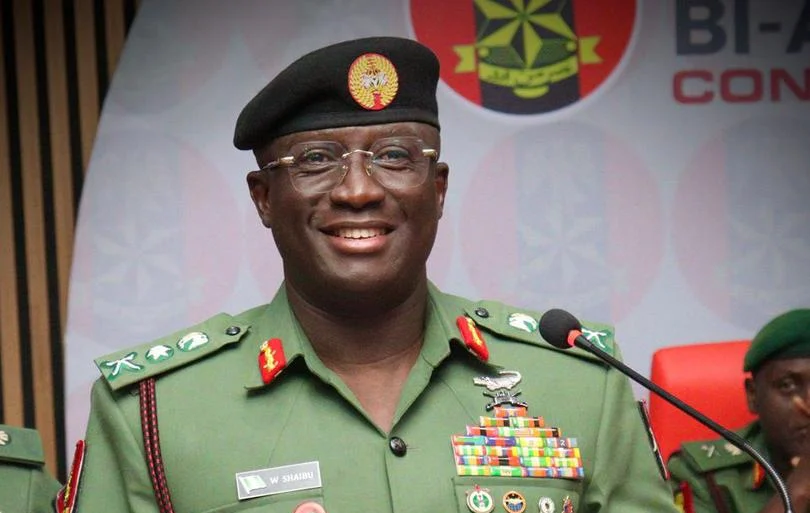
2027: COAS Shaibu charges troops on credible elections, professionalism
The army chief said much was expected of the troops in the discharge of their constitutional responsibilities.

States
Gov Sani commences N2 billion compensation for 865 property owners affected by road projects
Mr Sani said the payments demonstrated his administration’s commitment to infrastructure development while protecting citizens’ rights.

Education
56,000 candidates register for 2026 private WASSCE
The HNO advised candidates to study diligently.


