

Katsina out-of-school children reducing, says UNICEF
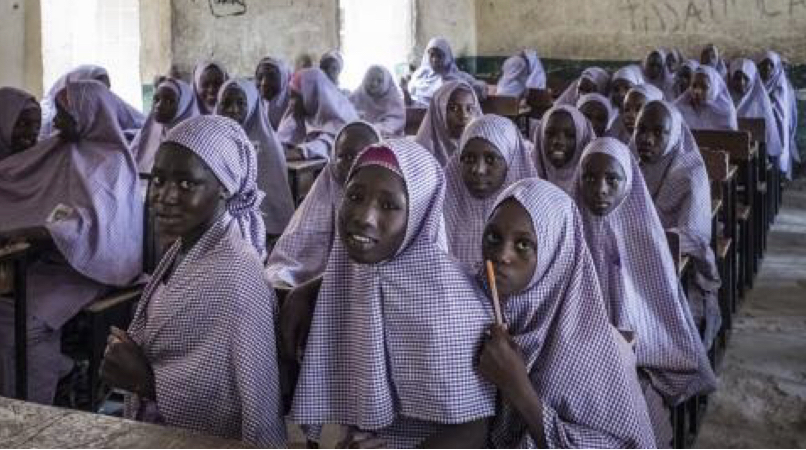
The United Nations Children’s Funds (UNICEF) says the rate of out-of-school children in Katsina has reduced from 36.9 per cent to 35.5 per cent in the last eight years.
UNICEF chief of Kano field office Rahma Farah disclosed this during a media dialogue in Katsina in collaboration with the Katsina Ministry of Basic and Secondary Education.
Mr Farah said the success was recorded due to collaboration between the state government, UNICEF and other partners.
“The number of out-of-school children has been high, with 536,122 children, but it is progressively reducing over the last eight years from 36.9 per cent in 2016 to 35.5 per cent in 2021 Multiple Indicator Cluster Survey (MICS).
“It has been projected that the rate will reduce to 30 per cent by 2024 if commitments to education and investments are sustained by the government. The primary school completion rate in Katsina state averages 62.5 per cent compared to the national average of 73.1 per cent and 56.1 per cent for the North-West, respectively.
“Senior Secondary School Completion rates are low, with only 32 per cent of children enrolled completing their education MICS 2021,” he said.
Mr Farah pointed out that it was important to note that Katsina has a positive gender parity index of one at the primary level, meaning there are nearly equal numbers of girls and boys in primary school.
According to him, the transition rate to secondary school in Katsina state is 69.5 per cent lower than the national average of 84 per cent and the northwest average of 70 per cent, with fewer girls transitioning to secondary school than boys.
Only 9.2 per cent and 13.3 per cent of children in Grade 3 demonstrated reading and numeracy skills in Katsina compared to the national average of 26.8 and 25.3 in reading and numeracy skills, respectively.
Mr Farah said that UNICEF and other partners also supported the government in launching a strategy that provides equal opportunities to all children to enrol, participate, transition and complete school by children in Frontline areas.
He added that the state was supported in creating an environment that enabled second-chance education for girls through re-entry guidelines that provide opportunities for pregnant and married girls to re-enrol and complete their education.
(NAN)

We have recently deactivated our website's comment provider in favour of other channels of distribution and commentary. We encourage you to join the conversation on our stories via our Facebook, Twitter and other social media pages.

More from Peoples Gazette

Agriculture
FG tasks ECOWAS on leveraging financing strategies for agroecology
The federal government has urged stakeholders in the agriculture and finance sectors in the West Africa region to leverage financing strategies to enhance agroecology practices

Politics
Katsina youths pledge to deliver over 2 million votes to Atiku
“Katsina State is Atiku’s political base because it is his second home.”
![U.S. Mission[Credit: X.com]](https://gazettengr.com/wp-content/uploads/images-78-3.jpeg)
World
U.S. issues security alert to Americans worldwide as Iran kills two soldiers
The U.S. government issued a warning to all Americans worldwide amid the escalating war against Iran.

Heading 3
Tinubu’s scorecard is 139 million Nigerians in poverty; he should resign, not seek re-election: ADC
“The evidence of 139 million people living in poverty and 17 million at risk of starvation is President Tinubu’s scorecard,” the party said.

Lagos
Lagos govt working to tackle flooding, says SSG
She said the government was assessing critical drainage channels and other vulnerable locations to strengthen ongoing flood control measures.

States
Three killed, four injured in Anambra road crash: FRSC
The FRSC said the accident occurred on Friday along the Nnobi–Agulu–Awka road.

Politics
2027: Group asks ADC, Atiku to drop Amaechi as vice-presidential candidate
The group accused Mr Amaechi of desperation, saying that he lacked the grassroots strength required to win the election.
![Jens Spahn. [PHOTO CREDIT: ZDF]](https://gazettengr.com/wp-content/uploads/Jens-Spahn.jpg)
Heading 4
German lawmaker resigns after backlash for welcoming child through surrogacy
The 46-year-old politician and his party, the Christian Democratic Union (CDU), had backed a ban on surrogacy.


