

Kazaure residents revive rainwater harvesting

Some residents of Kazaure council area of Jigawa have revived the traditional practice of harvesting rainwater to supplement their household water supply.
The residents on Thursday said that many families now collect and store rainwater during the rainy season for cooking, washing and other domestic purposes.
They said the practice had become important in helping households cope with water shortages when other sources were inadequate.
Rabi’a Musa, a resident, said many households had returned to rainwater harvesting because it provided an affordable and readily available source of water.
She said families usually kept containers ready to collect rainfall, adding that the stored water helped ease the burden of sourcing water.
“Rainwater is very useful because it is readily available during the rainy season and reduces the difficulty of getting water from other sources,” she said.
Similarly, Zainab Abdullahi said rainwater harvesting had become common because of its value in supporting household activities.
She advised residents to ensure proper storage and handling of harvested rainwater to maintain its cleanliness and safety.
Another resident, Maryam Muhammad, said rainwater harvesting was an age-old tradition that many families were reviving due to growing water challenges.
She said many households now kept large containers and other storage facilities to preserve rainwater for future use.
“Our forefathers practised rainwater harvesting, and many people are returning to it because it helps during difficult times,” she said.
Malka Ibrahim said she collected and preserved the first rainfall of the season because she believed in its traditional medicinal value. She said the water was kept for use whenever the need arose.
The residents urged relevant authorities to expand access to sustainable water facilities while promoting safe rainwater harvesting as a supplementary source of water for households.
Access to reliable and safe water remains a major challenge in Nigeria, especially in rural communities.
Recent UNICEF data shows that only about 30 per cent of Nigerians have access to safely managed drinking water services; water that is available when needed, accessible on premises and free from contamination.
As a result, many households rely on alternative sources such as boreholes, wells, rivers, streams, water vendors and rainwater, especially in areas where public water systems are unavailable or unreliable.
To address the challenge, the federal government has implemented initiatives including the Sustainable Urban and Rural Water Supply, Sanitation and Hygiene Programme and the Partnership for Expanded Water Supply, Sanitation and Hygiene.
The programmes are aimed at improving access to sustainable water services by supporting water infrastructure development, strengthening service delivery and promoting better management of water systems across the country.
However, the extent to which these interventions have translated into consistent and reliable water supply for communities remains a subject of concern.
(NAN)

We have recently deactivated our website's comment provider in favour of other channels of distribution and commentary. We encourage you to join the conversation on our stories via our Facebook, Twitter and other social media pages.

More from Peoples Gazette

States
Independence: NBA urges Nigerians to expect better future
The NBA said that ordinary Nigerians should be deriving benefit from the subsidy removal rather than hardship.

Agriculture
FG tasks ECOWAS on leveraging financing strategies for agroecology
The federal government has urged stakeholders in the agriculture and finance sectors in the West Africa region to leverage financing strategies to enhance agroecology practices

Politics
Katsina youths pledge to deliver over 2 million votes to Atiku
“Katsina State is Atiku’s political base because it is his second home.”

Education
NABTEB announces release of certificates for candidates up to 2024
Mr Mohammed said the certificates were ready for collection by successful candidates.
Lagos
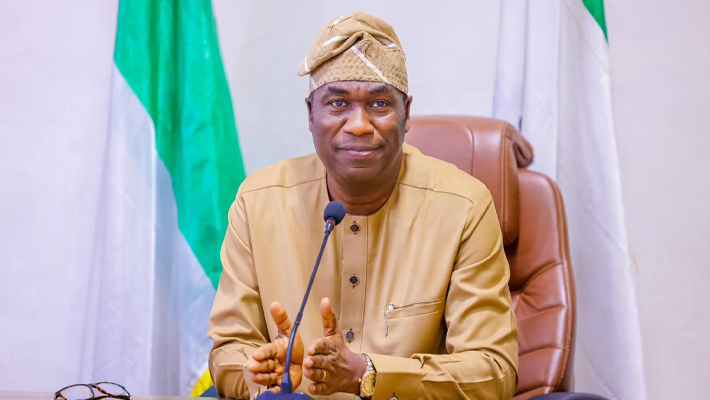
2027: Hamzat pledges safer, cleaner Lagos
The manifesto comprises seven pillars, 31 chapters and 100 pledges.
Africa
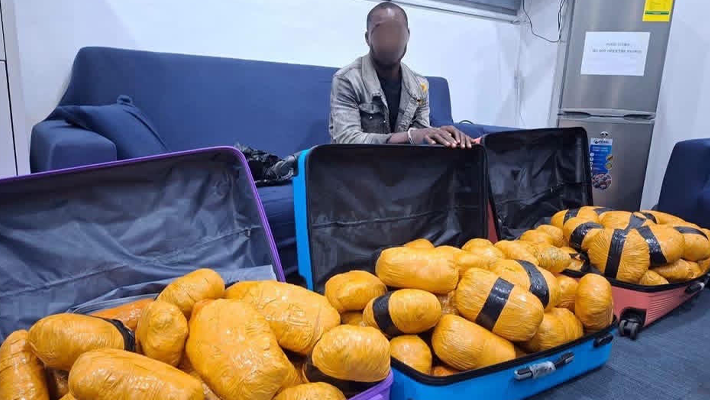
Ghanaian police arrest 40-year-old man with 91 parcels of suspected hemp
The suspect was arrested on Thursday.

Heading 2
Plateau: Alake calls for establishment of army battalion, stronger enforcement to curb illegal mining
The minister described enforcement as the most effective approach to tackling illegal mining.

NationWide
Obasanjo cautions against uncontrolled AI, urges local solutions
Mr Obasanjo cited concerns about AI-generated content and its potential to manipulate and distort identities.

Heading 5
NSE seeks partnerships to advance engineering development
The president said the NSE was ready to deploy its technical expertise to support the proposed partnerships.


