

Key factors that influence how forex trading, currency values work
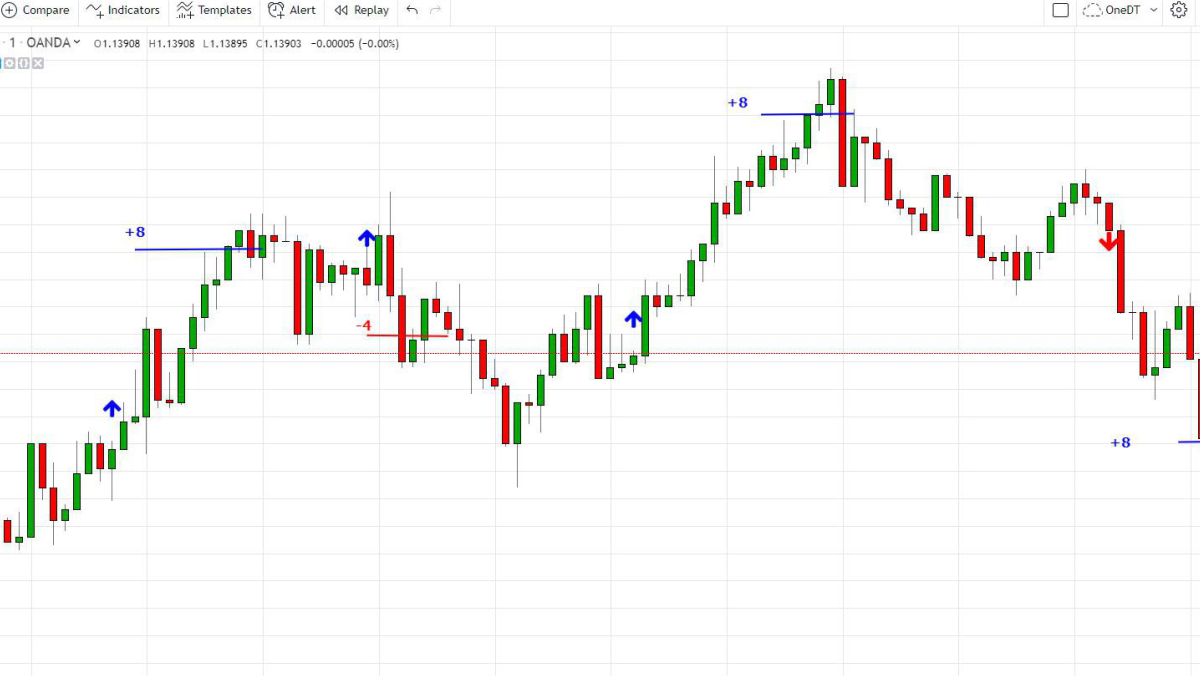
Foreign exchange, better known as forex, is the largest financial market in the world. Trillions of dollars are exchanged daily in this 24-hour market, which shifts activity across major trading centres in various parts of the world and enables any entity, institution, or government to trade in currencies.
To many, forex trading represents the ability to benefit from those changing values of currencies; “how does forex trading work?” and the aspects affecting the valuation of the currencies are, therefore, fundamentally important to learn to do it correctly.
Fundamentals of Forex Trading
Trading forex involves the simultaneous selling and buying of different pairs of currencies. An investor always opens a certain position with the hope of receiving dividends on the difference in value changes of the two currencies that will form this pair. For example, he sells U.S. dollars and buys euros in the currency pair EUR/USD and expects the euro to rise appreciably against the dollar.
Unlike traditional stock exchanges, forex trading is over-the-counter, which is decentralised and conducted via a network of different banks, brokers, and financial institutions. The traders have access to the market through a platform that provides real-time quotes and advanced analytical tools.
Supply and Demand Dynamics
At its core, currency value is a function of supply against demand in the market. When there is increased demand for a particular currency, its value appreciates against other currencies. In the reverse case, where the supply of currency outweighs demand, it diminishes the value of such currency. Central banks will affect supply and demand through monetary policies that alter interest rates or use direct intervention within the forex market.
For instance, if the Federal Reserve starts interest-rate hikes, then the U.S. dollar tends to appreciate since comparatively cheap money elsewhere abroad attracts that with rates higher than at home through foreign investment. This, of course, boosts demand for any currency in which the improved interest rate is resident. Inversely, when a central bank prints too much money, it can oversupply a particular type of currency, thus losing value against another.
Economic Indicators and Data Releases
One of the most significant drivers of currency value fluctuations is economic data releases. Reports on GDP growth, employment rates, inflation, and trade balances reflect the health of a country’s economy and influence investor confidence.
A good jobs report from the U.S., for instance, bodes well for the dollar in terms of economic performance and a probable interest rate rise. Conversely, weak data can lead to lower value as investors set their sights on more stable or profitable markets.
Geopolitical Events
Political stability and international relations are vital in determining a currency’s value. Where there is uncertainty—for example, through the holding of elections, political strife, or even trade wars—volatility arises within the forex market. As a rule, traders see stable governments with sound economic policies as conducive to investment, strengthening the currency of the country concerned.
For example, the British pound was highly volatile during the Brexit negotiations due to uncertainty over the UK’s future relationship with the European Union.
Market Sentiment and Speculation
Other factors that could influence the currency markets include trader psychology and speculative behaviour. News, economic forecasts, or even surprise events may trigger short-term price movements, which are usually further exaggerated by speculative traders as immense volumes of trade are executed based on perceived opportunities rather than fundamental changes in economies.
This, for example, means that if traders expect the euro to weaken due to poor economic data, their selling can become a self-fulfilling prophecy and drive the euro’s value lower.
Trade Balances and Export Competitiveness
The balance of trade, or the difference between a country’s exports and imports, is another determinant of currency values.
A country with a trade surplus- exporting more than imports- should appreciate its currency, all things being equal, since foreign buyers need it to buy goods and services.
The balance of trade can also influence exchange rates: large trade deficits weaken a currency since the country must sell its currency to purchase foreign currencies to buy the imports. A country with competitive export industries often enjoys a strong currency, reflecting worldwide demand for its goods and services.
The Role of Technology in Forex Trading
Technology developments have shaped the face of forex trading to become within reach of individual retail traders. Online platforms are equipped with technical and fundamental analysis tools that enable traders to make decisions.
More recently, there has been a surge in the adoption of automated trading systems and algorithms to trade on the markets, eliminating emotional decision-making. More so, technology has equalled timely access to market information, which has levelled the field between retail traders and institutional investors.
Conclusion
Trading Forex is done based on the principles of demand and supply, usually driven by a broad range of economic, political, and psychological factors. Understanding this as much as possible will give the necessary grounding to take advantage of this great market.
It would be better if it were to be said that the trader could accomplish these by observing economic indicators, geopolitical events, and market sentiments, after which a reasonable decision could be taken to ensure higher profitability. With further development in the field of technology, forex trading is likely to remain one of the easiest and most vibrant means through which one could profit from the differences in currencies.

We have recently deactivated our website's comment provider in favour of other channels of distribution and commentary. We encourage you to join the conversation on our stories via our Facebook, Twitter and other social media pages.

More from Peoples Gazette

States
Independence: NBA urges Nigerians to expect better future
The NBA said that ordinary Nigerians should be deriving benefit from the subsidy removal rather than hardship.

Agriculture
FG tasks ECOWAS on leveraging financing strategies for agroecology
The federal government has urged stakeholders in the agriculture and finance sectors in the West Africa region to leverage financing strategies to enhance agroecology practices

Politics
Katsina youths pledge to deliver over 2 million votes to Atiku
“Katsina State is Atiku’s political base because it is his second home.”

Politics
2027: Adeleke, Oyetola inaugurate 10,000 canvassers for Tinubu’s re-election in Osun
Mr Oyetola said the inauguration demonstrated commitment, organisation and shared conviction in Mr Tinubu’s continuity agenda.

States
Cross River targets 30 million coffee seedlings, 15,000 tonnes annual production
Mr Otu also announced a partnership to establish 6,000 hectares of coffee plantations across Odukpani, Akamkpa and Akpabuyo Local Government Areas.

Heading 4
Mass protests over rising cost of living rock Italy, Germany
Thousands of Gen Z protesters hit the streets in Berlin and more than 30 other German cities on Saturday.

Sport
Tottenham beat 10-man Crystal Palace 2-0 to secure third consecutive Premier League win
Crystal Palace were down to 10 men 13 minutes into the match after Jean-Philippe Mateta was sent off for a serious foul on Mickey van de Ven.

States
Troops kill suspected bandits in Kogi
Mr Zubairu said that troops received information regarding the discovery of suspected bandits’ bodies towards Adankolo Forest.

Sport
Ballon d’Or winner Harry Kane draws blank in Bayern, Dortmund draw
Dayot Upamecano restored Bayern’s lead in the 66th minute from an assist by Kane, before Fabio Silva stunned the hosts with an 89th-minute equaliser.


