


Labour Party urges Gov. Sanwo-Olu to implement living wage for Lagos workers
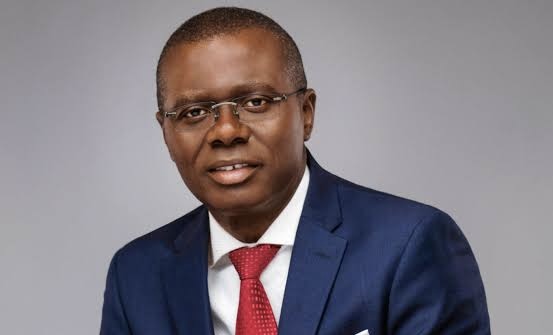
The Lagos state chapter of Labour Party (LP) has appealed to Gov. Babajide Sanwo-Olu to ensure a living wage for workers in the state.
The state publicity secretary of the party, Olubunmi Odesanya, made the plea in an interview with journalists on Wednesday in Lagos.
Ms Odesanya, while assessing Mr Sanwo-Olu as he marks the first anniversary in his second tenure, said the governor needed to step up his game to relieve residents of the current socio-economic challenges.
According to her, masses in the state including workers are struggling to survive and to meet their daily personal and family needs.
She urged the ruling All Progressives Congress (APC) to pity the workers in whatever it was proposing as the minimum wage.
Ms Odesanya said the people, however, needed a living wage, which would take cognisance of the socio-economic indices for workers to be happy.
She said: “We are all watching in awe the minimum wage debacle.
“The current minimum wage of thirty thousand naira is due for review this year 2024, as we can recall, from the agreed and written Labour Law.
“Ordinarily, the review ought not create so much apprehension or furore but for the difficulties in the country.”
The LP chieftain said there was an urgent need for the federal government and the state government to give a living wage to the workers that “lay the golden egg”.
She said that the immediate removal of fuel subsidy by the federal government drove the prices of goods and services to a high level.
“In Nigeria today, there is no middle class anymore, you are either extremely poor or super rich.
“Inflation rate is high,” she said.
The LP spokesperson, however, decried the current back and forth battle between the Federal Government and organised labour on the minimum wage.
“The government needs to propose a minimum wage that takes cognisance of the current economic realities, ” she said.
Ms Odesanya added that the Federal Government should block wastages in government, stop corruption and cut down on the salaries of federal lawmakers.
The organised labour, on Tuesday, walked out of the Tripartite Committee meeting on minimum wage after the federal government increased its offer to N60,000.
The government and the OPS had initially proposed N48,000 and N54,000 and N60,000, which were also rejected by the organised labour.
The organised labour had also presented N615,000 as the new minimum wage but saw reasons to drop their demand to N497,000 and then to N494,000.
(NAN)

We have recently deactivated our website's comment provider in favour of other channels of distribution and commentary. We encourage you to join the conversation on our stories via our Facebook, Twitter and other social media pages.

More from Peoples Gazette

Agriculture
FG tasks ECOWAS on leveraging financing strategies for agroecology
The federal government has urged stakeholders in the agriculture and finance sectors in the West Africa region to leverage financing strategies to enhance agroecology practices

Politics
Katsina youths pledge to deliver over 2 million votes to Atiku
“Katsina State is Atiku’s political base because it is his second home.”

Hot news Home top
Ukraine War: UK sanctions woman for recruiting Nigerians, other nationals to fight for Russia
Mrs Azarnykh was sanctioned on 5 May.
Heading 2
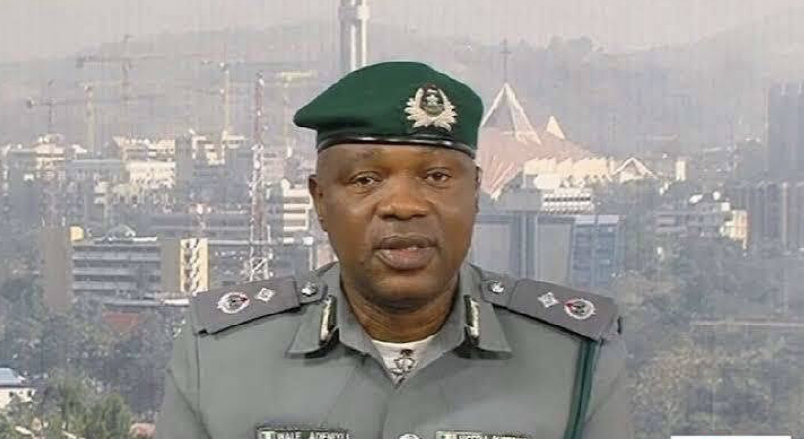
Customs, ABC strengthen trade ties
Ms Enwereji called for faster mechanisms to resolve outstanding challenges affecting businesses.
Economy
FG, states, local governments shared N2.3 trillion May 2026 revenue: FAAC
He further explained that total deductions for cost of collection amounted to N123.546 billion.

Heading 3
FG to establish GBV safe spaces in all 774 LGAs
She expressed concern over the increasing cases of GBV across the country.
Heading 2
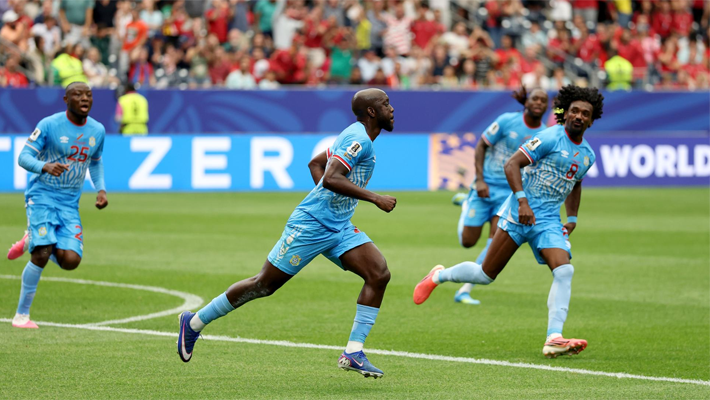
World Cup: Portugal held to 1-1 draw by DR Congo
Portugal enjoyed more possession and created several chances in the first half.

NationWide
2026 AFNIS targets new investment, partnerships, says Alake
According to him, the 2026 AFNIS comes at a crucial moment in Africa’s history.


