

Lagos speed limit rule not for revenue generation: Official

The permanent secretary of the Lagos State Ministry of Transportation, Olawale Musa, says the speed limit and e-policing cameras installed on the roads across the state are not for revenue generation but for safety purposes.
Mr Musa said this in a radio programme on Thursday in Lagos.
“Motorists should not speed so that the government does not generate money from their speeding. It is based on the need to reduce speed and thereby reduce accidents that lead to death that the government brought up the issue of enforcing speed limits in the state.
“If people do not obey rules, we must enforce them. Any rule that is not enforced will be a joke. If you cannot do the time, do not do the crime,” he said.
He noted that the government anticipated backlash with the enforcement, adding that they would be resolute about this, stating that more would be installed across the state.
Regarding the efficiency of the cameras, Mr Musa noted that the initiative had been tested three months before the government came out with the enforcement.
He said the complaints raised were being looked into.
“This thing can be contested; there are procedures, so if one feels there was no infraction, feel free to come and contest,” he said.
He said the e-policing cameras would help to monitor what motorists do on the road.
Mr Musa urged motorists, especially towards Alapere, inward Third Mainland Bridge, to note that the speed limit at both sides, inward and outward, of the bridge is 60 km/hour.
“Also, there are no bus stops at the expressway, so vehicles should go inside designated bus stops to drop off their passengers,” he added.
On complaints about signposts, Mr Musa said people destroy and take away posts that had been mounted.
“Also, the government is looking at inscribing the speed limit on the middle of the road so that people do not complain of not seeing the signs,” he said.
He said the cameras cannot be an avenue for extortion as speculated by some people, stressing that fines are electronically generated without human interference.
He said the speed limit was not only for private vehicle owners but also for commercial vehicles.
“Law is for everybody. We have also fined 300 government vehicles. We are looking at a situation whereby the drivers pay the fines and not the government.
“We want the public to understand that whatever the government does is for everyone’s safety. So, there is a need to cooperate with the government on this,” he said.
(NAN)

We have recently deactivated our website's comment provider in favour of other channels of distribution and commentary. We encourage you to join the conversation on our stories via our Facebook, Twitter and other social media pages.

More from Peoples Gazette

Agriculture
FG tasks ECOWAS on leveraging financing strategies for agroecology
The federal government has urged stakeholders in the agriculture and finance sectors in the West Africa region to leverage financing strategies to enhance agroecology practices

Politics
Katsina youths pledge to deliver over 2 million votes to Atiku
“Katsina State is Atiku’s political base because it is his second home.”

Africa
Envoy pledges robust engagement, collaboration between Nigeria, Benin
“We want to see better integration of our peoples and enhanced collaboration in terms of commerce that will facilitate trade across the borders,” she said.

NationWide
Lawmaker backs legislative bill on femicide
The bill seeks to prevent femicide in the country.

Lagos
Residents count losses as floods destroy homes, businesses in Lagos communities
Lagos residents count losses as rain floods homes across several communities in the state.

Lagos
Lagos police nab suspect over alleged N3 billion cyber fraud
Mr Ewhubare said the suspect was apprehended following an extensive investigation into a sophisticated cyber intrusion targeting a financial institution.
Africa
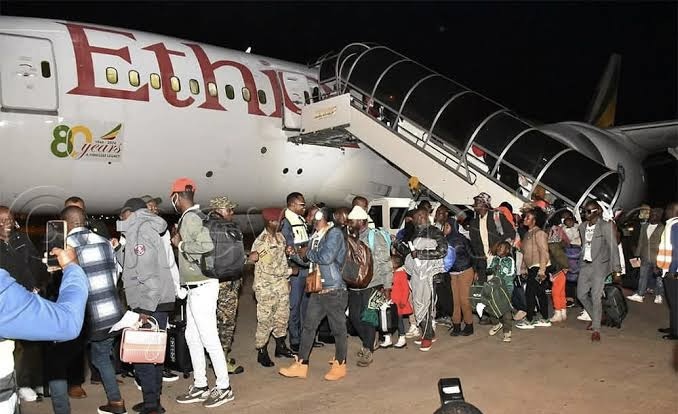
Xenophobia: Uganda repatriates 1,102 citizens from South Africa
The Ugandan embassy said, “The arrival marks the successful conclusion of phase one of the government of Uganda’s voluntary repatriation exercise.”

NationWide
CSOs urge assessment of National Assembly’s proposed electoral college for women legislators
“The proposal is unfamiliar to many stakeholders and understandably raises concerns, but we must carefully interrogate it instead of dismissing it outright,” he said.


