

Life expectancy increased from 46 to 73 globally: WHO

The World Health Organisation (WHO) says global life expectancy for both sexes has increased from 46 to 73 years, with the biggest gains in the poorest countries.
Dr Tedros Ghebreyesus, the WHO Director-General, said this during an online media conference.
Mr Ghebreyesus said after years of war, the organisation realised that it was better to work with one other than fight with one another.
He said that the organisation also realised that a healthier world was a safer world.
“Their vision was clear, but bold: the highest possible standard of health, for all people. To achieve that vision, they agreed to set up a new organisation.
“They debated and agreed what this organisation would be and do in a document called the Constitution of the World Health Organisation,” Mr Ghebreyesus said.
According to him, the organisation marked the 75th anniversary of the day that constitution came into force.
He said that the organisation’s constitution was the first document in history to formally recognise health as a human right.
The WHO boss said that since then, the world has made significant progress towards realising that vision.
He said that smallpox had been eradicated and polio was on the brink.
“These are actually two of the important highlights during the 75 years of existence of the Organisation.
“42 countries have eliminated malaria, the epidemics of HIV and TB have been pushed back.
“47 countries have eliminated at least one neglected tropical disease,” he said.
Mr Ghebreyesus said in the past 20 years alone, smoking has fallen by a third, maternal mortality has fallen by a third and child mortality has halved.
According to him, just in the past five years, new vaccines for Ebola and malaria have been developed and licensed.
He said that just in the past five years, new vaccines for Ebola and malaria have been developed and licensed.
“And for the past 3 years, WHO has coordinated the global response to the COVID-19 pandemic – the most severe health crisis in a century.
“We can’t claim sole credit for these achievements, but we have played a leading role in all of them. Partnering with many partners, especially our Member States.
“And although we have many achievements of which to be proud, we still face many challenges – some old, some new.
“Around the world, people still face vast disparities in access to health services, between and within countries and communities,” Mr Ghebreyesus said.
According to him, since 2000, access to essential services has increased significantly, but at least half the world’s population still lacks access to one or more services like family planning, basic sanitation, or access to a health worker.
He said that often it was because of where people live, their gender, their age or who they are, people living in poverty, refugees and migrants, people with disabilities, ethnic minorities and other marginalised groups.
“Meanwhile, since 2000, the number of people who experience financial hardship from out-of-pocket health spending has increased by a third, to almost two billion.
“Noncommunicable diseases now account for more than 70 per cent of all deaths globally. Rates of diabetes and obesity have increased dramatically, driven by unhealthy diets and physical inactivity.
“Progress against malaria and TB has stalled, antimicrobial resistance threatens to unwind a century of medical progress.
“Air pollution and climate change are jeopardising the very habitability of our planet;
“And as COVID-19 has exposed so brutally, there remain serious gaps in the world’s defences against epidemics and pandemics.
“For all these reasons and more, the world needs WHO now more than ever,’’ he said.
(NAN)

We have recently deactivated our website's comment provider in favour of other channels of distribution and commentary. We encourage you to join the conversation on our stories via our Facebook, Twitter and other social media pages.

More from Peoples Gazette

States
Independence: NBA urges Nigerians to expect better future
The NBA said that ordinary Nigerians should be deriving benefit from the subsidy removal rather than hardship.

Agriculture
FG tasks ECOWAS on leveraging financing strategies for agroecology
The federal government has urged stakeholders in the agriculture and finance sectors in the West Africa region to leverage financing strategies to enhance agroecology practices

Politics
Katsina youths pledge to deliver over 2 million votes to Atiku
“Katsina State is Atiku’s political base because it is his second home.”

Hot news Home top
Chris Brown sentenced for London nightclub attack
Brown,37, had repeatedly struck Abe Diaw with a tequila bottle in the VIP section of Tape, a nightclub in London on February 19, 2023.
World
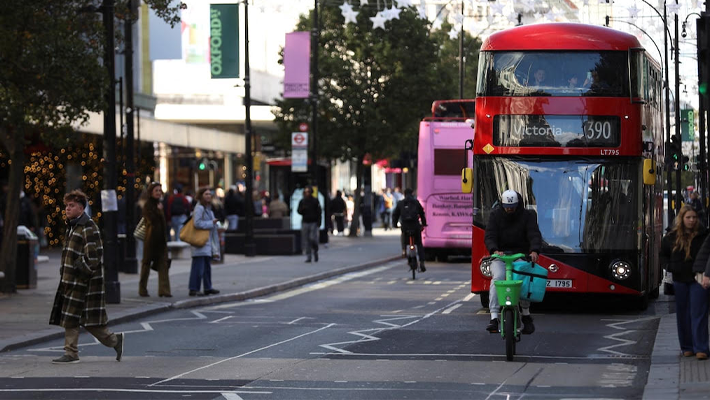
London’s Oxford Street becomes traffic-free
City officials said the revitalisation plan will create new opportunities for the famous street, which brings about $33 billion annually to London’s economy.
Health
Borno NMA sets up committee to check quackery
The NMA chair said that suspected cases of quackery would be reported to the appropriate authorities for investigation and necessary action.

Sport
Burna Boy headlines NFL’s first regular-season game in France
The performance marked the return of Burna Boy to the Stade de France after he headlined a sold-out 80,000-capacity concert at the venue last year.

Faith
Church chains Jesus’ statue to prevent another fall after killing Ecuadorian priest
This was captured in a viral video on social media showing the church taking the extra precaution by securing the crucifix with chains.

States
Ogun man arrested, arraigned for stealing iron rods
A 23-year-old man, Michael Gbadero, stood before an Abeokuta Magistrates’ Court in Isabo on Monday, accused of stealing iron rods worth N460,000.


