

Malaria reducing in Nigeria, says health minister

Nigeria recorded a slight decrease in malaria prevalence, from 23 per cent in 2018 to 22 per cent in 2021, health minister Osagie Ehanire says.
Mr Enahire made this known at the Official Launch and Dissemination of the National Malaria Indicator Survey (NMiS) Report and The National Advocacy Communication and Social Mobilization (ACSM) Strategy and Implementation Guide in Abuja.
The National Malaria Elimination Programmes (NMEP) organised the dissemination of the ACSM strategy and implementation guide (2021-2025) in collaboration with the National Population Commission (NPC).
The health minister added that while this may not appear significant at the national level, at the sub-national substantial gains have been observed in several states.
The minister noted that malaria was a leading cause of mortality and morbidity in Nigeria, with young children and pregnant women disproportionately affected.
Furthermore, he said the disease accounts for 60 per cent of outpatient visits to health facilities, 30 per cent of childhood deaths, 11 per cent of maternal death (4,500 deaths yearly), and 25 per cent of deaths in infants (children aged one year).
He said the 2021 World Malaria Report from the World Health Organisation showed that nine to 10 persons die every hour due to malaria or malaria-related issues in Nigeria and that the country contributes 27 per cent to the global malaria burden and 32 per cent to malaria deaths globally.
Also, Mr Ehanire announced that children under five years of age remained the most vulnerable group affected by malaria accounting for 67 per cent of all malaria deaths.
He also noted that it was pertinent to note that the federal government and its partners had made consistent and concerted efforts over the years in providing resources towards eliminating malaria in the country, which had resulted in millions of lives being saved.
“The results of the 2021 NMIS show a further decline in the national prevalence of malaria to 22 per cent from 23 per cent in 2018 and 42 per cent in 2010,” the health minister revealed.
He added, “We are seeing gains being sustained in getting the general population to adopt key preventive measures. Fifty-six per cent of households own at least one insecticide-treated nets (ITN), while 36 per cent of household members, 41 per cent of children under five, and 50 per cent of pregnant women slept under an ITN the night before the survey.”
He noted that “this underscores the importance of access, and therefore our drive to use all means including rolling mass campaigns to reach the teaming populations of Nigeria with nets.”
(NAN)

We have recently deactivated our website's comment provider in favour of other channels of distribution and commentary. We encourage you to join the conversation on our stories via our Facebook, Twitter and other social media pages.

More from Peoples Gazette

Agriculture
FG tasks ECOWAS on leveraging financing strategies for agroecology
The federal government has urged stakeholders in the agriculture and finance sectors in the West Africa region to leverage financing strategies to enhance agroecology practices

Politics
Katsina youths pledge to deliver over 2 million votes to Atiku
“Katsina State is Atiku’s political base because it is his second home.”

States
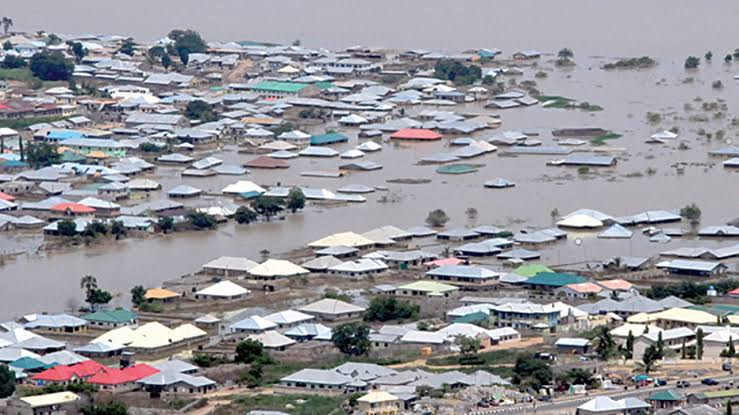
Flooding: Anambra, Ebonyi, Enugu place emergency response agencies on alert
He urged residents living in flood-prone areas to heed early warning messages.
NationWide
Flood Alert: NEMA urges residents in flood-prone areas to evacuate as rains intensify
Mrs Umar advised motorists and pedestrians against driving or walking through floodwaters.

NationWide
Shettima departs Abuja for ECOWAS summit in Freetown
The summit will focus on key policy decisions and strategic resolutions.
NationWide
NBC unveils new digital broadcasting rules
Mr Ebuebu said the commission had observed declining ethical standards in broadcasting.

Heading 3
POWA reaffirms commitment to members’ welfare
According to Mrs Disu, the invaluable role of police officers’ wives cannot be overemphasised.

States
N2 billion NPFL prize won’t fix Nigerian football, says Gara-Gombe
He lamented that Nigeria had only a few stadiums capable of meeting international standards.


